Famous Beijing Chinese food: Must-eat dinners in Beijing
If you visit Beijing for no other reason than its food, you won’t be disappointed. With a variety of dishes and dining options to suit every taste and budget, in many ways, China’s capital is a culinary delight. Be sure to plan your menus ahead to take advantage of food that will surely surprise and delight.

Peking Roast Duck
(Beijing Kaoya)
Experience the authentic traditional Beijing cuisine that is Peking duck, renowned worldwide as an exquisite dish, fit for an Empress. Invented during the Ming Dynasty, Peking roast duck was a royal delicacy. In keeping with tradition, only the very best duck is chosen and roasted by fire.
Read more
The tender, moist meat is covered by crispy, chewy skin. While being rich in fats, Peking Duck tends not to be overly greasy. Along with sliced shallots, delicate pancakes made of millet flour, and a fermented flour sweet sauce, Peking Duck is a sensational culinary experience to try while visiting China.
Old Beijing Noodles with Fried Bean Sauce
(Zhajiangmian)
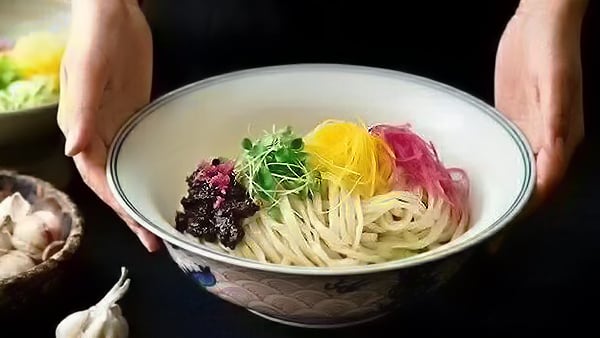
As Beijing’s signature noodles, Zhajiangmian is the most common noodle dish cooked by local Beijing families. The wheat noodles are topped with ‘zhajiang’, otherwise known as fried bean paste with pork or beef mince, as well as sliced or shredded vegetables (cucumbers, Chinese cabbage, radish and bean sprouts).

Beijing instant-boiled sliced mutton hotpot
(Shuanyangrou)
Regarded as an authentic Beijing hotpot, you may discover this dish served in a traditional style in local restaurants where distinctive copper pots and charcoal form part of the experience of enjoying this meal.

Sauteed shredded pork in sweet bean sauce
(Jingjiang Rousi)
Jingjiang Rousi is stir fried sauteed shredded pork in sweet soya paste served with shredded scallions and tofu sheets that are used to wrap the filling, very similar to the way Peking roast duck is wrapped in a pancake.

Mustardy cabbage mounds
(Jiemodun’er)
Mustardy cabbage mounds – or Jiemodun’er – is a cold dish traditionally eaten by local Beijing families for Chinese New Year Eve’s dinner. It is pickled Chinese cabbage served with mustard sauce, and the refreshing flavor and crispness of ingredients is a welcome balance to other rich dishes that are invariably included in Chinese New Year’s feasts.

Sauteed pork balls with brown sauce
(Jiaoliu Wanzi)
Jiaoliu Wanzi is deep-fried meatballs that are tender but with a crispy crust. The meatballs are stir-fried and coated in ‘brown’ sauce, which is essentially a mixture of both light and dark soy sauce, water, salt, sugar and potato starch.
Local snacks and street food
If you’re feeling adventurous during your time in Beijing, then you’ll want to sample some of Beijing’s finest street food. With many snacks unique to Beijing, expect an unrivalled culinary adventure while visiting here.
Stewed pork liver and intestines Beijing-style (Chaogan’er)
Stewed pork liver and intestines Beijing-style (Chaogan’er)
Chaogan’er is not for the fainthearted! It is a traditional breakfast for Beijingers in which pork liver and intestines are stewed in a thick broth, then served in a bowl and topped with crushed fresh garlic and eaten with steamed Bao (stuffed bun).
Bittern flapjack (Luzhu Huoshao)
Bittern flapjack (Luzhu Huoshao)
Bittern flapjacks or luzhu huoshao are not flapjacks as the travelers from the west know them. Among the main ingredients are pork, pork lung, pork intestines, pork liver, and tofu. Some may even include fermented bean curd or chives sauce. Luzhu huoshao are usually eaten with bing bread.
Quick boiled Halal tripe (Baodu)
Quick boiled Halal tripe (Baodu)
With its origins dating back to the Qing dynasty, this dish was traditionally prepared by the Muslim Hui people. Referred to by locals as ‘Bao Dur’, quick-fried tripe is the quintessential Beijing street food snack. The tripe is taken from the stomach of a bull or lamb, washed clean, cut into strips, and boiled; then dip in the mixing sauce of cooking oil, sesame sauce, Chinese vinegar, chili oil, bean paste, and chopped coriander and shallots.
Deep fried dough rings(Jiaoquan)
Deep fried dough rings(Jiaoquan)
Wandering Beijing’s streets on a city tour? Then a big handful of jiaoquan is just the thing you need for sustenance. A traditional Beijing street food from way back, these dough rings are fried until golden brown and crispy, and typically served with shaobing (baked flatbread) and douzhi’er (mung bean milk).
Fermented mung bean milk(Douzhi’er)
Fermented mung bean milk(Douzhi’er)
Emerging as a staple in Beijing cuisine over three hundred years ago, fermented mung bean milk is a by-product of the process of making starch (for example, cellophane noodles). Although its appearance may not appeal to the western traveler (it is grey-green), it has a sour and slightly sweet flavor (which not everyone appreciates). To make it more digestible – and receive its many health benefits – combine with pickles and cayenne pepper oil.
Beijing style crepes(Jianbing)
Beijing style crepes(Jianbing)
Originally based on jianbing guozi from Tianjin, these crepes are renowned as perhaps Beijing’s most popular breakfast. Jianbing is made from batter and then topped with a mix of various ingredients to suit the diner. One thing to note about jianbing – they are always made to order.
Grilled meat skewers(Kao Chuan’er)
Grilled meat skewers(Kao Chuan’er)
Like many other Beijing street food snacks, chuan’er or grilled meat skewers has gained in popularity since it arrived on the scene around 1980. Typically, chuan’er are made using lamb or chicken wings. As long as the debate among locals rages, there will continue to be an ongoing challenge deciding which restaurant prepares the best chuan’er. There are many to choose from, so be prepared for a big night out when you can really dine with locals. Try Liuxiaochuan and Wangjing Xiaoyao as both of these have an excellent reputation.
Candied hawthorn(Tanghulu)
Candied hawthorn(Tanghulu)
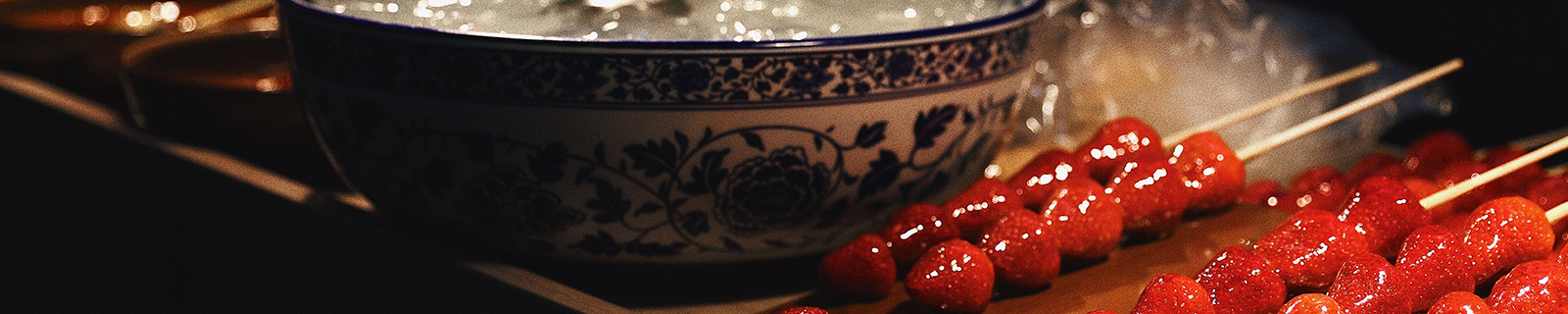
Originating from China’s north, Tanghulu or candied hawthorn is a traditional Beijing treat in which the fruit is coated in toffee (candied sugar). Chinese hawthorn is the traditional fruit used for these sweet skewers, however, other fruits are now being used also.
Tuckahoe pie or Fuling pancake sandwich (Fulingbing)
Tuckahoe pie or Fuling pancake sandwich (Fulingbing)
Tuckahoe pie (fuling bing) is also referred to as a fuling pancake sandwich. Fuling bing was first enjoyed by the royal family and government officials during the Qing dynasty but is now a popular sweet snack among the local Beijing people.
Old Beijing-style yoghurt(Suannai)
Old Beijing-style yoghurt(Suannai)
Like so many traditional Chinese and Beijing street food snacks, old Beijing-style yoghurt offers the consumer a product with many health-giving properties. As you’d expect, old Beijing yoghurt is a fermented product made with honey or sugar that is served in distinctive ceramic jars at room temperature or chilled slightly.
Glutinous rice rolls stuffed with sweet red bean paste(Ludagun)
Glutinous rice rolls stuffed with sweet red bean paste(Ludagun)
The back story to ludagun (glutinous rice rolls stuffed with sweet red bean paste) involves a demanding Empress, a royal cook, and a careless eunuch. The creation of Ludagun is the result of Empress Dowager Cixi’s demand for something different. The pastry is made with sticky rice and covered in red bean paste and then rolled in soybean powder.
Steamed glutinous rice cakes with sweet stuffing(Aiwowo)
Steamed glutinous rice cakes with sweet stuffing(Aiwowo)
Aiwowo are balls of steamed sticky rice filled with sugar, sesame, melon seeds, apricots, plums, and Chinese hawthorn. They are white like a snowball and legend has it these delightful treats were originally created in honor of the Fragrant Concubine, the Qianlong Emperor’s consort.
Seasoned flour mush(Chatang)
Seasoned flour mush(Chatang)
Described as a type of ‘flour mush’ made from different types of flour, Chatang, is a sweet dense cake that is prepared in several stages. First, the flours are cooked by stir-frying. At the time of serving, hot water is poured into a bowl with the flours and then stirred to create a ‘mush’. This is topped with sugar and a sweet osmanthus sauce. Traditionally, serving chatang required a bit of a performance, with the pouring of boiling water necessitating considerable skill as the water was poured from a vessel with a dragon-shaped spout. Modern-day chatang is not quite as demanding and like many foods, it is available from the local snack stores or Beijing cuisine restaurants. The time-honored Chatang Li is a must to visit for Chatang.
Sweet pea pudding or pea flour cake (Wandouhuang)
Sweet pea pudding or pea flour cake (Wandouhuang)
Sweet pea pudding is made from yellow pea flour, sugar, and water and like many Beijing street food snacks, its heritage can be found in the history of the royal family presiding over China at any given time. Wandouhuang was a favorite with members of the royal family during the Ming dynasty, however, it can now be found at local supermarkets, particularly Beijing cuisine restaurants, or the famous Daoxiangcun Bakery.
Recommended restaurants in Beijing
Beijing is a food lover’s heaven, so among the many things to do in Beijing, you absolutely must include dining out. Come prepared to give your taste buds an adventure when you visit, but do your research first. That’s how we can help. In this section, we’ve compiled a list of recommended restaurants for some of Beijing’s most well-known and celebrated dishes. Hungry? Let’s fix that with our list of recommended restaurants in Beijing.
For Peking Roast Duck

Quanjude
Known worldwide for its Peking Roast Duck, Quanjude was established in 1864. Hugely popular with travelers from all around the globe, dining here is a ‘must-do’ while in Beijing.

Da Dong
Da Dong is another restaurant you simply miss while in Beijing. With its claim to fame being its Peking Duck is made with leaner birds than those of other restaurants, as well as the fact it has been awarded ‘Best Chinese Restaurant of the Year’ (according to thebeijinger.com). It’s highly recommended you book ahead and arrive hungrily, not least because the menu is 160 pages, so there are plenty of dishes to choose from.

Siji Minfu Roasted Duck
Visit Siji Minfu for Beijing’s best value Peking Roasted Duck, as well as a variety of traditional Beijing dishes that are favorites with the locals.

Liqun Roast Duck Restaurant
Liqun Roast Duck Restaurant is a family-owned restaurant in Beijing’s famous hutong. It has an excellent reputation and has earned favor with locals and travelers alike for remaining true to the traditional method of cooking the ducks used in their Peking Roasted Duck.

1949 Duck de Chine
Arguably Beijing’s best duck (at least when it comes to the performance of slicing the duck), Duck de Chine captivates its guests with a dining experience, not just a meal. If it’s a beautiful dining memory you’re after, put 1949 Duck de Chine at the top of your list.

Ya Wang Restaurant
At Ya Wang Restaurant you will find a showcase of Peking Roasted Duck, Cantonese cuisine and seafood, and a regularly updated menu sure to impress.
For Beijing instant boiled mutton hotpot

Dong Lai Shun
Founded in 1903, discover the traditional Muslim way of preparing instant-boiled mutton. With a lovely history, this restaurant began as a snack stall on Wangfujing Avenue in Beijing. Locals showed their support as diners and it wasn’t long before the street stall became a restaurant. Expect to enjoy the house specialty, instantly boiled mutton hotpot, as well as other traditional Muslim dishes.

Nanmen Shuanrou
The restaurant is one of the best-known hotpot restaurants in Beijing. The sauce for dipping boiled mutton is the founder’s secret recipe. Dishes are served in coal-fired bronze pots, while the restaurant itself has a rustic feel to it, unlike other similar venues. Ideal for a one-time visitor to Beijing.

Man Fu Lou
If you’re keen to experience one of Beijing’s best hot pot dining options, then Man Fu Lou has to be included on your list. Choose from a vast selection of dishes, but our guides recommend the Qing dynasty imperial hot pot banquet, if you can’t bear to share, order individual hot pots for each guest. The hand-cut fresh meat is essential for what will definitely be a memorable meal.

Ju Bao Yuan
They say you know a good restaurant by the length of the queue out front. If that’s the case, then Ju Bao Yuan definitely ticks the box. Located in Niu Jie, a Muslim neighborhood in Beijing, it is one of Beijing’s authentic traditional hotpot restaurants that always has a long queue of diners waiting to enjoy its offerings.
For local Beijing snacks
Huguosi Snack Shop
Huguosi Snack Shop
Visit Huguosi Snack Shop where you’ll find over 80 different kinds of local Beijing snacks in a single location.
Niujie Street
Xianyukou Street
Xianyukou Street
Immerse yourself in a precinct that still retains a traditional Chinese feel to it, with restaurants, snack stalls, and specialty shops offering a unique experience of Beijing culture and food.
‘Guijie’ Dongzhimen Inner Street
‘Guijie’ Dongzhimen Inner Street
‘Guijie’ Dongzhimen Inner Street is a busy and (Beijing’s most) famous food street that operates 24/7. Nicknamed ‘Ghost Street’ by locals, Expect to be delighted with the food on offer day or night, as well as the vibrant and colorful atmosphere that caters to those who like to venture out beyond regular dining hours.
Yaoji Chaogan
Yaoji Chaogan
Yaoji Chaogan is a local restaurant with a number of house specialties, including chaogan, a thick livery stew made with pork intestines. The restaurant made headlines when Joe Biden visited for a meal during the time when he was Vice-President.
Longfusi Snack Shop
Longfusi Snack Shop
The famous Longfusi Snack Shop reopened at its new location at the end of 2020 selling a wide variety of local foods. The all-day menu includes choices as diverse as sweet fried dough, sweet cream and vanilla fritters, steamed beef buns, the unusually named “doornails” meat pie, fermented mung bean milk, and jellied tofu. Many local Beijing residents will remember this store fondly from childhood memories, but that shouldn’t stop international visitors from stopping by for a taste of real Beijing food.
For imperial court cuisine

Beijing Fangshan Restaurant
Located in Beihai Park, expect to dine like an emperor when you visit. Established in 1925 by four chefs who had worked for the last emperor of the Qing dynasty, Fangshan is the term used to refer to imperial cuisine. Many generations of chefs have worked at the restaurant, with some undertaking research at the Palace Museum so they can prepare dishes once only made for royalty. The Manchu Han Imperial Feast is revered as the finest example of imperial cuisine, and should not be ordered by the faint-hearted.

Ting Li Guan Restaurant
For another regal dining experience, book your table at Ting Li Guan Restaurant at the Summer Palace. Offering a truly imperial experience, Ting Li Guan was originally built by Emperor Qianlong for his mother. Although it was razed to the ground by allied forces in 1860, Empress Dowager Cixi rebuilt it and used it to entertain foreign diplomats, court officials, and the emperor’s wives. Every detail of the experience is considered, from the plates, cutlery, decor, dishes, and service, with each element contributing to provide a truly special experience.

Beijing Yuxiandu Royal Gastronomy Museum
Well, if there was ever a reason to dine out, the Beijing Yuxiandu Royal Gastronomy Museum is it. Taking visitors on a ‘dynastic dining’ adventure, the museum recreates imperial banquets from various dynasties, thus providing insights into the kinds of meals enjoyed by emperors throughout the centuries. Apart from an imperial banquet, diners are entertained with performances that would have kept emperors happy during their meal. And if that isn’t enough for you, wander through the museum’s exhibitions and private banquet suites that give modern-day diners a little taste of imperial history.

Family Li Imperial Cuisine
Receiving one Michelin star for its excellent food, Family Li Imperial Cuisine is not your everyday family Chinese restaurant. It is a fourth-generation family of chefs who truly have an imperial cooking pedigree with family members forming part of the Qing dynasty’s kitchen. In addition to its tastefully understated decor, you will appreciate the set menus that feature notable dishes like braised ‘tiger skin’ pork. If you plan to visit, make sure you book ahead.
For dumplings and noodles
Don’t even think about visiting Beijing without savoring its dumpling and noodle offerings. In our must-try list here, we’re certain you’ll be lining up for seconds because, let’s face it, one round of dumplings (or noodles for that matter), really isn’t enough.

Qingfeng Steamed Dumpling Shop
Operating as a large chain of stores, the Qingfeng Steamed Dumpling Shops will definitely appeal to international travelers as much as they do to Beijingers. These popular dumpling shops offer good quality food at remarkably cheap prices. The stores’ setup has barely changed over six decades (they still use a cafeteria-style ticketing system). The quality of baozi sold there hasn’t changed either. Wondering what you should try? We guarantee you won’t be able to pass up their now-famous juicy pork and green onion-filled buns (baozi). Or maybe you’ll opt for the wonton soup, Chaogan, congee and other side dishes. Whatever you do, just be sure to make time to visit.

Xian Lao Man restaurant (authentic old Beijing style)
If you are looking for simple, authentic food done right, make sure Xian Lao Man restaurant is on your list of things to do in Beijing. Considered by some to be the very best for dumplings in Beijing, expect to find traditional flavors, as well as the more unusual. Noodles are also a specialty, but dumplings are really the stand out here.

Baoyuan Dumplings
With David Beckham having famously graced this venue, Baoyuan Dumplings is a Michelin Guide restaurant that is highly regarded for its colorful dumplings. What will you find at Baoyuan? Dumplings that are as colorful on the outside as they are inside. Expected to find dumpling dough that has been dyed with vegetables and fruits to create both the weird and wonderful. Yuanbao – or silver ingot shaped dumplings – are served in plates of six and are very reasonably priced. Arrive hungrily and leave completely satisfied.

Hai Wan Ju
Among the many culinary adventures to be enjoyed in Beijing, international travelers must really include an experience of watching the skill of artisans making hand-pulled noodles. The perfect place for a dinner like no other can be found at Hai Wan Ju (or Beijing Zhajiangmian as it is otherwise known). At Hai Wan Ju, hand-pulled noodles are served with shredded vegetables and black bean sauce. There are two house specialties: guo shui (rinsed in cool water) and guo tiao (served straight out of the pot). While the main appeal of Hai Wan Ju is obviously the noodles, there is also much to be said for the authentic ‘old Beijing’ vibe of the place that provides a window to a Beijing of another time.

Chaishi Fengwei Zhai
Rated by the Michelin guide, Chaishi Fengwei Zhai provides unassuming surroundings for enjoying what many locals consider perhaps one of Beijing’s best examples of beef noodle soup. The only way to know is to try for yourself at this authentic local Beijing restaurant.
Other specialty restaurants in Beijing
With so many dining options to choose from, it’s absolutely essential to whittle your list down before landing in Beijing. Whatever your taste or budget, we’re sure you’ll find the exact match among the many specialty restaurants that now form part of Beijing’s vibrant dining scene.
Haidilao
Haidilao
If you haven’t heard of Haidilao in China, you must have been sleeping under a rock, because the Haidilao hotpot restaurant chain is taking the modern dining world by storm. Providing diners with a delicious hotpot experience, Haidilao’s owners are embracing the future too, having already established a dining experience unlike any other. Artificial intelligence, or AI, is the centerpiece of Haidilao’s first ‘smart restaurant’. Expect your food to be assembled by an intelligent kitchen and served and cleared by a robot. Yes, that’s right, the robot comes to your table. It’s a dining experience of the future you can experience today.
Sishi Tongtang
Sishi Tongtang
If you’re not quite ready to launch into the future, then make your way to Sishi Tongtang Beijing. Considered to be yet another ‘best Beijing restaurant for Peking duck’, Sishi Tongtang translates as ‘four generations together in the same house’. The highlight of Sishi Tongtang is the method of roasting the duck. Chefs use a woodfired pit, which gives the meat a delicious flavor, adding to the overall unique experience offered by this authentic Beijing restaurant.
Huajia Yiyuan
Huajia Yiyuan
Looking for traditional Chinese food served in a courtyard restaurant? Looking for a way to dine like a local? Huajia Yiyuan is just the place. Here you’ll find traditional local food that looks and tastes like it’s cooked at home. Enjoy dining in the courtyard, or ask for a private dining room for a truly special experience.
Najia Xiaoguan
Najia Xiaoguan
Reflecting the traditional cuisine of the Manchus, the ethnic group that ruled the Qing dynasty, Najia Xiaoguan is a restaurant that is fit for royalty. Steeped in legend, the story goes that the restaurant’s recipes are prepared according to records prepared by the royal chef. Whether you believe it or not, Najia Xiaoguan’s imperial reputation precedes it, making dinner here a definite must-do while visiting Beijing.
Tanjia Cuisine
Tanjia Cuisine
Tanjia Cuisine combines the best of Cantonese and Beijing food to form what is considered an authentic fine dining experience. Tanjia Cuisine served the ‘upper class’ in Beijing, who congregated at the private club dining operated from 1909 by Tang Zongjun’s son, Tang Zhuqing. It is now run by the fourth generation and has been located in the Beijing Hotel since 1958. Book a table to enjoy what can only be described as a once-in-a-lifetime dining adventure.
King’s Joy
King’s Joy
Western travelers who follow a vegetarian or vegan diet might feel somewhat overwhelmed by the number of meat-based dishes in China, however, there are many vegetarian options. Among the more contemporary vegetarian cuisine to be found in Beijing, visitors should take advantage of the creative vegetarian food created at King’s Joy by restaurateur David Yin. Based on a philosophy of not only eating well but doing the right thing by the environment, guests will also find the beautiful food is complemented perfectly by the stunning architecture of the restaurant. Be sure to book ahead.
TRB Hutong
TRB Hutong
Ever wondered what it’s like to dine in a temple? Probably not. But someone in Beijing did and established TRB Hutong, a Michelin guide restaurant located in a 600-year-old temple serving European cuisine. TRB is actually an abbreviation of Temple Restaurant Beijing and it is considered so good by travelers from around the world it was awarded TripAdvisor’s Best Fine Dining Restaurant in 2019. Offering diners an exceptional dining experience of understated elegance, TRB will surprise and delight the western visitor to Beijing from the moment they arrive.
Beijing bars and Beijing dining precincts
Enjoy Beijing at night by visiting one of its famous precincts dedicated to dining and drinks. These areas have become even more popular as demand grows for more options that integrate the flavors and tastes of both east and west.

Sanlitun
Located in close proximity to international embassies, Sanlitun is an area well known as Beijing’s most prestigious shopping, dining, and entertainment precinct. The area has been popular with locals and internationals alike (particularly expats) since the first bar opened there in 1983. Now Sanlitun is home to a whopping 70 percent of the total number of bars in Beijing and many international brand shops. Make an afternoon and evening of your visit here – you’ll need it!

Shichahai Bar Street
Unlike Sanlitun, Shichahai Bar Street is a veritable oasis where visitors can enjoy drinks and dining without the melee. Shichahai Bar Street has blended the contemporary and traditional, using water landscapes and delightful courtyards as the backdrop for a bar and restaurant precinct without equal. Apart from the many options to eat and drink, the setting itself is fascinating. Discover old style residences and courtyards in the hutong, and wander through the snack streets, which offer a taste of Beijing’s many flavors. Notably, shops like Kao Rou Ji (roast meat) and Bao Du Zhang (famous for tripe) have been operating for many decades.

Guijie
Beijing’s famous Guijie Street – or Ghost Street – is popular among locals as a snack food precinct. Not only is the food fabulous, a wander along this street lit up with its bright red lanterns provides an authentic experience of daily life for modern-day Beijingers. The moniker ‘Ghost Street’ came from the produce markets at which traders would operate from late night to dawn. Working by the light of kerosene lamps gave the appearance of ghosts, hence the name. Make a night of it by starting at one end and working your way to the other.

Wudaoying Hutong
Experience both old and new China as expressed in the Wudaoying hutong. Now a fashionable business precinct that has merged traditional courtyard residences with contemporary enterprises in the form of boutique shops and trendy cafes. You’ll find everything from one-off vintage items to handcrafted wares made by lamas in Tibet. Perfect for those travelers looking for a less mainstream experience of Beijing.



 Excellent Tour and Outstanding Guides