Author Archives: April Zhu

do's and don'ts in China

Do’s and Don’ts on a China Tour: How to Save Face Like a Local

do's and don'ts in China

This do’s and don’ts in China is back pocket material to keep you out of trouble on your China tour.

From table manners to Chinese temple etiquette, we know you’ll want to avoid any embarrassing moments on your China tour. That’s why our outstanding local guides, working in destinations all across China share these top tips.

Good manners in China

It pays to know that although Chinese people have been greatly influenced by the modern outside world, they remain strongly steeped in tradition and reading the do’s and don’ts in China provided below will help you understand the Chinese traditions and allow you to save face and act like a local!

1. Table manners in China

do's and don'ts in China

To dine in China is not just to eat but to experience and share in good company. Different from western society, Chinese people practice a ‘gather dining system’. That means dishes are placed communally in the center of the dining table and everyone is encouraged to help themselves.

While the emphasis is on eating well, there are still a few do’s and don’ts to remember.

Chinese table manners – do’s

Allow for elders to be seated first. Following this, you will be instructed where to sit. when dining with elders, it is also impolite to begin eating before they do.

It is suggested to engage in each toast, saying the phrase ‘gan bei’ before finishing your drink – pronounced ‘gun bay’ – which means ‘dry cup’.

Try everything. At dinner, it is both polite and encouraged to sample every dish available and remarking aloud with ‘eating noises’ that you enjoy the food. “Mmm, Delicious!”

Feel free to drink from the bowl, as will everyone else, or using your fingers to eat things like shrimp or chicken. Just make sure that you’re not touching food that isn’t already on your own plate.

Chopsticks are the most versatile tool you’ll find on Chinese dining tables. Even if you’re not an expert. Give them a go. Your Chinese host will love it!

Chinese table manners – don’ts

do's and don'ts in China

Never leave chopsticks upright in your food, like incense sticks! This symbolizes death because it is similar to the ceremony that Chinese people use to pray for someone who has passed and is considered bad luck.

Avoid tapping the bowl with your chopsticks and never point them at other people when dining. This is considered to be extremely rude and best to be avoided entirely.

Do NOT use your own chopsticks to put food on your plate – this will have everybody else turning up their nose! Use

the serving chopsticks or ladles provided to show proper table manners.

While tipping is not a common practice in Chinese restaurants, in Chinese culture, asking someone to dinner means you just offered to pay for the bill.

2. Gift giving and receiving gifts in China

do's and don'ts in China

In Chinese society, it is often the case, that people are likely to decline the offer a few times before accepting a gift, as a way of showing modesty.

When gifting in China, you’ll definitely want to avoid the following things that may cause insult and misunderstanding.

Gift giving and receiving gifts in China – do’s

Offer your gift with both hands. This is considered respectful in China, and in exchange, gifts should be received with both hands.

It is customary in Chinese culture to refuse to accept a gift once or twice before accepting it. Respectfully declining, to show one is modest before accepting the gift, is commonplace in Chinese culture and this may be done several times. So don’t be discouraged when giving gifts, but don’t be too eager upon receiving one either!

Gifting fresh produce such as fruit or other treats is very polite in Chinese culture, especially if presented neatly with a box or basket.

When giving gifts from your home country, Chinese people usually appreciate gifts along the lines of souvenirs, cigarettes, and alcohol, in lieu of this a reputable Chinese brand is also a satisfactory gift.

Gift giving and receiving gifts in China – don’ts

Avoid giving a clock as a gift. To say “sending a clock” in Chinese is the same as saying “attending a funeral”. Therefore, sending a clock to someone as a gift in China is usually regarded as cursing someone to die. This is obviously extremely impolite to give as a gift to anyone. Similarly, scissors and other sharp objects do not make proper gifts either, as they represent the severing of relationships.

Never gift white or yellow flowers, particularly chrysanthemums. These are funeral flowers in China. Do not offer them as gifts to anyone, especially to elderly people, patients, or someone who is sick.

Don’t send pears or umbrellas to your Chinese friends in a relationship! Especially newly married couples, because the Chinese pronunciation of “pear” is exactly the same as “divorce”. In the same way, saying “umbrella” in Chinese implies “separation”.  Sending these gifts to Chinese couples is strongly regarded as cursing them to be apart.

When wrapping your gift, to be on the safe side, use red wrapping paper. While other festive colors can be used, they seldom are. Never wrap in any dark color, black, dark blues, and purples, etc. Stick with red, and you can’t go wrong!

Chinese people usually think it is impolite to open the gift in front of the sender. So do not feel frustrated if they decide not to open the gift in front of you. So when you receive a gift, avoid hastily unwrapping it. Unless indicated by the person presenting you with the gift, It is advised to open the gifts after you leave.

3. Important cultural do’s and don’ts in China

Chinese cultural etiquette – do’s

Punctuality is an important virtue in China, as it shows respect for others, so always be on time. Arrive slightly before important engagements or events, as being a little earlier than the appointed time shows your character and respect of others time.

Be aware, the number four is highly regarded as ‘the unluckiest number’ in Chinese culture, as it has the same pronunciation as “death” in Chinese. So don’t be shocked to find the fourth or fourteenth floor of a building has been changed or altered when traveling around China.

Chinese cultural etiquette – don’ts

Don’t be taken aback when asked personal questions regarding age, relationships, family, what you do for work, or even income. This is considered Chinese-style small talk and is perfectly polite within Chinese society.

Avoid being too physical when meeting Chinese people for the first time. They will find this very uncomfortable from a stranger. A handshake and a smile or simple nod of the head are more than enough to demonstrate your friendliness.

Similarly, avoid public displays of affection. China is a very reserved society and generally looks down upon these. Remain mindful of this and your China tour will be an unforgettable one.

4. Exploring China’s Tibetan Temples or Monasteries? Some valuable do’s and don’ts

do's and don'ts in China

Cultural etiquette in Tibet – do’s

  • Take off your hat as a sign of respect when entering temples.
  • Always walk clockwise when inside a monastery or temple.
  • Be sure to donate a couple of yuan to religious beggars. This is considered an act of good karma in Tibetan culture.

Cultural etiquette in Tibet – don’ts

  • Don’t photograph people. Tibetans do not appreciate being photographed. However, if you ask permission first, this is usually acceptable.
  • Don’t touch a Tibetan on the head. Tibetans believe God resides in your head and may be offended if you touch them here.
  • Don’t step on a lama’s shadow or walk between a person praying to the Buddha and the statue.
  • Don’t point directly. If you want to indicate a statue and have to use your hand you should gesture palm up, fingers flat and together, in that direction.

Experience authentic Chinese culture with ChinaTours.com

With local guides to guide you around, learn your Do’s and Don’ts in China and never worry about making a cultural faux pas.

Ready to experience more of the real China? Possibly join us on a Tibet tour now that you know the cultural etiquette? Why not check out our China Tour Packages, or have a look at our Best China Tours page.

Feeling the travel bug and think a China tour might fix it? There’s no better place to start than by connecting with a China travel agency who can provide you with an experience of the real China. Traveling to 20 unique and exciting destinations, including Beijing, Xi’an, and Shanghai, ChinaTours.com, combined with the option of small group, private and custom tours, we’ve designed our China tours to meet the needs of people who enjoy structure and flexibility when they travel. Ready for adventure? Enquire now.

Shaanxi food

Shaanxi Food: a Culinary Journey to Ancient China

When traveling in China, you should definitely make sure you go on a Xi’an tour as not only does Xi’an city have a fascinating history, but it also has exquisite Shaanxi food. Shaanxi food is said to be the tastiest way to get transported back to ancient China, and we couldn’t agree more.

Shaanxi food characterizes in aromatic, tasty, and spicy dishes, with heavy ingredients such as lamb, beef, garlic, onion, vinegar, and is strongly influenced by Islamic cuisine, thanks to the large Muslim community in the area.

Shaanxi food

For those on a Xi’an tour for the first time,  exploring Chinese cuisines, Shaanxi food is a good entry point. The wide array of noodles, bread, and dumplings are a culinary delight for locals and tourists alike.

Wondering which Shaanxi food you must try on your multi-day China tour? Keep reading, and find out all about the old and new of Shaanxi cuisine.

Shaanxi cuisine, a rich culinary history

Shaanxi food

The culinary history of Shaanxi cuisine is one of the world’s longest, and one of the richest too. According to written materials, the first major features of Shaanxi cuisine, such as its diverse ingredients, refined cutting and cooking techniques, and rich flavors, could be traced back to as early as the West Zhou Dynasty, a few thousand years ago.

Shaanxi cooking took on more of a scientific approach from the early Qin Dynasty onwards. Especially Master Lu’s Spring and Autumn Annals, one of the core Chinese classics, had a profound influence on the further development of Shaanxi cuisine. In that time, Xi’an became China’s very first capital, giving Shaanxi cuisine an enormous popularity boost.

Once the starting point of the Silk Road, Shaanxi cuisine has been shaped by a range of cultures and religions, with Islamic influence being particularly strong. In fact, the consumption of beef and lamb in Shaanxi is much higher than in any other place in China.

The strong and heavy flavors of Shaanxi food

Shaanxi food

Compared to other Chinese cuisines, Shaanxi dishes have strong and heavy flavors. Shaanxi cooks love to spice things up, with ingredients such as garlic, onion, chili, ginger, and cumin. Vinegar is also a Shaanxi favorite, while sugar is only used sparingly to improve a dish’s umami taste.

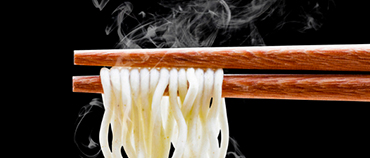
Rain isn’t abundant on the Guanzhong Plain, which makes wheat the main crop in the Shaanxi region. That’s why Shaanxi people go crazy for noodles, especially the hand-pulled Biang Biang Mian (or trouser belt noodles). When it comes to noodles, the motto in Shaanxi is: the bigger, the better! In fact, many Shaanxi signature dishes are characterized by colossal noodles, the size of a belt, however no less delicious than their smaller counterparts.

Shaanxi food

Another notable Shaanxi dishes is Calabash chicken (or Huluji), a lightly breaded and fried chicken dish and an absolute local’s favorite. You might also want to try sour and spicy pork sauce noodles (Saozi Mian), famous for its five features: thin, chewy, hot, sour, and fragrant.

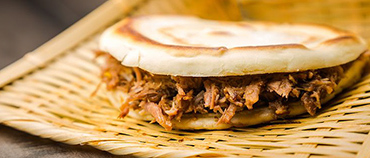
Or how about a Chinese hamburger (or Roujiamo)? It’s like a regular hamburger, but with a much longer history. The perfect Roujiamo is made with traditionally baked leavened bread, pocketed with shredded meat that has been braised for hours. Locals usually have Roujiamo with Liangpi (or cold noodles). The most basic way to serve cold noodles is drizzled with a sauce of chili oil, pepper, vinegar, garlic, and topped with bean sprouts and sliced cucumber.

When in Xi’an, do as the Xi’anese do

One typically Shaanxi street food that’s worth trying is Chuan’r, or kebab. Though common throughout China, the best way to enjoy Chuan’r is by sharing them with friends, while drinking a beer late at night, at an outdoor night stall in Xi’an.

Shaanxi food

Since you’re in Xi’an already, why not try an aromatic, tasty, and spicy bowl of Yangrou Paomo? Yanrou Paomo is Xi’an’s signature dish of shredded flatbread soaked in mutton broth. Eating it can be a uniquely relaxing experience. That is if you do it the right way.

Here’s how to do it:

You’ll be served two pieces of flatbread in a bowl, and it’s your job to tear the bread into small pieces. A tiresome task, but totally worth it according to the locals. Next, you sit down with the locals and trade gossip, while your flatbread crumbles are being cooked in mutton soup with rice noodles. Once the bits of bread a fully soaked in soup and flavor, the stew will be topped with slices of lamb or beef of your choice. Finally, pickled sweet garlic is added to complete the dish.

Tour Xi’an with ChinaTours.com

Is your mouth is watering already? Why not book one of our many Xi’an tours. Discover the ancient former capital of China, with its melting pot of cultures, and experience the richly cultural Shaanxi cuisine that comes with it. Book online or talk to one of our China tour experts today.

Feeling the travel bug and think a China tour might fix it? There’s no better place to start than by connecting with a China travel agency who can provide you with an experience of the real China. Traveling to 20 unique and exciting destinations, including Zhangjiajie, Xi’an, and the Silk Road, ChinaTours.com, combined with the option of small group, private and custom tours, we’ve designed our China tours to meet the needs of people who enjoy structure and flexibility when they travel. 

Cantonese food

Why Cantonese Food Is the World’s Favourite Chinese Cuisine

If you’ve ever been to a Chinese restaurant outside of China, it’s likely you’ve already experienced eating Cantonese food – or at least some variety of it.

Authentic Cantonese cuisine is famous for its mild, fresh, and natural flavors, innovative ingredients, and exquisite cooking techniques. It’s even considered China’s most exquisite cuisine.

But what is it about Cantonese cuisine that sets it apart from China’s other regional cuisines? Let’s deep dive into the short but rich history of Cantonese food.

Cantonese food and cuisine

Cantonese food

China’s “haute cuisine”

Cantonese cuisine is considered the “haute cuisine” of China and originates from the province of Guangdong. The Cantonese are very fortunate to live in an area with such abundant rainfall and a warm tropical climate. Guangdong Province is known for its agriculture, and there are plenty of pig and poultry farms in the area. Lush rice paddies are scattered all throughout the Pearl River Delta.

Located on the Pearl River, Guangdong province’s capital Guangzhou makes an excellent seaport through which many foreign ingredients are imported from other countries. Inventive as the Cantonese are, they are happy to incorporate these non-native ingredients into their cuisine.

A short but rich history of Cantonese food

Though having only a short history, Cantonese cuisine has made quite the international impact. Chinese immigrants, many of them from Cantonese origin, are spread throughout the world and introduced their beloved cuisine to every corner of the planet.

Unfortunately, Cantonese immigrants have been struggling to reproduce their native cuisine in a foreign land, resulting in the “pseudo-Chinese” cuisine we know today.

Although these not-quite-authentic Chinese dishes may not be part of the ancient Chinese food culture, they are authentic products of the Chinese immigrant experience, yielding diverse takes on Chinese food tweaked for local palettes.

The mild, fresh, and natural flavors of Cantonese cuisine

Cantonese food

The hallmark of Cantonese cuisine is preserving the natural flavors of the food. A Cantonese cook knows fresh is best, and goes all the way to make sure your meal isn’t overcooked or too heavily seasoned. Amongst the varied cooking techniques, steaming and braising are a Cantonese cook’s favorite.

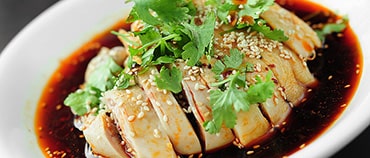
Fresh fish and shellfish, beef, chicken, pork, rice, tropical fruits, and a wide array of fresh vegetables are common ingredients in Cantonese food, which makes for mild, fresh, naturally flavored meals. Notable Cantonese dishes include sliced boiled chicken (Baiqieji), roasted suckling pig (Kaoruzhu), and black chicken soup (Wujitang).

The Cantonese believe that food is delicious as it is, so almost no additional seasoning is added. However, no Cantonese kitchen would be complete without a bottle of oyster sauce and hoisin sauce. Spices such as ginger, chives, black pepper, and anise also figure prominently in Cantonese cooking.

Keep in mind, though, the Cantonese are very open-minded when it comes to ingredients. Don’t be surprised if you end up ordering a dish that contains snake, cat, or even dog! Being a late bloomer, Cantone cuisine is an infusion of the best of other cuisines all around the world. Throughout the centuries, Cantonese cuisine has gradually formed its own signature taste, which has captivated the palates everywhere.

Visit China with ChinaTours.com

Curious to try authentic Cantonese food? Experience Cantonese cuisine firsthand, either dining in or learning Cantonese cooking yourself, on one of our China tours to “China’s Southern Gateway” Guangzhou. Book online, or talk to one of our experts to book your China tour package.

Looking for flexible China tour package options? ChinaTours.com can help, as our tours are designed to be flexible. We understand not everyone travels the same way. Some explorers enjoy their independence. Others like to travel with a small group. The good news is the best China tours do both. Flexible travel options mean you can join a group tour for part of a tour and then travel independently to other destinations in China. And we can arrange every detail. Want to know more? Contact us today!

Chinese Food for China Travelers

Chinese Food for China Travelers: Creating Culinary Memories

Chinese Food for China Travelers

For centuries, the influence of Chinese food has made its way around the globe. The country’s cuisine is incredibly popular everywhere you go, and lovers of Chinese food are well being catered for with different options ranging from Chinese street food to boutique Chinese restaurants.

Experience Chinese food in China

Still, the best way to experience authentic Chinese cuisine is by going to China. You would be surprised by how many remarkable dishes and exotic ingredients you will come across.

Want to travel China seeking out the spiciest soups, best bamboo-pounded noodles, and crispiest duck? Here’s how you can eat like a local in China.

What the Chinese locals eat

A well-known Chinese joke is that the Chinese eat everything with four legs, except tables, anything that flies, except for an airplane, and anything that swims, except for a submarine. Though exaggerated, it vividly demonstrates the variety of ingredients found in Chinese cuisine.

When in China, take a good look at your plate. You’ll see that Chinese dishes are perfectly prepared, with vivid colors, rich flavors, and exquisite tastes. Chefs carefully cut and carve the different ingredients to make your plate look like a piece of art.

Another look at your plate, and you’ll most likely find either rice or noodles as part of your dish. These staple foods are probably the most famous and frequently used ingredients in the Chinese kitchen.

Chinese people eat rice or noodles almost every day, but if you think that makes Chinese food is boring, think again! China’s different regions all have their very own distinct regional cuisine. Let’s take a look.

The culinary traditions of Chinese cuisine

Chinese food

China is an ancient civilization with a long history of over 5000 years. Throughout the centuries, China has established an authentic food culture, with its very own unique dining etiquette. One that foreign visitors may consider quite different from what they’re used to.

Chinese food has five key flavors that must be balanced according to traditional Chinese medicine, namely sweet, sour, salty, bitter, and spicy. Flavors vary by region, all influenced by the geographical location, available resources, cultural customs, and cooking techniques.

Chinese food can be divided into the following eight distinguished regional cuisines.

Simple Shandong cuisine

Chinese food

Simplicity is key in Shandong cuisine (or Lu cuisine), one of the most prevalent cuisines in China, and popular in northeast China, Beijing, and Tianjin. Shandong cuisine specializes in simple dishes, highlighting the original flavors of the ingredients. Making soups and soup dishes is this region’s forte.

Spicy Sichuan cuisine

Chinese food

Universally famous for being spicy-hot, the Sichuan cuisine (or Chuan cuisine) uses chilis, peppers, and over 40 different cooking techniques to spice things up in the kitchen. Classical Sichuan dishes include Mapo Tofu, Kung Pao Chicken, and boiled pork slices.

Exquisite Cantonese cuisine

Chinese food

Originating from China’s Guangdong Province, Cantonese cuisine (or Yue cuisine) is almost considered a work of art. Think dishes with fresh and tender taste, full of exotic and innovative ingredients, prepared by excellent chefs.

Mountain-style Fujian cuisine

Chinese food

Fujian chefs are renowned for their masterly cutting skills, endeavoring to highlight the original flavors of the used ingredients. Fujian dishes are light and fresh and vary from mouthwatering mountain delicacies to steamy seafood. Fujian cuisine (or Min cuisine) also offers a dazzling variety of soup dishes.

Fresh Jiangsu cuisine

Chinese food

Dishes from the Su cuisine, short for Jiangsu cuisine, are fresh, with a moderately sweet taste. The Jiangsu cooking style is distinguished by crafty cutting and carving techniques, and an elegant appearance. Our personal favorites are Jinling Salted Duck, Liangxi Crisp Eel, and Braised Mandarin Fish in Shape of Squirrel.

Rich Zhejiang cuisine

Chinese food

Zhejiang Province, along the eastern coastline of China, is known as the land of the plenty thanks to its countless fish farms, myriad mountain delicacies, and abundant freshwater foods. Zhejiang cuisine (or Zhe cuisine) is known for its alluring aesthetics, tender taste, and rich cultural connotation.

Hot Hunan cuisine

Chinese food

Hot, hotter, hottest! Hunan people love their chilis, thus it’s no surprise that half of a Hunan dish consists of chili. However, it’s not just the spicy taste that makes Hunan cuisine (or Xiang cuisine) so distinctive. Its rich colors and thick oils will make your mouth water just as much.

Original Anhui cuisine

Chinese food

Anhui people value the freshness and original flavor of their ingredients. Anhui cuisine (or Hui cuisine) cooking style emphasizes the use of heat, favoring techniques such as stewing, steaming, and braising. The strictly controlled cooking process is what sets the Anhui cuisine apart from other regional cuisines in China.

Other regional Chinese cuisines

Chinese food

Besides the eight culinary traditions of Chinese cuisine, there are many other famous local cuisines to be found throughout the country. Looking for examples of Chinese food, here’s a short list:

Chinese food traditions

Chinese cuisine is deeply rooted in Chinese tradition and religion. China is a multi-religious country, and each religion comes with its own culinary customs.

With Buddhists making up the largest religious communities in China, and main ingredients of Chinese cuisine being noodles or rice, tofu, and fresh vegetables, it’s not that hard to be a vegetarian in China. Vegetarian food is widely available in Chinese restaurants however you should be very clear and specific about what you don’t eat.

Given the large Muslim population in China, halal food is also fairly easy to find. Chinese halal foods is an infusion of original Middle Eastern and traditional Chinese flavors, characterized by the use of wheat products, sweet flavors, and chicken, beef and lamb.

All these different religions in China have their own different festivals and special occasions, and preparing and eating food is an important part of a celebration.

Eating dumplings, for instance, is an important part of the Chinese Spring Festival. An ancient Chinese tale even tells us, the more dumplings you eat on Spring Festival Eve, the more money you will make in the New Year!

And did you know eating noodles is a birthday must in China? Long noodles are a symbol of longevity. The longer the noodles are, the more promising.

Need to balance your qi after all those celebrations? Try some chicken and ginger soup, a Chinese medicinal dish. Healing herbs or animal parts have been added to the Chinese diet to heal disease since ancient times. It is said that each food item’s temperature and flavor influences the body in its own way, and taking too much of one type of food can cause an imbalance.

Dining etiquette in China

Chinese people pay great attention to etiquette and customs, so before you visit a Chinese family or restaurant it’s good to learn a thing or two about Chinese dining etiquette. Pay attention to what your host is doing and show good table manners.

Tour the Real China with ChinaTours.com

Excited to taste authentic Chinese food? Our wide variety of China tours combines the most fascinating destinations with exquisite Chinese cuisine in carefully selected restaurants.

ChinaTours.com also offers you the possibility to have a genuine family dinner with a local Chinese family. Talk to our China tour experts or book your China experience online.

A small group, private or custom tour is the ideal way to experience China when you travel with the friendliest China tour company. Arranging specialized inbound China tours for over ten years, we understand the importance of providing comfort, safety, and a real experience of China. What makes ChinaTours.com different? Our small group focus. We can even arrange private tours for any of twenty unique China destinations, such as Beijing tours, the Yangtze Tours, and Taiwan tours

Zhejiang Cuisine

A Seafood Lover’s Guide to Zhejiang Cuisine

Zhejiang is a seafood lover’s dream come true. Zhejiang cuisine (or Zhe Cuisine) boasts exquisite seafood dishes and is ranked as one of the eight major cuisines in China.

The extensive variety of seafood dishes is the main allure of Zhejiang cuisine, although most foreign travelers find the artistic refinement attractive as well. Zhejiang is known as a wealthy and sophisticated province, and its elegant cuisine truly reflects that.

Zhejiang cuisine

Looking for a sophisticated seafood dining experience? Why not join us on a Hangzhou tour, the picturesque capital of Zhejiang, and enjoy fine dining in our carefully selected restaurants.

But before you go, let’s dive into the rich culinary history of Zhejiang.

Zhejiang province, the land of fish and rice

Zhejiang province has been known as the land of fish and rice since ancient times. According to written records, Zhejiang cuisine dates all the way back to the Hemudu Culture in the Neolithic Age and took further shape in the period between the Han Dynasty and Tang Dynasty. (202 BC – 907 AD).

Its coastal location makes for an abundance of fish and seafood, with over 500 different nutritious and unique species. Further inland, the southwestern highlands are rich with mountain delicacies, while the northern part of the province offers plenty of freshwater foods.

With such a rich variety of resources, it’s easy to carefully select the most exquisite ingredients for high-quality Zhejiang dishes. Zhejiang cooks prefer using seasonal ingredients to ensure freshness, and to highlight the natural flavors.

Zhejiang cuisine is worldwide renowned for its many different cooking techniques. Zhejiang cooks are particularly good at sautéing, frying, stewing, stir-frying, steaming, or roasting the ingredients in a way that preserves and enhances the original flavors of the ingredients. The same goes for seasoning.

The four famous local cuisines of Zhejiang province

Zhejiang cuisine can easily be divided into the following four local cuisines:

Hangzhou cuisine

Since becoming the province capital, Hangzhou cuisine has become quite popular. Hangzhou food features freshness and lightness. Stir-fried, steamed, or pot-roasted dishes, elegantly displayed on your plate. The story goes that Hangzhou cooks include bamboo shoots in at least half of their dishes.

Ningbo cuisine

Ningbo cuisine features fresh and salty seafood, with an emphasis on the original flavor of the carefully selected ingredients. Ningbo cooks have their own unique way of quick-frying, stir-frying, deep-frying, simmering, and steaming to make sure the food is tender and fresh.

Shaoxing cuisine

Have a taste of the rural charm of Shaoxing. Shaoxing cuisine boasts mild and refreshing flavors and includes fresh ingredients such as fish, shrimp, poultry, beans, bamboo shoots, and many more. Raw ingredients are usually steamed or stewed with the famous Shaoxing rice wine.

Wenzhou cuisine

With over 30 different cooking methods and more than 250 seafood dish varieties, Wenzhou cuisine is anything but boring. Wenzhou locals have very special ways of preparing and their seafood. For instance, drying fresh yellowfin tuna, soaking jellyfish, or eating live shrimp with a hint of local rice wine, sugar, and ginger. Wenzhou cooks place great importance on the art of cutting food, and an aesthetically pleasing result.

The many legends of Zhejiang cuisine

Many Zhejiang dishes have an alluring story to tell, from the steamed grass carp in vinegar gravy to the beggar’s chicken. Here from all the options that Zheijiang cuisine has to offer are four of the best legendary Zhejiang dishes (not just seafood, but also pork and chicken) that are worth a try:

Zhejiang Cuisine

Steamed grass carp in vinegar (Xihu Cuyu)

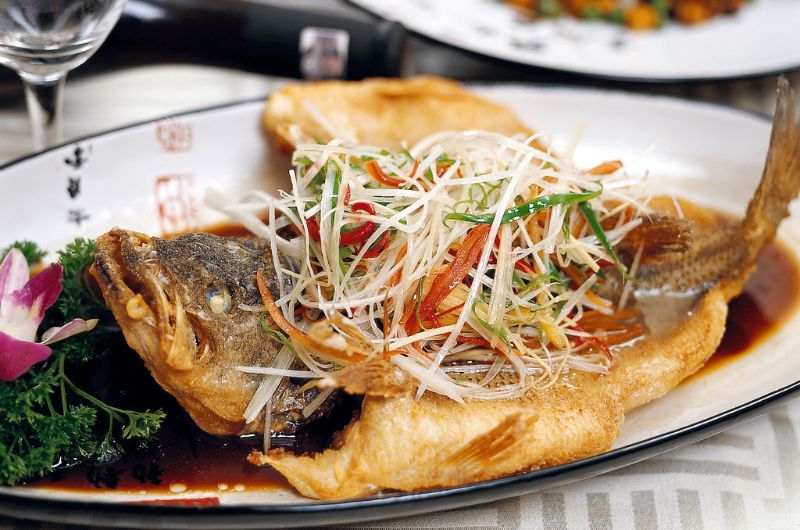
Steamed grass carp in vinegar is known as the most famous dish in the Hangzhou area. The taste of the fish is tender and goes really well with the sharp sweet and sour, vinegar-based sauce. The story goes that before cooking, a fresh alive grass carp is kept hungry in clear water for two days for cleansing, before being cut in half from head to tail (but not separated), delicately poached, and then served eyes-up.

Zhejiang Cuisine

Dongpo pork (Dongporou)

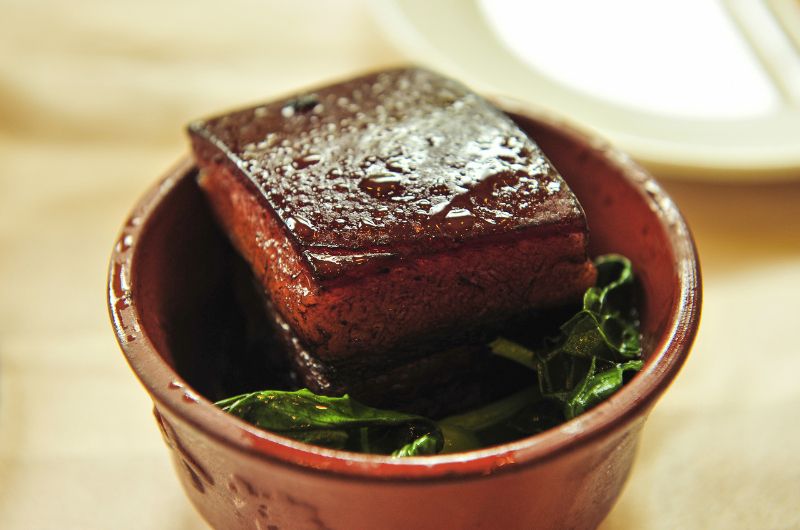
Whilst seafood is a major part of Zhejiang cuisine, the area also has some delicious meat dishes including Dongpo pork.  Dongpo pork is braised pork belly, made from half fatty, and half lean pork belly meat braised with a lot of Shaoxing rice wine. Legend says, the dish is named after a revered poet, calligrapher, and artist from the Song Dynasty, Su Dongpo, who is supposed to have invented, or at least inspired Dongpo pork as we know it.

Zhejiang Cuisine

Beggar’s chicken (Jiaohua Ji)

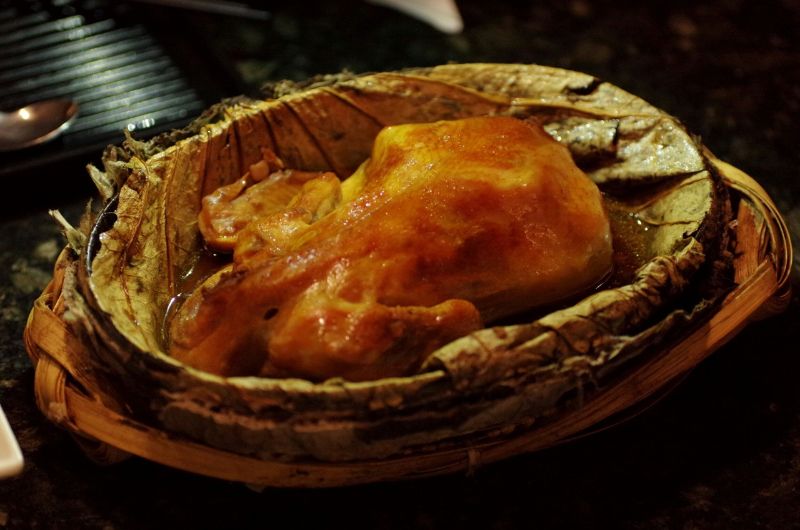
Did you know it can take six hours to prepare a single serving of Beggar’s chicken? Beggar’s chicken is chicken that is stuffed, wrapped in clay, and slowly baked at low heat. Rumour has it, a beggar stole a chicken from a farm. However, he didn’t have any pots or utensils, so he improvised. He wrapped the chicken in lotus leaves, encased it in mud, and buried it in a hole in the ground where he had lit a fire. After a while, he dug up the chicken and cracked open the mud, which revealed a delicious roasted chicken inside.

Stir-Fried shrimps with Longjing tea (Longjing Xiaren)

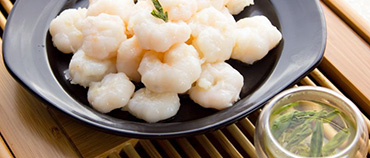
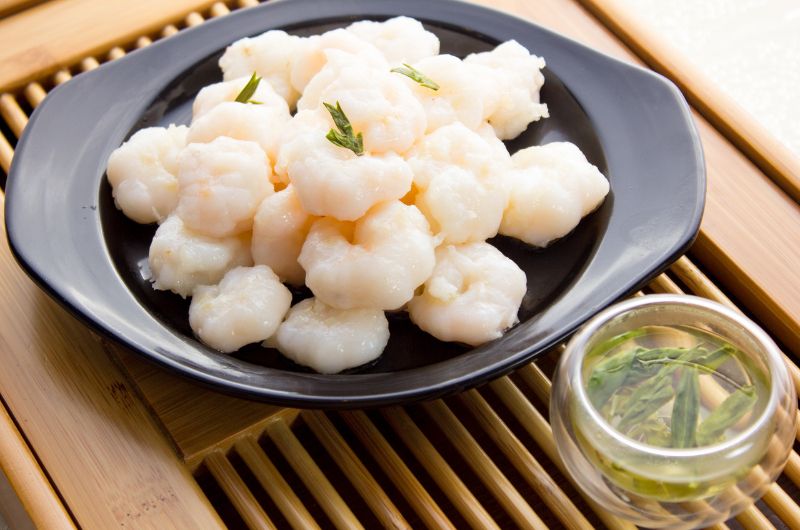
Stir-fried shrimps with Longjing tea is a delicacy originating from Hangzhou. It’s an elegant looking dish, with white and green colors, and light and fragrant flavors. Legend has it, an imperial chef mistakenly dropped some Longjing tea leaves while stir-frying shrimp for the emperor. A classic Zhejiang dish was born.

Explore the REAL China with ChinaTours.com

Want to experience the legendary flavors of Zhejiang cuisine? Our Hangzhou Tours cover the area’s highlights and give you the opportunity to explore the true taste of its exquisite cuisine. Book online or talk to our China tour experts today.

Looking for flexible China tour package options? ChinaTours.com can help. Our tours are designed to be flexible. We understand not everyone travels the same way. Some explorers enjoy their independence. Others like to travel with a group. The good news is the best China tours do both. Flexible travel options mean you can join a group tour for part of a tour and then travel independently to other destinations in China. And we can arrange every detail. Want to know more? Enquire now.

popular chinese dishes

10 Popular Chinese Dishes to Excite Western Tastebuds

popular chinese dishes

How do you come up with a list of just 10 popular Chinese dishes in a country with the diverse tastes and cultures of China?

With over 30 different provinces, municipalities, and autonomous regions, and multiple ethnic groups, it’s not easy. We do have an advantage though, ChinaTours.com provides popular tours throughout China and our outstanding local guides have helped put this list together sharing a few of their favorites among China’s myriad of delicious specialties.

List of most popular Chinese dishes

Want to eat like an emperor on your China tour? Sample at least one or two popular Chinese dishes from this carefully curated list of the top 10 and you’ll wonder why China’s fabulous food has been kept a secret so long.

1. Dongpo Rou (Bouilli)

popular chinese dishes

The poet Su Dongpo was made namesake of the dish Dongpo Rou, nearly a thousand years ago! And while Dongpo Rou maintains these fairly illustrious origins, over the centuries, this dish’s name has changed from province to province. In spite of the different interpretations, the elements of Dongpo Rou, or Bouilli, remain the same.

A premium pork belly, prepared in the traditional red cooking style, Dongpo Rou’s flavor comes from the tantalizing aroma of the brown sugar, soy, and wine special sauce. Slowly stewed in this sauce, these flavors delightfully balance the meat’s lean and fat elements, creating a truly mouth-watering experience.

Now that’s a mouthful!

2. Wonton

popular chinese dishes

Who doesn’t love a wonton? Those lovely soft, yet firm delicate bundles of flavor. Steamed, fried, or floating in broth, wontons are heartwarming and a staple in Chinese cuisine. Good enough to include in our list of the 10 most popular Chinese dishes.

Surprisingly, the humble wonton goes by many names, with each variation offering a unique flavor sensation reflecting the diversity of China’s many regions. Simple in form and filling, a wonton wrapper is made of premium flour through a process of fermentation and kneading. Made special with plentiful fillings, such as pork and other ground meats, shrimp, and fresh vegetables, there is a wonton for every taste.

Looking for a special kind of wonton? Try the chāo shǒu or ‘folded arms’ wonton from the Sichuan province, so named for the impression it gives of crossed arms, with its corners folded toward its center before cooking.

No matter where your journey takes you throughout China, you’ll always have ample opportunities to savor this popular Chinese morsel.

3. Dumpling

popular chinese dishes

A close cousin to the wonton, Chinese dumplings enjoy a history spanning nearly 2000 years. Apart from being made famous by dumpling lovers, Kung Fu Panda, dumplings truly are one of the most popular Chinese dishes and rightly deserve a spot among the top ten.

Consumed during festivals, particularly the Spring Festival and Winter Solstice, all of China shares in this symbolic delicacy. With links to good fortune and good health, we can understand why. Variety is key with Chinese dumplings. Find them stuffed with sugar, peanut, date or walnut. You may find yourself changing flavor on your China tour. Why? Well those who eat one with sugar, expect a happier life in the future. Eat date or walnut dumplings and you could be lining up for a beautiful healthy baby. More of a peanut dumpling lover. Expect good health and long life.

4. Mapo Tofu

popular chinese dishes

Typically Sichuan (code for hot and spicy), like many other popular Chinese dishes, Mapo Tofu has a story to it.

Legend has it, that Chen Mapo, owner of a Sichuan province restaurant in Chengdu, earned the name for her dish because of the distinctive freckles or Mazi on her face. Mapo Tofu’s long history – Chen Mapo lived at the time of the early Qing Dynasty (mid-1600) – continues today with locals and people all over China now enjoying this dish.

No China tour is complete without a taste of spicy Sichuan food, so why not start with Mapo Tofu. It’s hard to go past the fresh and tender tofu drizzled with a spicy chili sauce made of ground meat, wild peppers, and a broad bean paste. Each bite of tender tofu and savory minced meat combine to fascinate and enthrall the pallet. The Sichuan Sauce? It’s Delicious!

5. Century Eggs

popular chinese dishes

Century Eggs make it to #5 on our top 10 list. An exceptional and fragrant dish, famous among the locals of Henan, read on to learn why.

The Century Egg is a Chinese preserved delicacy prepared by curing quail, chicken, or duck eggs in a blend of cement and rice hulls for up to 12 months. Changing the color and the texture of the egg yolk, to be nearly translucent, the flavor of the eggs is sweet and comparable to a hard-boiled egg, only softer, with a strong aroma.

Visually, Century Eggs look more like exotic jellies than Chinese delicacies. Ideal for the culinary adventurer!

6. Sautéed Sweet and Sour Pork Tenderloin

popular chinese dishes

Western travelers in China could be forgiven for thinking they’ll finally have the opportunity to try ‘real’ Sautéed Sweet and Sour Pork Tenderloin (or sweet and sour pork). And you very well could on your China tour.

Considered to be the most popular Chinese dish in the world, Sautéed Sweet and Sour Pork Tenderloin, or Tangcu Liji, finds itself on menus all across the country, highlighting the versatility and regional flare from each province.

Built around the core ingredients of delicious pork tenderloin, along with sugar and vinegar, this dish has a very distinctive flavor. Combining sweet with sour, the irresistible taste of that crispy coating and tender meat will give your palate a rollercoaster ride of flavors. Popular in China and beyond, the sweet and sour flavor has made its way into many alternative dishes, such as Sweet and Sour Whole Fish (Tangcu Quanyu) and Sweet and Sour Ribs (Tangcu Paigu).

An absolute must-give-it-a-go dish!

7. Sautéed Diced Chicken with Peanuts and Chili

popular chinese dishes

Sautéed diced chicken with peanuts and chili, or Kung Pao Chicken, is certainly a famous Chinese dish at home and abroad. Countless restaurants in America, the U.K., and Australia are selling Kung Pao Chicken. However, few can replicate the stir-fried succulent chicken with peanuts, cucumber, and hot pepper that China has brought together to conceive this outstanding dish.

On a China tour? Add this to your most popular Chinese dishes list.

8. Chow Mein

popular chinese dishes

Stir-fried noodles? Chow Mein? Count you in, right?

A dish common among the locals of Northern China, and now the rest of the world, this dish of thin noodles made from a fine bean and cornflour dough, is often accompanied by a delicious yet affordable medley of egg, sliced meats, and an abundance of Chinese vegetables.

Be sure to ask your local guide for their best Chow Mein tip. Found in most restaurants across Northern China, you’ll want more than Chow Mein. You’ll be ready to chow down!

9. Peking Duck

popular chinese dishes

Experience the authentic Beijing cuisine that is Peking duck, renowned worldwide as an exquisite dish, fit for an Empress, and not surprisingly one of the most popular Chinese dishes.

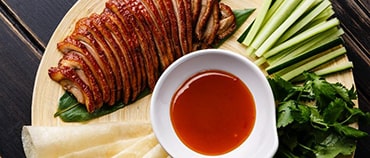
Invented during the Ming Dynasty, the Peking duck was a royal delicacy. In keeping with tradition, only the very best duck is chosen and roasted by fire. The tender, moist meat is covered by crispy, chewy skin. While being rich in fats, Peking Duck tends not to be overly greasy.

Along with sliced shallots, delicate pancakes made of millet flour, and a fermented flour sweet sauce, Peking Duck is a sensational culinary experience to try while visiting China.

10. Spring Rolls

popular chinese dishes

Traditionally a Chinese food common to China’s Southern provinces, spring rolls consist of sheets of dough and assorted fillings, including pork paste, peanuts, sugar, jujube paste, and sweetened bean paste to list but a few. Shallow fried until gold and crispy. The spring roll is a staple, containing a rich variety of nutritional fats, proteins, and carbohydrates with both locals and tourists adoring this dish. Worthy of its place in the 10 most popular Chinese dishes? You bet.

Tour with ChinaTours.com

What’s on the menu for your China Tour? The flexibility and freedom provided by ChinaTours.com mean that every traveler can experience a real taste of China. Talk to your local guide and take advantage of the free choice of lunch and dinner options to sample any or all of these top 10 most popular Chinese dishes.

Are you a culture aficionado who wants an authentic experience when you travel? The team at ChinaTours.com is too. Designing small group China tours, private and custom China tours is in our DNA. As a family-owned business, we’re committed to opening up a whole new world of China to Western travelers. We focus on giving our guests a genuine experience of the history, culture, and cuisine of China and the surrounding region in ways that build bridges and forge understanding between people. Ready for a China tour package made of beautiful travel memories? Talk to ChinaTours.com – the friendliest China tour company.

10 Things You Need to Know About Air Travel in China

Air travel in China is one of many ways to get around, and a great choice if you want to see a lot of the country within a time limit. Experience amazing bird’s eye views of China’s major cities, while saving time on traveling – it’s a win-win!

With two major Chinese airlines featured in the SKYTRAX top 10 airlines of the world, you know you’ll be in good hands when choosing air travel in China. Both Cathay Pacific and Hainan Airlines made it to this prestigious list in 2018, which is a true testament to the quality of their service and safety.

Important information about China air travel

Although most travelers enjoy the fast-paced experience of air travel in China, for some the excessive crowds and cultural differences may be overwhelming.

Want to know how to streamline your way around China’s many airports, airlines? Here are 10 things you should know about air travel in China.

1. These are the best Chinese airlines to travel with

Besides Cathay Pacific and Hainan Airlines, there are other major Chinese airlines well worth traveling with, such as Air China, China Eastern, and China Southern. All these major Chinese airlines offer quality onboard experiences, including friendly English speaking staff, various food and drink options, in-flight entertainment and frequent flyer programs.

In 2018, Hainan Airlines, China Southern, and China Eastern ruled the top 10 of best airlines in China.

2. Off-season air travel in China saves you money

We’re probably stating the obvious here, but traveling off-season can save you a lot of money in China. It even pays to look for last-minute flights during the off-season, as airlines sometimes offer discounts because of low sales volume or high cancellation rates.

When you’re on a budget, you may want to avoid traveling around China’s national holidays, such as Spring Holiday and Golden Week, as ticket prices go through the roof. However, if you insist on traveling around China in peak season, make sure you book your flights as early as possible to avoid paying a premium.

Choosing a connecting flight can also be a lot cheaper than direct flights in China. Want to make the most of a layover? Book one of our carefully selected visa free layover tours and catch a glimpse of some of China’s major cities on the go.

3. Excessive crowds on Chinese airports and how to avoid them

With literally millions of transient inhabitants, you can probably imagine how busy major Chinese airports can get. They literally team with people – all day and night. You may find your expectations around queuing challenged too. Typically, the Chinese do not tend to not form any lines, which makes Chinese airports a chaotic and very stressful place for foreign travelers.

So here’s a big tip that will keep you happy and sane in any Chinese airport lounge: arrive early and give yourself plenty of time to get to the gate. Avoiding national holidays is also a good way to avoid the crowds and losing your cool.

4. Know the restrictions for air travel in China

Air travel in China is a well-regulated process, and it’s important to understand what the baggage and security restrictions are before arriving at the airport. If you don’t, you may find yourself disappointed and having to explain yourself to the authorities.

Generally, when flying domestically, you’re entitled to one free checked bag, and one piece of carry-on luggage. However, the maximum baggage allowance varies by airline and travel class.

Unsure if the size or weight of your luggage will be approved? Check with your airline which unique baggage allowances are in place.

Before boarding an aircraft in China, passengers are subject to multiple security inspections. Both checked baggage and carry-on baggage will go through a thorough check to make sure you don’t bring any prohibited items on board. You will even be checked before you enter the airport itself. Any flammable, explosive, corrosive, poisonous, radioactive, polymerizable, and magnetized materials, firearms, and sharp or lethal weapons are strictly prohibited to take on board

You can find more information on the unique restrictions for air travel for each individual Chinese airline on their websites.

5. Be aware of the cultural differences

Especially as a first-time traveler to China, expect things to be a little different. Keep in mind that, even at major Chinese airports, you may not encounter many English speaking staff members, particularly at the shops in the terminal.

Even if they do speak English, you may not always receive the most helpful answers – everything is always going to be okay, even when it’s not. Understand it’s not bad will but it has something to do with the concept of face in Chinese culture.

The main advice is to be tolerant and patient when talking to airline staff. Being positive goes a long way!

6. Delays are standard in China

China’s airports may be some of the world’s most modern and elegant, however, there is one area where they are world leaders – and that’s flight delays! The frequent China flyer knows instinctively to add 30 to 60 minutes to the duration of the flight. In fact, you can expect your flight to be delayed by hours. When traveling in China, you find the perfect opportunity to develop a Zen-like acceptance of running late, because, frankly, flights in China seldom leave or arrive on schedule.

One of the reasons for China’s poor record of flight delays, is China’s airports are struggling to accommodate the continuously growing number of passengers. Another reason is poor weather. Airlines in China are much more likely to delay or even cancel flights due to a rainstorm.

Air travel in China is all about flexibility and keeping an open mind. If you end up getting stuck on a Chinese airport because of a delay, go on a visa free day tour and make the best of a (perhaps not so) unfortunate event.

7. Onboard meals as a cultural experience

Even though airplane food is never that good, some Chinese airlines offer reasonable meals on board. We won’t go as far as suggesting those in-flight meals are gourmet Chinese cuisine, however, they do reflect local culture.

On request, most Chinese airlines also offer Western, vegetarian, vegan, halal, and kosher meals. Just be sure to order your meals in advance to avoid disappointment.

8. Stay connected in China

Your beloved Facebook, Google, or WhatsApp are not accessible in China but if you really insist on letting your loved ones know your whereabouts, consider using WeChat. Now well and truly part of life in China, you can connect with family back home with a WeChat account. And you can pay for just about anything using WeChat too.

9. Short on time? Explore these visa free cities in China

Got a long layover in one of China’s 27 visa free cities? Why not make the most of your trip and explore the city on one of our meticulously planned visa free tours.

Our visa free tours take you on a short one to six day tour cities like in Beijing, Xi’an, Shanghai, Hangzhou, Guangzhou, or any other visa free city in China. A great way to check out the highlights of Shanghai or catch a glimpse of Guangzhou.

10. Let ChinaTours.com make your life easier

Still feeling a little overwhelmed about air travel in China? Our China tour experts are here to make your life easier. We offer a wide range of China tour packages, flights included so you don’t have to go through the booking-overwhelm.

The best way to discover the most beautiful places in China is to talk with people who can provide a real experience of this diverse and fascinating country. ChinaTours.com can help plan, organize, and deliver every detail of your China tour, including flights, accommodation, where to go, what to see, foods to savor, and experiences to remember. Whether you love big cities, history, culture, or want to get off the beaten track, we’ll make it happen. Travel with us and see the real China. Enquire now.

Beijing Shanghai tour

Beijing to Shanghai: make the most of travel between China’s great cities

Beijing Shanghai Tour

First time to China and want to travel from Beijing to Shanghai? Not sure how about the best ways to travel?

China is such a diverse, exciting and fascinating country – and it can be confusing. If it’s your first time visiting, the challenge is not only deciding where to go, but how to get there.

If time is a limiting factor, it’s hard to go past Beijing and Shanghai.

Of course, creating the ideal China tour itinerary from Beijing to Shanghai depends on many factors: your travel budget, tour duration, personal interests, and whether you do a small group, private or custom tour.

If it’s your first visit to China, you’ll no doubt have lots of questions. So let’s look at what can impact your China tour from Beijing to Shanghai that way you can plan the best itinerary for your with confidence.

Travel budget – Making the most of your travel dollars between Beijing to Shanghai

With a myriad of China tour options available to suit the budget of any Western traveler, it’s possible to find exactly what you want.

While budget travel suits some, those who prefer to travel in comfort will be pleasantly surprised with what China has to offer. As the country has advanced at breakneck speed over the past two decades, four and five star hotel accommodation and air, rail and road travel options abound.

Small group China tour packages between Beijing and Shanghai are one great option that combine four and five star travel at great value for money. Short on time? Then take the shortest route and travel straight from Beijing to Shanghai. However, if you’re looking for more China adventure, then make must-see stops along the way in other cities like Xi’an and Chengdu. Or take the road less traveled and visit beautiful natural destinations like Guilin, Zhangjiajie, and Huangshan.

Be sure to book your China tour with a company that allows you the flexibility to integrate more China cities to make the most of your travel budget.

Beijing Shanghai Tour

Tour duration – The fastest way to make the most of a Beijing to Shanghai trip

A major factor for most western travelers who visit China is the distance traveled just to get there, so tour duration is a major consideration, even if it’s only between two cities.

At just over 1,300 kilometers apart, travel from Beijing to Shanghai can be made quickly, via air or China’s fantastic network of high speed trains. In fact, travel by one of these new trains, which moves at speeds up to 350 kilometers per hour is a must. Offering the perfect way to see much more of China and how it’s developing and changing, the train trip between Beijing and Shanghai is done in less than four and a half hours. This is mind-boggling given the time it takes to transfer between hotels, airports, and check-ins. Definitely consider it as an option for making the most of your time on tour, especially if you only have a few days to see the highlights of these great cities.

With a longer tour duration, the pace of your travels can be more relaxed. Whether it’s eight days11 days or 16 days, it’s possible to combine air, rail, and even road travel to truly make the most of every available minute.

For this kind of travel, you can’t go past China private or custom tours. Even with a pre-arranged small group tour schedule, private or custom tours offer the advantage of being able to tailor the full duration of your tour from start to finish. That means, even if you want a side step to Suzhou on the way to Shanghai, you can do that. Looking for an authentic step-back-in-time experience in the rice fields at Longji? That can happen too.

Knowing you’re on limited time while traveling booking well in advance and seeking advice from experienced travel consultants is a worthwhile investment. It helps avoid surprises – and disappointments – while on tour, whether you’re in China for three days or three weeks.

Beijing Shanghai Tour

What about a tailored Beijing to Shanghai tour

If there’s one thing to learn about travel in China, it’s that your every need can be met. In fact, it’s why the premium China tour providers provide the option of tailored tours. They understand the importance of personalized itineraries and cater specifically to the individual needs of each traveler.

With a strong orientation towards providing a premium (and truly memorable!) experience of China, there’s much to be said for a China travel agency who’s prepared to go the extra mile simply because no detail is too small to take care of. If there’s one thing these China tour operators do well it’s service. Be sure to look for unfiltered tour reviews from previous customers. These are a great indicator of what to expect while on tour, even on a short Beijing to Shanghai trip.

Need more guidance? Don’t let the size of China overwhelm you about how to plan your China tour. Get help from a China tour expert and enjoy every moment of your travel experience.

Come Tour With Us

ChinaTours.com is a leading provider of China tours. With the experience of designing and creating China tours for over a decade, they know how to create beautiful travel memories for Western travelers wanting a real experience of China. Providing unique small group, private and custom tours between Beijing and Shanghai – and any other China destination is what they do. Let a dedicated China tour travel consultant plan your tour today. Connect online via our inquiry form or explore our China destination tour options.

Daxing International Airport

Flying to Beijing? Discover 7 surprising facts you should know before touching down at Beijing’s new Daxing International Airport

Daxing International Airport

Flying into Beijing’s new Daxing International Airport, you could be forgiven for wondering how everyone managed with the original international airport in this city.

Touted as the world’s largest and most expensive airport at $63 billion, ‘the Phoenix’ as it is known, is setting new standards in airport design and functionality. Whether you regard it as a symbol of success as the Chinese do, or a sign of renewal, there’s no doubt this Phoenix is going places.

Beijing Daxing International Airport was officially opened just prior to China’s 70th anniversary. With a build time of five years, a 7.5 million square foot terminal, currently handling 300 flights every hour, and a future capacity for 100 million passengers annually by 2040, Daxing stacks up with some impressive statistics.

More than just a place for planes to come and go, Daxing International Airport is considered a mega-airport. In time, pundits believe it will rank right alongside Singapore’s Changji and Qatar’s Hamad airports, and with good reason.

We’ve put together this list of seven surprising facts you should know before you land in Beijing to kick off your China tour.

Daxing International Airport

#1  Daxing International Airport: The airport you build when one is not enough

Nobody would argue that China is a super busy place, not least because of the sheer number of people.

Add to the nearly 1.5 billion people who live there, inbound foreigners to the country for business, personal, and tourism purposes (estimated at around 30.5 million a year and growing), and it’s easy to see how infrastructure – like the original Beijing international airport could be stretched.

It was this realization which prompted the development of the new Daxing International Airport.

Interested in more Daxing International Airport trivia? Check out these fun facts.

#2  Inspired design is at the heart of the Daxing Airport 

The unusual airport design was created by female architect Zaha Hadid. In her words, the airport design “evolved from principles within traditional Chinese architecture that organise interconnected spaces around a central courtyard”.

Some will say the main building’s likeness to a phoenix is a stretch and that it’s more like a starfish or hand, however this is a debate on semantics. Wherever your imagination takes you, there’s no doubting the building profiles the late architect’s signature curvilinear designs, which also features many elements of sustainability and green design.

You can visit Daxing Airport and feel reassured that careful consideration has been given to environmental concerns.

#3  Advanced technologies make Daxing Airport the departure lounge of the future

Fifty years ago we could only dream about robots that provide customer service and facial recognition technology, however at Daxing Airport, these advanced technologies are de rigueur. Facial scans will be used for flight check-ins and airport security checks. Airline staff will even use it to help passengers find their seats.

And the futuristic technology doesn’t stop there.

Check in or arrive at Daxing on any given day and you’ll find real time baggage tracking, paperless boarding, renewable energy via ground source heating and solar energy. In fact, renewable energy represents over ten percent of the total amount of energy used at the airport (more than any other in China).

There will also be a 5G base station where you can while away the minutes and hours as you wait for your flight. Expect to power up your experience with augmented reality, cloud computing, and other technologies. Overall the approach to technology here is to create an integrated system that is available to travelers, airlines, and airport officials.

#4  Daxing Airport is user-friendly

Arrive at any major international airport and you’ll know the challenge it is to travel between terminals, especially when you have a connecting flight to catch. Daxing Airport solves that problem.

As a single terminal airport, there is no need to commute between terminals. In fact, the distance between security checkpoints to the furthest departure gate is just 600 meters – less than eight minutes’ walk.

#5  Did someone say airport shopping?

Somehow everything in airport shops looks just that little bit shinier and appealing, doesn’t it? The creators of Daxing Airport must know it too.

Shopping here at Daxing has been taken up a notch. Expect to find regular duty free options combined with luxury and fashion brands.

Sound like fun? Well, don’t say we didn’t warn you! Just be sure to hang onto some spending money for your trip!

#6  Daxing Airport is easy to reach

China’s experience at moving huge volumes of people via its massive train network is paying off.

Planners have brought that knowledge to bear on the railway connecting the airport. Incredibly, you’ll complete the trip from Caoqiao Station in Beijing to Daxing Airport in just 19 minutes on a self-driving train traveling at speeds up to 160 kilometers per hour.

But wait. There’s more!

Daxing Airport is connected underground too, with the Beijing-Xiongan intercity railway. Plans are already underway to extend these connections to link with Tianjin in the very near future.

Quite simply, it’s all part of a grander plan to bring development to the wider region, particularly southern Beijing, Tianjin and Hebei.

#7  Who’s making Daxing International Airport their home?

Planning a trip to China and landing at Daxing? Expect to find big names in airlines making it their home.

It’s reported that China Eastern Airlines is expanding its operations and customer base through its partnership with Delta, Air France and other Skyteam members. American Airlines, British Airlines, and 10 domestic carriers are also moving operations to Daxing, drawn by the appeal of everything that’s shiny and new.

Final word on the runway

Daxing International Airport is setting the standard for airports all around the world. With its design, technology, attention to green building principles, and creating a user experience beyond compare, arriving here for a China tour certainly sets the scene for what’s to come.

Traveling to and from Daxing International Airport is simple.

By Train:

Depart from Caoqiao station near the South Third Ring Road, take the 160km/hour train to Daxing Airport. Arrive at floor B2 floor in less than 20 minutes.

By Car:

Drive from South Fifth Ring Road along the Daxing Airport Expressway for 27 kilometers and arrive at Daxing within half an hour.

By Jingxiong Intercity Railway:

Travel from Beijing West Railway Station in Beijing CBD and arrive at Daxing International Airport in 20 minutes.

ChinaTours.com understands the importance of creating memorable and unique experiences for our customers. We’re excited to be welcoming travelers at Daxing International Airport and feel our approach to taking care of customers is closely aligned. Having designed and delivered China tours specifically with the needs of western travelers in mind, our insights to creating the very best China tours are unsurpassed. Whether you seek a custom or private tour, or are happy to travel in one of our small group tours (maximum 12 travelers), we’re committed to creating beautiful travel memories for our guests. If you’re ready to enjoy China’s rich history, culture, cuisine and people, we’d love an opportunity to be of service and welcome you to Beijing when you arrive at Daxing.

Wechat and wechat pay

How to use WeChat and WeChat Pay: Everything western travelers need to know on a China tour

wechat pay

WeChat and WeChat Pay are part of everyday life in China.

For those who may not be aware, WeChat is a social media giant in China. With a billion users and counting, the next logical step for this mega platform was the introduction of cashless payments via WeChat Pay.

Interested to learn how this can affect you on a China tour?

We’ve got everything you need to know right here.

What is WeChat Pay?

WeChat Pay is one of China’s two foremost e-payment platforms. Together these platforms are used by 90 percent of the population. Making everyday transactions super simple, WeChat Pay and Alipay  have changed the way merchants sell and buyers pay for products and services in China.

Now progress is a wonderful thing, but there are a few challenges around payments that many western travelers experience while visiting on a China tour.

One big impact to be aware of through the proliferation of these platforms is that China moving closer to becoming truly cashless. (Incredibly, even street vendors use WeChat Pay.)

This is great if you’re a local in Beijing tucking into your breakfast of Qingfeng steamed dumplings, but what if you’re a western traveler on a China tour. What’s the best way to pay, given there’s a move away from cash, and even some credit or debit cards aren’t accepted?

Breathe easy because WeChat Pay can help.

The owners of WeChat Pay have finally realised the opportunity and now have an option for foreign travelers.

In 2019 WeChat Pay announced visitors can add foreign credit cards to WeChat, allowing them to make mobile payments in China. Considering how much easier it is to buy just about anything in China using WeChat Pay, this is a big step forward.

Ready to download the app? Let’s go!

#1:WeChat and WeChat Pay for foreigners

Fortunately, using WeChat and WeChat Pay is simple. But just to be sure you’re across everything you need to know, we’ve outlined every step right here.

Download WeChat from the App Store or Google Play. Complete registration, login and open up on your phone.

Click “Me” on the bottom menu to find “Pay and Services”, where you can click on “Wallet” to choose “Bank cards” and add your card to WeChat.

As of April 2024, overseas users can easily sign up a WeChat account using their local mobile number and link the international payment cards to WeChat Pay. Accepted cards include Visa, MasterCard, American Express, Discover, Diners Club, and JCB issued outside of mainland China.

Now you’re ready to buy your own dumplings in Beijing! Even make payments to the merchants of dining, shopping, accommodation, transportation, entertainment, and so much more.

Find more detailed information at:

https://www.tencent.com/en-us/media/weixin-pay.html

https://www.tencent.com/en-us/articles/2201831.html

#2:Shopping with WeChat Pay

Whether you’re shopping in a Shanghai department store on Nanjing Street, hailing a taxi in Beijing, or buying specialty food in Chengdu, you can use WeChat Pay to make your purchase.

To make things as easy as possible, WeChat Pay offers two ways to make purchases.

One option is the store or vendor can scan your unique WeChat barcode. Alternatively you can scan the barcode of the merchant you are buying items or services from.

Just click ‘+’ on the upper right corner on Chat page to find the options. Check out the image below to see where to navigate to in the app.

wechat pay

#3:There’s more to WeChat than making payments

WeChat was originally set up as a social media platform, so it naturally offers all the functionality that allows users to connect with friends and colleagues.

In China and want to connect with other travelers on your tour? Why not add a friend or two? This is super simple to do.

Simply select the ‘Chat’ or ‘Contacts’ tab at the bottom of your screen, tap on the ‘+’ icon in the upper right corner, and choose “Add Contacts”.

You can then search for people — or businesses — by phone number or WeChat ID, then add them to your network by hitting the “Follow” button.

wechat pay

There are other easy ways to add friends, like scanning their QR codes. That’s right, everyone gets their own WeChat QR code.

Access your QR code by selecting the “Me” option and tapping the QR code icon. You can scan the code with the built-in QR reader that can also be found in the ‘+’ icon.

wechat pay

#4:You’re now ready to connect with your China tour network

WeChat is a great way to connect with other people on your China tour and to stay in touch with your China tour organizer and tour guide.

Ready to chat? Here’s how you do it.

Simply tap on the person you want to talk to in your contact list. You can do this by typing or even recording a minute long audio message. This is perfect if you want to make or confirm arrangements while you’re traveling. It’s easy and quick too.

And if you’ve changed your mind, no problem. One great WeChat feature is you can even recall a sent message if you take action within the first two minutes of sending.

Need translation. WeChat is multilingual too. It will translate messages if they aren’t in your preferred language.

Both these features can be accessed by tapping and holding a message, which will bring up a list of different options.

When you tap the ‘+’ icon at the bottom right corner, a function menu will be displayed where you could find icons to take and share photos and videos, share your location, transfer money, make a voice or visual telephone.

The image below shows how this works.

wechat pay

#5:Chatting with a group on WeChat

Want to connect with your whole tour group at once? WeChat will let you do that.

Tap on the ‘+’ icon at the top right corner, then ‘New Chat’, and choose all the people who want to talk in this group. Booking a tour group dinner has never been easier!

wechat pay

#6:WeChat can do more than connect and pay

WeChat is a platform that does more than connect and pay.

When you have a few spare minutes – perhaps waiting for that high speed train to Xian or your flight to Shanghai – explore WeChat’s other functionality.

In the Discovery menu, you can share photos and videos and articles just like you would in the ‘Moments’ function on Facebook.

WeChat is also home to other functions, which can be found in the ‘Mini Programs’ menu. It’s here you’ll find the tools to shop, order take-away, book tickets, vehicles, delivery services – pretty much anything you can think of.

wechat pay

WeChat and WeChat Pay are ideal for taking on a China tour

Using WeChat and WeChat Pay while traveling on a China tour can make things easier to manage and navigate. They provide a seamless way to connect and pay – and you’ll feel like a local. Furthermore, you can take public transport in China by using WeChat Pay.

ChinaTours.com is dedicated to helping western travelers enjoy a genuine experience of China. We constantly strive to find ways that enhance the tour and enrich the tour experience. While you travel with us, we want you to feel connected and cared for. We believe that staying in touch with your tour guide helps contribute to that level of care and provides peace of mind. WeChat is just one tool that can help. If you’d like to learn more about how we design and deliver China tours, we’d love to hear from you. Enquire via our contact form and we’ll respond within 24 hours.