WeChat and WeChat Pay are part of everyday life in China.
For those who may not be aware, WeChat is a social media giant in China. With a billion users and counting, the next logical step for this mega platform was the introduction of cashless payments via WeChat Pay.
Interested to learn how this can affect you on a China tour?
We’ve got everything you need to know right here.
What is WeChat Pay?
WeChat Pay is one of China’s two foremost e-payment platforms. Together these platforms are used by 90 percent of the population. Making everyday transactions super simple, WeChat Pay and Alipay have changed the way merchants sell and buyers pay for products and services in China.
Now progress is a wonderful thing, but there are a few challenges around payments that many western travelers experience while visiting on a China tour.
One big impact to be aware of through the proliferation of these platforms is that China moving closer to becoming truly cashless. (Incredibly, even street vendors use WeChat Pay.)
This is great if you’re a local in Beijing tucking into your breakfast of Qingfeng steamed dumplings, but what if you’re a western traveler on a China tour. What’s the best way to pay, given there’s a move away from cash, and even some credit or debit cards aren’t accepted?
Breathe easy because WeChat Pay can help.
The owners of WeChat Pay have finally realised the opportunity and now have an option for foreign travelers.
In 2019 WeChat Pay announced visitors can add foreign credit cards to WeChat, allowing them to make mobile payments in China. Considering how much easier it is to buy just about anything in China using WeChat Pay, this is a big step forward.
Ready to download the app? Let’s go!
#1:WeChat and WeChat Pay for foreigners
Fortunately, using WeChat and WeChat Pay is simple. But just to be sure you’re across everything you need to know, we’ve outlined every step right here.
Download WeChat from the App Store or Google Play. Complete registration, login and open up on your phone.
Click “Me” on the bottom menu to find “Pay and Services”, where you can click on “Wallet” to choose “Bank cards” and add your card to WeChat.
As of April 2024, overseas users can easily sign up a WeChat account using their local mobile number and link the international payment cards to WeChat Pay. Accepted cards include Visa, MasterCard, American Express, Discover, Diners Club, and JCB issued outside of mainland China.
Now you’re ready to buy your own dumplings in Beijing! Even make payments to the merchants of dining, shopping, accommodation, transportation, entertainment, and so much more.
Whether you’re shopping in a Shanghai department store on Nanjing Street, hailing a taxi in Beijing, or buying specialty food in Chengdu, you can use WeChat Pay to make your purchase.
To make things as easy as possible, WeChat Pay offers two ways to make purchases.
One option is the store or vendor can scan your unique WeChat barcode. Alternatively you can scan the barcode of the merchant you are buying items or services from.
Just click ‘+’ on the upper right corner on Chat page to find the options. Check out the image below to see where to navigate to in the app.
#3:There’s more to WeChat than making payments
WeChat was originally set up as a social media platform, so it naturally offers all the functionality that allows users to connect with friends and colleagues.
In China and want to connect with other travelers on your tour? Why not add a friend or two? This is super simple to do.
Simply select the ‘Chat’ or ‘Contacts’ tab at the bottom of your screen, tap on the ‘+’ icon in the upper right corner, and choose “Add Contacts”.
You can then search for people — or businesses — by phone number or WeChat ID, then add them to your network by hitting the “Follow” button.
There are other easy ways to add friends, like scanning their QR codes. That’s right, everyone gets their own WeChat QR code.
Access your QR code by selecting the “Me” option and tapping the QR code icon. You can scan the code with the built-in QR reader that can also be found in the ‘+’ icon.
#4:You’re now ready to connect with your China tour network
WeChat is a great way to connect with other people on your China tour and to stay in touch with your China tour organizer and tour guide.
Ready to chat? Here’s how you do it.
Simply tap on the person you want to talk to in your contact list. You can do this by typing or even recording a minute long audio message. This is perfect if you want to make or confirm arrangements while you’re traveling. It’s easy and quick too.
And if you’ve changed your mind, no problem. One great WeChat feature is you can even recall a sent message if you take action within the first two minutes of sending.
Need translation. WeChat is multilingual too. It will translate messages if they aren’t in your preferred language.
Both these features can be accessed by tapping and holding a message, which will bring up a list of different options.
When you tap the ‘+’ icon at the bottom right corner, a function menu will be displayed where you could find icons to take and share photos and videos, share your location, transfer money, make a voice or visual telephone.
The image below shows how this works.
#5:Chatting with a group on WeChat
Want to connect with your whole tour group at once? WeChat will let you do that.
Tap on the ‘+’ icon at the top right corner, then ‘New Chat’, and choose all the people who want to talk in this group. Booking a tour group dinner has never been easier!
#6:WeChat can do more than connect and pay
WeChat is a platform that does more than connect and pay.
When you have a few spare minutes – perhaps waiting for that high speed train to Xian or your flight to Shanghai – explore WeChat’s other functionality.
In the Discovery menu, you can share photos and videos and articles just like you would in the ‘Moments’ function on Facebook.
WeChat is also home to other functions, which can be found in the ‘Mini Programs’ menu. It’s here you’ll find the tools to shop, order take-away, book tickets, vehicles, delivery services – pretty much anything you can think of.
WeChat and WeChat Pay are ideal for taking on a China tour
Using WeChat and WeChat Pay while traveling on a China tour can make things easier to manage and navigate. They provide a seamless way to connect and pay – and you’ll feel like a local. Furthermore, you can take public transport in China by using WeChat Pay.
ChinaTours.com is dedicated to helping western travelers enjoy a genuine experience of China. We constantly strive to find ways that enhance the tour and enrich the tour experience. While you travel with us, we want you to feel connected and cared for. We believe that staying in touch with your tour guide helps contribute to that level of care and provides peace of mind. WeChat is just one tool that can help. If you’d like to learn more about how we design and deliver China tours, we’d love to hear from you. Enquire via our contact form and we’ll respond within 24 hours.
How much does it cost to travel to China? is a bit like asking ‘How long is our favorite noodle?’.
While it’s not impossible to answer this question, because there are so many variables, it can be hard to give a definitive answer that meets every traveler’s needs.
So, to keep things simple, we’ve decided to break down the answer to the trip-to-China-cost question for all those people who are ready to take a China tour adventure. In this article we’ve shared our best and brightest insider tips gained over a decade of helping our lovely customers create beautiful travel memories.
Feet feeling itchy and ready to flash your travel passport?
Let’s jump in!
Is it expensive to travel to China?
Comparatively speaking, once you’ve arrived in the Middle Kingdom (that’s China), you’ll find expenses are considerably lower than in most developed western countries. You can thank the lower cost of labor and relatively low unemployment. Consequently, expect to get more bang for your buck when you’re traveling or shopping. Of course, be sure to check the exchange rate, which can be calculated quickly via a smartphone app, before making any purchases so you can be confident you’re getting everything you expect.
How much does it cost for a flight to China?
An international air ticket to China from the USA ranges from USD1200 to USD1500.
Looking to save your cash for all those take home travel mementos? Perfect! Choose a flight with stopovers, because there are savings to be made. Make the most of your extra dollars by enjoying an in-country layover somewhere else en route (bonus!) or save the cash for special experiences when you arrive in China. And remember the insider’s secret weapon for the best cost for a flight to China: Book early and save!
Is eating in China expensive?
Most western travelers don’t realize just how fabulous Chinese food is – until they arrive – and then start sampling real Beijing Duck, authentic Sichuan hot pot, and genuine Xiao Long Bao dumplings (we’re getting hungry just writing this!).
Not only is it really good, it is incredibly inexpensive too. There is a super abundance of options, from street food stalls to Michelin star fine dining, however a good rule of thumb is to allow USD20 to USD40 for a meal in a regular restaurant.
Unlike a western dinner, a typical Chinese meal involves more than one dish. You might start with a wonton noodle soup (USD3 – USD5), follow it with a plate of dumplings (USD1 – USD5), then round it out with fried rice (USD2 – USD5) and a dish of Sichuan chilli chicken and some sweet and sour pork (USD5-6, USD4 to USD10).
What does it cost to travel around China?
Once known as the land of bicycles, modes of transport in China have certainly evolved in keeping with the country’s almost unceasing march towards development.
The country’s high speed train network crisscrosses the land as it continues to expand. This has made traveling between China’s cities an enjoyable, eye-opening, and totally affordable experience.
From Beijing to Xi’an, roughly a 5 hour trip covering 1,200 kilometers, expect to pay about USD80 for a second class seat. From Xi’an to Chengdu – about 600 kilometers and a duration of four hours, a second class ticket is about USD40. The great thing about train travel is that unlike air travel, ticket prices don’t fluctuate between high season and low season.
Domestic flights in China are generally on relatively new aircraft, however, ticket prices are still surprisingly low. From Beijing to Xi’an, an economy class ticket is usually about USD120. Keep in mind, though ticket prices will be higher or lower depending on the time of day and whether you are traveling in high or low season.
Getting in and around a city is easy too simply because there are so many choices. By way of example, if you take a taxi in Beijing, the starting price is USD2 for the first three kilometers, then USD0.30 per kilometer thereafter. The local version of Uber, called Didi is another option for those not wanting to take advantage of the exceptional Metro rail system, which is fast, cheap, and designed to move millions of people everyday. And if none of these suit, take a bus. These are by far the cheapest way to make your way around a city.
What is the cost of accommodation in China?
If you think it’s expensive to stay in hotels in China, think again. Comparative hotel accommodation is nowhere near as expensive as it is in other countries. While you can expect to enjoy the same quality and level of hotel in a similar inner location, you’ll discover the price is vastly different. A five star hotel in Paris is roughly USD500 per night; in Tokyo, about USD400 per night; and in Beijing – the same hotel is about USD250 per night. As you’d expect, the difference is reflected at the four star level too, with per night prices for Paris, Tokyo and Beijing around USD230, USD200, and USD120 respectively per night.
Shopping cost in China
As the origin of so many consumables around the world, it’s hardly a surprise that a shopping experience in China is really something else. With every conceivable item available to buy, ‘made in China’ means you’re limited only by your imagination. This means good value buying on anything from kids’ toys to high end electrical goods. You can even have your clothes (including that must-have suit or wedding dress) tailor made and buy luxury brand items, like designer sunglasses or prescription glasses. Expect excellent quality, but at significantly less cost.
With all that said, we’ve found most western travelers are looking for something a bit special; a travel memento or two they can take home as a treasure from their trip. Fortunately, there is plenty to choose from: exquisite silk, delicate porcelain, wonderful tea. Whatever it is you’re looking for, we’re certain you’ll find it shopping in China.
What is the cost of a tour in China?
There are so many variables to determine the cost of a tour: Budget, personal interests, duration, destinations, whether you want a small group, private, or custom tour. Fortunately, we have all bases covered.
ChinaTours.com offers tours in China from a half or full day trip to multi-city tours that extend beyond two, three, or even four weeks if you’re up for adventure. As a point of reference, an 8 day small group tour including time in Beijing, Xi’an, and Shanghai staying in 4 star hotels for a couple will cost around USD3,400 (not including international flights). For a private tour, the cost is closer to USD4,200.
How much pocket money/cash should I take on a China tour?
To say that China is leading the way with the shift to a cashless economy is an understatement. You’ll quickly discover that even street food stall holders accept payment via WeChat Pay and AliPay. While this is great for locals, the convenience isn’t so available to western travelers, although we do recommend installing WeChat Pay on your mobile because it does provide some flexibility for making payments.
The good news is credit cards are accepted widely throughout China, although a certain amount of cash is a necessity. Let’s say you’re traveling on the 8 day Beijing, Xi’an and Shanghai tour, allow for USD1000 to buy small souvenirs, handcrafts, meals, and pay gratuities to guides and drivers in every city.
Whether you’re a savvy traveler or a first time visitor to China, doing your research is the best way to make the most of your trip to China. Be sure to get the information you need on travel costs, including hotels, tours, food, and experiences from people who truly care about your holiday. Talk to the ChinaTours.com team. We’re travelers too, and we’re committed to helping you create beautiful travel memories that endure long after you’ve arrived home. We welcome online enquiries via direct contact, with responses delivered within 24 hours.
The ultimate bucket list of best places to visit in China would be as unwieldy as a Chinese New Year dragon if it wasn’t for the input and help from our ever reliable team of travel consultants and guides.
Even while international travel remains on hold, we sense the travel dreams for many of our customers are bubbling away. And with so much time to plan and scheme, why not? In fact, now is the perfect time to design a tour that includes the best places to visit.
After all, how many times have you found yourself on a tour and wondered why you’ve been taken to a certain destination or highlight? Even if it’s only been once, we figure it’s one time too many – so we’ve come up with this list: Best places to visit in China.
It’s been designed with the savvy western traveler in mind.
You won’t find sights and highlights that leave you wanting more. No, instead, you’ll have the ultimate list of best places to visit in China, allowing you to travel virtually right now in preparation for the real thing when borders reopen.
Ready? Let’s go!
Beijing
Beijing is a must-visit destination on any first time tour to China and with this city of power, politics, and ceremony comes a ‘best of’ selection of iconic China highlights.
#1 The Great Wall
It’s virtually impossible to separate China from its most well-known landmark, the Great Wall. Stretching more than 20,000 kilometres west of the mountain ridges north of Beijing, travelers can access this UNESCO World Heritage listed highlight from many locations. Our preference is for the Mutianyu section of the wall because it is less frequented than other sites close to Beijing (it’s an easy 90 minute drive away). The Mutianyu section of the wall is unique for its military watchtowers, which provide travellers with incredible views across the mountains outside Beijing, just as it did for soldiers and sentinels in centuries past.
As wonderful as Mutianyu is, there is more to the Great Wall and we love introducing other sections to our customers. If adventure is your thing, then consider a hiking tour. Maybe you’re a photographer and looking for the ultimate in lasting travel memories. Then consider visiting the Jinshanling and Simatai sections with its steep ridges and endless views. Regardless of what you’re looking for, we can create exactly what you’re looking for.
#2 Forbidden City
Standing as a remarkable example of design, engineering, and planning, the Forbidden City is truly ‘something else’. Located at the heart of Beijing, this centuries old imperial palace from the Ming and Qing dynasties is an amazing demonstration of Chinese royal architecture. Without doubt, it is the best place for gaining an insight to imperial culture and the glorious court life of feudal society in China. It now serves as home to the Beijing Palace Museum, where a collection of over one million pieces of precious relics is housed.
#3 Temple of Heaven
Covering an area four times the size of the Forbidden City, the Temple of Heaven was a royal site used by emperors to worship heaven in the hope that it would bring a good harvest and prosperity for the country. You will marvel at the deep thought, design, and symbolism which are a feature of the whole area that makes up the Temple of Heaven. Balance and symmetry reign supreme here, leaving you in no doubt as to the brilliance of those behind its construction. Enjoy the surrounding parklands, where you’ll discover other buildings and age-old cypress trees. A stand-out highlight here is the rebuilt Hall of Prayer for Good Harvests, which was built using the ancient – but highly sophisticated – method of mortise and tenon joints in which no nails are used. First erected in 1420, a fire that razed it to the ground in 1889 meant reconstruction was necessary.
#4 Summer Palace
More imperial grandeur is to be found at The Summer Palace, located about 15 kilometres northwest of Beijing’s city centre. The Summer Palace has a well-earned reputation as the largest and best-preserved imperial garden in China, and is rightly listed as a World Heritage Site by UNESCO. First built in 1153, the palace garden was the summer retreat for emperors, concubines and, most notably, the Empress Dowager Cixi, who ruled China for some 47 years. After extensive restoration and reconstruction, the garden, palaces, temples, corridors and exquisite exhibits can be seen reflecting their former glory against the backdrop of an incredible man-made lake.
Xi’an
There’s no doubt China’s history is characterized by the rise and fall of many dynasties and that warriors take pride of place in the country’s rich history. When you visit Xi’an, you’ll come face to face with the famous Terracotta Army; a reflection of a unique vision held by Emperor Qin for his protection in the afterlife. Xi’an exudes ‘personality’ and you’ll see why when you travel to the city’s heart and scale its beautifully restored City Wall, which offers vistas of a place that has been the historical launchpad for China’s Silk Road.
#1 Terracotta Army
It seems everything in ancient China was done on a grand scale, and the Terracotta Army is no exception. Discovered in 1974 by a humble local farmer near the Mausoleum of the First Qin Emperor – Qin Shi Huang – the Terracotta Army is an amazing collection of life size terracotta figures, horses, and chariots, which are believed to be part of Emperor Qin’s attempt to protect himself in the afterlife. Incredibly, there is still more to be excavated at the site and restorations are ongoing within the onsite ‘hospital’ for damaged soldiers and horses.
#2 Xi’an City Wall
Explore Xi’an’s City Wall, believed to be China’s largest and best-preserved; no mean feat given the number of ancient city walls. Enclosing China’s former capital city, and almost 14 kilometres long, tap into your inner child and enjoy riding the full circuit on a bike (there are tandems available!) or simply explore on foot, taking time to peek out through the wall as guards did in the past and gain a bird’s eye view of this lively, colorful city. Marvel at city gates that can be found on each side of the wall. Four of these are the main gates (north, south, east, and west). Each is beautifully decorated, especially the south gate, while the gates’ design as complex and robust fortifications, meant attackers would find it difficult to break through. As with many attractions in China, the Xi’an City Wall is a testament to the ingenuity, foresight, and creativity of its leaders and engineers.
Shanghai
Shanghai really is unlike any other destination in China. Of course, you’ll find the rich history that is ubiquitous throughout all China, however, Shanghai’s unique appeal is found in the way the ancient entwines with the contemporary, a reflection of colonial conquest, commerce, and international influences. The magnificent Huangpu River has been – and remains – the city’s life force making it a central feature of any visit, however if you see nothing else, be sure to spend time walking The Bund and visiting Yuyuan Garden and Bazaar.
#1 The Bund
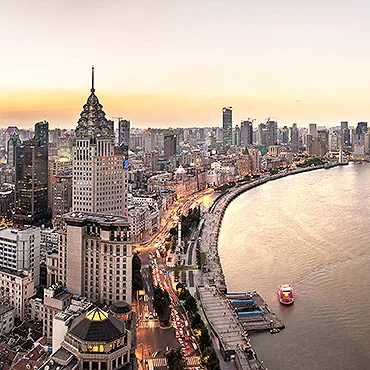
Located in the Huangpu District of Shanghai on the bank of the Huangpu River, The Bund is perhaps the most impressive promenade in Shanghai. Apart from providing a present day glimpse into Shanghai’s glamorous early 20th century commercial past (the Bund is a legacy of stunning 1920’s architecture and design), it offers the perfect view of a more contemporary skyline punctuated by sky-high buildings like the Oriental Pearl Television Tower and the Jin Mao Tower across the river in Pudong. Explore by day or night and enjoy the vibe created by the fabulous boutiques, restaurants, bars, and people who carry forward the energy of Shanghai today.
#2 Yuyuan Garden and Bazaar
Once the residence of a prestigious local merchant family prominent during the Ming dynasty, Yuyuan Garden reflects the thoughtful and considered art of garden design so much a part of Chinese culture. Multi-layered with exquisite examples of garden design and beautifully maintained, despite being destroyed not once, but twice in its long history, Yuyuan is the ideal place to wander in contemplation and capture beautiful images. By total contrast, visit the nearby Bazaar for an experience of browsing through a market with locals. Expect to find just about anything and maybe even make a purchase or two.
Chengdu
The capital of land-locked Sichuan Province in China’s southwest, Chengdu has a well-earned reputation for its relaxed lifestyle, slower pace, and of course, for its most famous residents, the world’s largest population of giant pandas. However, there is more to this city: famous spicy Sichuan hotpots, Tibetan influences, melodramatic Chinese opera, magical Bian Lian (mask changing), and a devoted tea culture. Discover it all with just a couple of days visiting this fascinating city.
#1 Giant Panda Breeding Research Base
Nowhere else in the world can you gain such a complete appreciation of these amazing wonders of nature, giant pandas, and record your experience with them in photographs. The Giant Panda Breeding Research Base is perhaps the most popular of all places where pandas can be seen. They live, eat, and love in well maintained enclosures, and if you’re very lucky, your visit may be timed with the arrival of the baby pandas, which win all awards for total cuteness. The Research Base provides insights to the breeding program, delivery room, and anything panda related. Whether they’re the live version, or stuffed, cuddly take-home type, the giant pandas will inevitably steal your heart.
Guilin
Guilin sits against a backdrop of some of China’s finest and most famous natural landscapes and scenery. It is also home to local sites, the Elephant Trunk Hill, Seven Star Park, and the stunning Reed Flute Cave, with its incredible naturally formed stalagmites and stalactites formed over 180 million years ago. Once you’ve made your way around the local highlights, complete your time in Guilin with a leisurely cruise along the Li River to Yangshuo. It’s the perfect way to relax into the slower pace to be found here.
#1 Li River
Be inspired as poets and ancient Chinese leaders have by the instantly recognizable karst stone mountain landscape and water buffaloes that line the Li River. While the river itself may be with cruise boats and traditional rafts, a Li River cruise is the ideal opportunity to relax and absorb the scenery en route to Yangshuo. Expect to take a multitude of photos of the instantly recognizable scenery for which this region is famous.
#2 Yangshuo
In less than two decades Yangshuo has grown from a tiny ancient village to a bustling modern town catering to international visitors. In Yangshuo, appreciate the local traditional ethnic culture with a 1400 year history. There is much to absorb in the amazing scenery around this ‘town’ and amidst the blend of local and western cultures and cuisines in West Street with its vibrant shops and restaurants. Yangshuo offers an insight to an authentic rural landscape, punctuated by small local farms, winding roads, and a slower pace not found in China’s big cities.
Dunhuang
An important stop for camel caravans traveling the Silk Road, it’s easy to see how Dunhuang became home to rich historical relics and religious arts. Dunhuang allows you to delve into exquisite murals and sculptures in the Mogao Caves, which are over a thousand years old. It is also renowned for its location in an oasis where you’ll find Crescent Spring and Echoing Sands Dune. Ready to take a step back in time? Then Dunhuang is one of the best place to visit in China.
#1 Mogao Caves (Grottoes)
Boasting over 700 caves, 2,000 painted statues, and 40 thousand square meters of mural paintings, the Mogao Grottoes are spectacular on another level. Frequently referred to as the Thousand Buddha Grottoes or Caves of the Thousand Buddhas, the thousands of carvings found here have survived centuries – a marvel in itself – and a visit will inspire awe and wonder.
Lhasa
Remote, mysterious, exotic, and breathtakingly beautiful, Tibet’s capital, Lhasa, is a travel destination beyond compare. Surrounded by mighty ice-capped mountains, awe-inspiring lakes, unique and ancient culture, and friendly people, getting there is worth every step of the distance and time it takes.
#1 Potala Palace
A magnificent icon of Tibet, visiting Potala Palace will be a travel memory you’ll always treasure. Apart from its status as a surprising exemplar of architectural design, Potala Palace is a place where reverence meets wonder. Both pilgrims and travelers alike sense how special it is, regardless of their origins. Formerly the residence of the Dalai Lama, you’ll discover the history behind this sacred, mysterious palace, which dates back to the 7th century. There’s no question about its inclusion on the list of best places to visit in China.
Zhangjiajie
Explore Zhangjiajie and be captivated by the breathtaking sandstone landforms that inspired poets and philosophers long before Avatar became a film that unveiled this gorgeous secret to the world. The city of Zhangjiajie is located in Hunan in China’s southern central region. Its remoteness has preserved both the idyllic landscape and minority peoples who have been its inhabitants for millennia – the Tujia, Miao, and Bai. Rich in diversity – thanks in part to the subtropical and temperate conditions, Zhangjiajie, and the now famous Wulingyuan Scenic Area, are places that regularly make it to the bucket list of China tour travelers.
#1 Zhangjiajie National Forest Park
The Zhangjiajie National Forest Park has more going for it than inspiration for movie backdrops. Stunningly beautiful natural landscapes that literally take your breath away are a welcome contrast from the otherwise busy pace of China’s big cities. A definite inclusion on any ‘must see in China’ list.
#2 Tianzi Mountain Nature Reserve
Rising one after another, the peaks of Tianzi Mountain provide stunning views. Visitors can see the full expanse of the Wulingyuan Scenic Area and the beauty of each season – all at the same time. This unforgettable highlight of our Zhangjiajie tours is where you experience the four wonders: Radiance of the Moonlight, Sea of Clouds, Rays of Sunshine and Snow in Winter. If it’s truly mesmerizing that you’re after, you’ll find it here.
Hangzhou
Hangzhou is the picturesque capital of the Zhejiang province, located on China’s east coast and in proximity to Shanghai. For travelers wanting the opportunity to experience all this city has to offer, one of our Hangzhou tours offers the ideal way to see a different side of China.
For millennia favored by locals for its quintessentially Chinese scenery of wispy willows and green mist covered hills, the city’s major landmark, the West Lake makes it a memorable travel destination. Easily reached by train and plane from Shanghai and Suzhou, join us on one of our Hangzhou tours and experience a laidback and unassuming real experience of China.
#1 West Lake
On West Lake, make the most of a unique opportunity to relax and enjoy the experience of getting out on the water. While you’re in the neighborhood, take time to observe the famous Red Carp Pond. West Lake affords a different perspective of the serenity provided by the natural scenery, historic pagodas, and stunning pavilions that form part of the surrounds. Scenes that conjure up images portrayed by scholars and philosophers are inspired by spots along the way: the poetically named Three Pools Mirroring the Moon and Su Causeway.
Suzhou
Once dubbed the ‘Oriental Venice’, China’s waterside city of Suzhou is admired for its crisscrossing canals, stone bridges, enchanting classical gardens, and relaxed and easy lifestyle. Among Suzhou’s highlights is the Humble Administrator’s Garden and Garden of the Master of Nets, both fine examples of classical Chinese garden design.
#1 Classical gardens
In Suzhou, enjoy the opportunity to explore and admire the exquisite classical gardens. Remarkable creativity, thoughtfulness and design as only ancient Chinese craftsmen can do, is to be discovered at the Humble Administrator’s Garden. So well regarded is it that UNESCO saw fit to make it a World Heritage site. Picturesque landscape harmonizes the many elements of traditional architecture, hills, lawns, flowers, and meandering streams. In the same vein, discover what inspired China’s ancient philosophers, poets, and intellectuals at Master of the Nets Garden. This wondrous garden synthesizes residences and buildings with lakes, grottoes, gardens of flowers and ancient trees. For a unique and altogether different insight to China, Suzhou’s gardens should find their way onto your list.
Hong Kong
If you’ve never even visited, or only ever skimmed through,a Hong Kong travel getaway is like no other. At the intersection of east and west, Hong Kong is a special gateway to bucket list highlights, fabulous food, and yes, even shopping that is matched in few other places around the world. With dizzyingly high skylines, a tropical vibe, and an edgy and modern approach to life, Hong Kong stands out as a China destination for stunning views, gardens and skylines that inspire traditional and modern architecture, and an aliveness that is unique among China’s capitals.
#1 Victoria Peak & The Peak Tram
It may not be Everest, but when you visit Victoria Peak, the highest point in Hong Kong Island, you’ll enjoy incredible panoramic views of the whole city. Look out above the highrises and skyscrapers to the harbor and beyond. And a bonus? Ride aboard the Peak Tram and enjoy the view from the Sky Terrace at the top.
#2 Po Lin Monastery & The Big Buddha
Relatively young by China’s standards, Po Lin Monastery is a Buddhist monastery that was originally known as ‘Big Thatched Hut’ when it was first established on Lantau Island over 100 years ago. The monastery is a place of tranquility and serenity, while the monks who live there – remain committed to creating a place where they can practise and spread Dharma. The Big Buddha Statue – also known as the Tian Tan Buddha – sits at the front of the monastery. It is the second largest outdoor Buddha statue in the world. At 34 meters in height and weighing just over 200 tonnes, locals and visitors alike visit here in reverence – and we feel sure you will too.
Huangshan
There are few natural destinations in China that are as captivating and exquisitely beautiful as Huangshan and the surrounding region. With good reason, Chinese artists and philosophers for centuries retreated to Mount Huangshan – which translates as Yellow Mountain – drawing inspiration from the tranquility created by steep granite mountain peaks, mist covered pine trees and eternal views. You can experience this too when you make it your launchpad for taking in the rich treasures, architecture and natural beauty of nearby villages, Tunxi, Hongcun, and Xidi. Best visited in the autumn from September to October, one of the main highlights is, of course, Mount Huangshan itself.
#1 Mount Huangshan
Whether viewing spectacular scenery from the peaks of “Yellow Mountain” as it pierces the mystical mists or as it sparkles in bright light, you’ll appreciate why this is one of China’s sacred mountains, especially when seen up close on an awe-inspiring hike. Enjoy a cable car ride up the mountain and along the way, savor the beautiful views that take in the surrounding mountains. Once at the top, hike to gorgeous Begin-to-Believe Peak, one of the numerous small peaks that comprise the Huangshan mountain range. It’s the perfect way to absorb the breathtaking views from key vantage points, with Black Tiger Pine and Flower Blooming on a Brush Tip. With beauty inspired names like these, it’s impossible not to be impressed.
The Yangtze River
The Yangtze River is China’s longest river, winding 6,300 kilometers west to east across the country and a Yangtze River cruise is the perfect way to slow down for a few (or more!) days in between other travel activities and destinations in China.
#1 Yangtze River Cruise & Three Gorges
The most popular section of the Yangtze River to take a cruise is known as Three Gorges. Climb aboard one of the many tastefully appointed river boats that take you away from the hustle of China’s big cities, giving you time to soak in the spectacular scenery and awe-inspiring landscapes. Experiencing the Yangtze – in all its magnitude, history and the surrounding natural beauty of jaw-dropping gorges is a once in a lifetime experience, so be sure this adventure makes it to your list of best places to visit in China.
Whether you’re a savvy traveler or a first time visitor to China, doing your research is the best way to make the most of your vacation. Don’t leave the decision about the best places to visit in China to chance. Get help from people who know – and truly care about your experience. Talk to the ChinaTours.com team. We’re travelers too, and we’re committed to helping you create beautiful travel memories that endure long after you’ve arrived home. We welcome online enquiries via direct contact, with responses delivered within 24 hours.
Hotels in China range from basic hostels to luxurious five-star hotels. There are literally thousands of them scattered all throughout China.
For first time travelers to China, finding and choosing good hotels in China can be stressful if you don’t know what to look for. What can you do to make sure that you’re choosing a hotel that matches your level of comfort and budget? This guide will tell you everything you need to know about finding and booking quality hotels and we should know as we do this for all the different china tour packages that we at ChinaTours.com offer.
Hotels in China
Hotels in China have different standards
Although most hotels in China are fine by Chinese standards, some of them leave much to be desired by international standards. That’s because, in China, the criteria for hotel ratings are different from the ones in Western countries.
In addition, Chinese customer ratings can be slightly misleading, due to the concept of face. Chinese people are more likely to give a hotel a good rating, and avoid complaining even if their stay didn’t meet their expectations. Make sure to read more than just a handful of customer reviews, and check out the different reviews on commercial websites, such as TripAdvisor and Booking.com.
Hotel price alone is also not a guarantee for quality in China. Hotel prices vary from hotel to hotel, and from city to city. You may end up paying the same for a 5-star hotel in Guilin as a 3-star hotel in Beijing. Even within major cities, more expensive doesn’t necessarily mean better.
When deciding on which to hotel choose in China, look beyond just the price and rating, and consider the facilities, the luxury (or lack thereof), and location. Do some research before making a final decision, or contact an expert tour operator to help you find the hotel you’re looking for.
Tip – If you look at one of our China tours for the area you are planning to visit, such as our Beijing tours, Chengdu tours or Shanghai tours, for example, you will be able to see the hotels that we have carefully selected in these different areas.
Facilities in hotels in China
Most three-star and above hotels in China offer comfort and quality facilities that’ll make your stay as pleasant as possible. In general, three-star and above rooms in China are air-conditioned, have free WiFi, a minibar, a kettle, and a flat screen tv with satellite channels (including CNN, BBC, and more). Not a smoker? Most hotels offer non-smoking rooms. Let your travel agency know in advance to ensure availability.
In China, it’s considered healthy to sleep on a hard bed, so hotel beds in China may not be as soft as your own. If this is the case, do not hesitate to ask reception for more blankets to ensure a better night’s sleep.
You will have a private bathroom in most three-star and above hotels, including free toiletries, a hair dryer, and a hot shower. Generally, you will have a Western toilet in your private bathroom, though don’t be surprised if that’s not the case in remote areas.
Fancy a bite to eat? Most three-star hotels have an in-house restaurant serving local Chinese cuisine, while higher-rated hotels (four-star and above) serve both local and Western cuisine. Higher-rated hotels usually have at least one bar, one restaurant, and room service.
Looking to get pampered during your stay? Book a higher-rated hotel with extra facilities, such as swimming pools, playing areas, fitness centers, spa and wellness centers, as well as massage and sauna facilities.
Higher-rated hotels in China are also the perfect place for a business meeting. Generally, hotel meeting rooms include multimedia services, translation services, courier services, and a host to make your business meeting run as smooth and efficient as possible.
China provides a 220-volt, 50-Hz power supply, thus appliances requiring 110-volt will need an adapter. Some higher-rated hotels will provide these for free.
Please note, tap water in China is not drinkable. Most hotels offer one or two bottles of water per room for free, otherwise, you can purchase bottled water for a very small price ($0.25-$0.75 per bottle).
Five-star hotels in China
Live the lifestyle of the rich and the famous in China’s extravagant five-star hotels. Nowadays, five-star hotels in China have large rooms with a cutting-edge interior, luxurious amenities, and expert services, such as butler service, a concierge, and transportation options ranging from airport pickup to limousine service.
Notable five-star hotels in China are the Regent Hotel in Beijing, Hyatt on the Bund in Shanghai, Shangri-La Hotel in Guilin, and Sofitel in Chengdu. ChinaTours.com is very selective about the hotel partners we use for our tours. In fact, ChinaTours.com founder, Mr. Li personally visits and meets with hotel owners and managers to ensure the quality standards fit with the company’s commitment to delivering a memorable travel experience.
Four-star hotels in China
Four-star hotels in China are designed for your comfort and luxury. These hotels come with exclusive services, such as concierge service, luggage storage, currency exchange, ironing, and dry-cleaning facilities, a tour desk with ticket services, and transportation services.
Recommended four-star hotels in China are the Novotel Peace Hotel in Beijing and the Grand Mercure on Renmin Square in Xi’an.
Three-star hotels in China
Three-star hotels in China are the ideal pick for those who want a comfortable stay, without breaking the bank. These hotels are usually conveniently located near tourist attractions and business areas.
A good three-star hotel in China is the King Parkview Hotel in Beijing.
Guarantee your stay, book in advance
Hotels in China can be easily booked online, via telephone, or via fax. Keep in mind, not all hotel staff members speak English, or their English skills may be very basic, which may turn booking via phone or email into a bit of a challenge. There are many online booking platforms and travel agencies out there, ready to make your booking experience a lot easier. If you think you might need help, be sure to work with a travel consultant who knows how to look after Western travelers.
Hotel reservations in China can be made from several months in advance to just a few hours before arrival. However, it’s strongly recommended to book your hotel as early as possible to guarantee your stay, especially during high season (April to October) and on national holidays, such as May Day Holiday, National Day Holiday, New Year’s Day, and Spring Festival.
ChinaTours.com will look after your hotel bookings
If you’re after a comfortable and luxurious stay, it’s worth considering a pre-arranged tour with an experienced tour operator. ChinaTours.com has got you covered with some of China’s best hotels included in our China tour packages.
First-time travelers to China will love the ChinaTours.com approach to organizing, planning, and taking a tour with us. With a deep understanding of what Western travelers need, we provide flexible travel schedules that allow ample time for exploring and enjoying an experience of real China. With centrally located four and five star hotel accommodation, experienced and friendly local guides, and your safety our priority, we make travel in China the enriching and memorable experience it should be. Talk to us now about designing your ideal custom tour.
The Bund must surely be one of Shanghai’s most recognizable landmarks making it hard to imagine a visit to the ‘pearl of the orient’ without a wander along this iconic boulevard.
So what makes the Bund special?
Ever descriptive in their naming of things, the Chinese call the Bund wai tan (外滩), which literally translates as ‘outer bank’. The word bund is not English in origin, rather it is derived from Persia and means ‘embankment’.
During the 19th century, an influx of Baghdadi Jews settled in the area. In Shanghai and other port cities in East Asia, they established businesses and communities, developing the harbours as they did in Shanghai. The Bund encompasses this riverfront area in Shanghai, holding as much appeal today as it did for those who brought it life originally.
The Bund: Wall Street of the East
Behind an appealing facade of river views and lovely buildings, there is another story, however.
The Bund – and Shanghai’s modern history generally – is intimately linked to trade, opium, and colonialism.
In 1842, the Treaty of Nanking (Nanjing) ended the first Opium War between China and Great Britain. The first of a number of ‘unequal treaties’ between China and foreign imperialist powers (Great Britain, France, Germany, Russia, the United States, and Japan), the Treaty of Nanjing saw China cede territories to Britain. Included among these were Hong Kong, Shanghai, and four other port cities, which were opened up for foreign trade and occupation.
In 1845, the British Concession was established. Wharves and trading houses were set up along the Huangpu River. In 1863, the British and American settlements merged, forming the Shanghai International Settlement in this waterfront area.
The appeal of Shanghai as a commercial hub grew, leading to development of western style buildings – consulates, hotels, trading firms, clubs, and banks – which are now synonymous with the Bund. With this pedigree in commerce, it’s hardly surprising it was regarded as the ‘Wall Street of the East’.
Is the Bund worth seeing?
Well, of course our response to this is completely biased: Yes, it is!
The Bund runs 1.5 kilometers from south to north. It is an eclectic miscellany of buildings and architectural styles, incorporating Baroque, Gothic, Classicism, Romanesque and Renaissance, a reflection of the spirited, vibrant city that emerged during its peak, the period between 1920 and 1937, when the Japanese captured the Chinese part of the city.
If you have an affinity for art deco, you’ll be delighted. Some of the best Art Deco buildings in the world can be found here, and there is an enduring sense of vintage Shanghai to be found in many places along the Bund. Despite the variety in architecture, there must have been an alignment of vision in design, as the skyline is surprisingly homogenous, and often referred to as an ‘international architecture exhibition’. Be sure to wander at a relaxed pace to take it all in.
At a time when Shanghai thrived on the glamor, commerce, and fashion, Shanghai became known as Paris of the Orient, and the Bund was at its epicentre. Although there have been many changes since, Shanghai continues to hold appeal for travelers and expat with a sense of adventure.
What will you discover at the Bund?
With buildings a major highlight on the Bund, take time to explore these stand-outs.
HSBC Building
Completed in 1923, the HSBC Building was the former headquarters for the Hong Kong and Shanghai Banking Corporation. At the time, it was the largest bank building in the Far East and second largest in the world. To top it off, the HSBC Building was considered the most luxurious building between the Suez Canal and Bering Strait – and after a wander through its foyer, we feel sure you’ll agree.
It retains an air of understated elegance and wealth that will have you whispering in awe. The stunning mosaic ceiling alone is worth the visit. Featuring the 12 zodiac signs and global financial centres, it is a beautiful artwork that will have you looking towards the heavens.
While its heyday may have passed, the building’s current owner, the Shanghai Pudong Development Bank, is keeping the door to glamor open, if only a little.
Shanghai Club
When we think of vintage Shanghai, it usually conjures up images of glamorous women wearing cheongsams and cigarette smoked men in tuxedos, and certainly that image wouldn’t be out of place at the Shanghai Club. Founded in 1861, it was a gentleman’s club for British residents in Shanghai.
Construction on the original building was completed in 1864, while another building was developed and opened later in 1910. Its claim to fame? Well, it was the first building constructed in Shanghai with reinforced concrete. However, its greater appeal was the famous L-shaped ‘long bar’, which just so happened to be the longest in the world at the time. The good news is, you can still visit, as it is now part of the Waldorf Astoria Shanghai on the Bund.
Customs House
Truly symbolic of the Bund, Customs House is perhaps the quintessence of old Shanghai. Opening in 1927, Customs House is famous for its clock tower and clock, the largest in Asia. The clock and its bell, which is a replica of the Big Ben at Westminster, were both manufactured in England and shipped to Shanghai.
Peace Hotel
The Peace Hotel with its green pyramid roof is yet another iconic landmark of Shanghai. Considered an exemplar of art deco architecture, it was built by real estate and business magnate, Victor Sassoon.
Like the street on which it was built, the Peace Hotel is rich in history. The penthouse was occupied by Victor Sassoon himself, while floors four to nine were taken as the Cathay Hotel. As the hotel of choice for discerning visitors at the time, it attracted many of the world’s political, artistic, and business elite, with Noel Coward, Charlie Chaplin, George Bernard Shaw, and Chiang Kai-Shek among them.
The Peace Hotel is the tallest building in the Bund, reaching to 77 meters. While small by comparison to the cloud-topping highrises on the opposite side of the Huangpu River, during the peak of its popularity, the Peace Hotel naturally held great appeal. So great was the influence of the building’s owner that when the Bank of China proposed to construct a taller building right next door, the design had to be scaled back to meet Mr. Sassoon’s insistence that no building could top out his own.
Originally built as the Cathay Hotel, in 1956 the hotel reopened the Peace Hotel, and then after a three year renovation, it reopened again in 2010 as the Fairmont Peace Hotel. If jazz appeals, check in for a drink and enjoy The Old Jazz Band who play there. With musicians ranging in age from mid-sixties to nearly a hundred, be inspired by their individual stories and their creativity that keeps them playing such vibrant music to audiences from all around the world.
Former Consulate-General of the United Kingdom
As one of the oldest buildings on the Bund, the Former Consulate – General of the United Kingdom consisted of a compound of five buildings within which was a spacious garden. It was built in a Renaissance style in 1873 and is now a function venue.
Enjoy the Bund at night
Of course, the old buildings are only one part of the Bund’s appeal. On the other side of Huangpu River, which is clearly visible from the Bund, there is more to be discovered. Development of Lujiazui began in 1990 and since then has become the most important financial and commercial centre in China. Many skyscrapers have been constructed over the past three decades, providing offices for local and international corporations, banks, hotels and shopping centres. Certainly, these highrises have far eclipsed the height of their Bund counterparts, however, they represent an altogether different time and space in Shanghai’s history.
Among the famous landmark buildings in Lujiazui are the Oriental Pearl Tower (468 meters); Shanghai Tower (128 floors/632 meters); Shanghai World Financial Centre (101 floors/492 meters; including three observation decks); Jin Mao Building (93 floors/421meters), Bank of China Tower (53 floors/226 meters). And a fun fact for you: Tom Cruise bungee jumped from the Bank of China in Mission Impossible III.
If you don’t fancy crossing the river, walk the Bund esplanade at night when you can enjoy the mix of old buildings contrasted with the impressive modern Lujiazui highrises. While you’re in the area, take an evening cruise that allows you to immerse yourself fully in the city’s magnificent skyline at night.
If you’d love to experience the Bund firsthand with someone who knows it well and can bring it to life, consider booking a Shanghai day tour, or visit Shanghai for a layover, or as part of a multi-day China tour. Discover real China with people who really know it. Incorporating bilingual guides, flexible itineraries, options for private and custom tours, you’ll feel cared for every step of your journey. Reach out to our travel team. We are here to help.
Entry Prices
Adults
Free
Children
Free
Food
Yes
There are many restaurants in the precinct around the Bund.
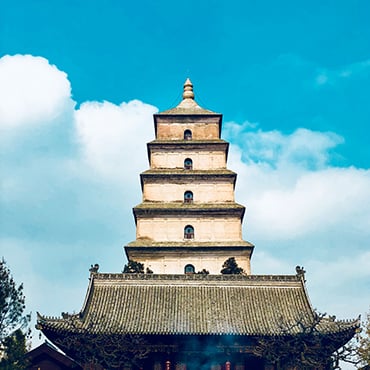
Big Wild Goose Pagoda is a famous pagoda in Xi’an. Located at the Da Ci’en Temple in the city’s south, it reaches nearly 65 meters, a remarkable feature, given it was built over 1,300 years ago.
So, why would a westerner visit Big Wild Goose Pagoda? What makes this famous Xi’an pagoda stand out among the many to be discovered in China?
Let’s see if we can clear that up with some insider knowledge about Big Wild Goose Pagoda.
What’s the back story to Big Wild Goose Pagoda?
Big Wild Goose Pagoda was built in 652AD on the same site as another temple.
Back in 648AD, Da Ci’en Temple, which means ‘motherly love and kindness’, was constructed by order of Crown Prince Li Zhi, who later became Emperor Gaozong, third emperor of Tang Dynasty.
Inspiration for the temple came from Li Zhi’s mother, Empress Zhangsun, who died young. The location of Da Ci’en was selected on the basis it would be visible from the emperor’s residence, Hanyuan Palace, and allow him to pay respects to his mother each day.
But Da Ci’en is more of a sideline, rather than the main event at Big Wild Goose Pagoda, so let’s discover why.
What does Monkey King have to do with Big Wild Goose Pagoda?
Every child growing up in China knows Monkey King, and not surprisingly, so do many people from all over the world.
Monkey King’s story – and that of Master Xuanzang – starts with an incredible ‘journey to the West’, that allegedly began in 629 AD when Master Xuanzang traveled to India for the purpose of studying Buddhism.
After 17 years (645 AD), he made his way home with over six hundred Buddhist scriptures in tow, a collection of Buddha statues, and sarira (the sanskrit term for Buddhist relics). On his return, Xuanzang settled in Chang’an city (as Xi’an was known at the time), and was then invited to make Da Ci’en his home. It was here that he began an epic task to translate the Buddhist scriptures.
Clearly an adventurer at heart, Xuanzang’s reputation stems from his adventurous spirit – he traveled to 110 countries – and his seemingly voracious appetite for translation – he is responsible for having translated an amazing 1,330 scriptures into Chinese. It’s any wonder he was considered the greatest scholar of the Tang Dynasty, and his own personal legacy, the Great Tang Records on the Western Regions, captures his remarkable insights as an early pioneer. Due to the voluminous works he translated, Da Ci’en became known as the most significant imperial temple during the Tang dynasty.
So what does an emperor do with all those Buddhist scriptures and treasures? He stores them in a special place fit for treasures. To that end, Master Xuanzang proposed to Emperor Gaozong that a pagoda would be ideal for this purpose, and it seems his enthusiasm carried him over because in 652AD construction on a five storey Indian style pagoda was completed. And while earthquakes, groundwater, and age have contributed to a definite lean that is apparent in the pagoda, it continues to be a Xi’an must-see highlight.
Incredibly, Big Wild Goose Pagoda has been reconstructed several times over a number of dynasties, and has varied in height between nine, ten, and seven storeys. It began leaning to the northwest in 1719 during the Qing dynasty. After the Wenchuan earthquake in 2008, the lean measured just over a meter.
How Big Wild Goose Pagoda was named
Behind the many ancient buildings and monuments in China steeped in legend and history, there is a story to be found, and of course, Big Wild Goose Pagoda does not disappoint. It is said that while he was working on the Great Tang Records of the Western Regions, Master Xuanzang documented a legend involving a pagoda and a wild goose, which he learned Indian monks.
The story goes that Hinayana (meat eating) monks were concerned about their meal because there was no meat. In keeping with their tradition, they prayed to Buddha for meat to cook, at which point a flock of geese appeared. The goose leading the flock fell to the ground and died, providing the monks with their meat.
Naturally, the monks regarded this as a miracle from Buddha and were so deeply touched they became vegetarian. The goose was buried and a pagoda that was built on the site was aptly named Big Wild Goose Pagoda. Master Xuanzang deemed this a fitting tribute to the Buddhist influences and legacy that became home to so many Buddhist scriptures and treasures.
Inside Big Wild Goose Pagoda
Big Wild Goose Pagoda is beautiful, even palatial in design. It follows traditional principles of Chinese architecture , with a single point of access. Notwithstanding the lean, Big Wild Goose Pagoda still offers unique vistas of Xi’an through four arched doors. Take the circular stairway to the top of the pagoda and enjoy viewing the murals throughout, which tell visual stories of Master Xuanzang’s experiences from his travels to India.
Two stone tablets are positioned on either side of the south door on the ground floor. They were completed in 653AD and are regarded as the finest examples of the Tang dynasty’s calligraphic inscriptions. Because two emperors from the Tang dynasty wrote articles about Master Xuanzang, the prime minister, who was also a famous calligraphist at the time of Tang dynasty, scribed the calligraphy for these documents.
Some historians and archaeologists believe there is an underground palace at Big Wild Goose Pagoda where more Buddhist treasures and valuable offerings from the royal family can be found, however this theory hasn’t proven
Is there more to see around the Big Wild Goose Pagoda?
Recognizing the importance of the pagoda, the local government has invested in creating a precinct around the pagoda and broader temple complex.
The Da Ci’en Temple complex is designed in accordance with traditional Chinese architectural style. It includes various halls, bell and drum towers , a vast library for Buddhist texts, Big Wild Goose Pagoda itself, and the Pagodas Forest.
It continues to be a place of learning, with the temple’s monk master delivering lectures on Buddhism most mornings and afternoons. Visitors can hear monks chanting in the courtyard, as well as observe the traditional bell and drum towers that were used in ancient China to signal time. In the morning, the city gate opened after the bell sounded, allowing people to go about their daily life. In the evening, the city gate closed after the drum sound, indicating the start of curfew after which people were required to stay at home.
At the Buddhist temple, it was slightly different. In the morning, the bell is rung first and then followed by the drum, while in the evening, the sounds are made in reverse. The bell is considered to be calming and induce the ideal atmosphere for meditation. The bell is seen as a representation of the sitting Buddha because of its shape. Those who strike the bell make three bows to show their respect.
Looking to capture beautiful travel memories at Big Wild Goose Pagoda? Make your way to either the north or south of the temple complex. It’s here you find perfect settings for photo opportunities. Get snap-happy by day or night, when you take a guided tour. An evening tour is extra special, with the musical fountain show a highlight for visitors.
Entry Prices
Adults – Temple complex
¥50 (1 Mar – 31 Oct) ¥40 (1Nov – 28 Feb)
Adults – Pagoda
¥30
Children (6 -18 years old)
half price
Children (under 6 years old and under 120cm)
free
Food
Yes
Restaurants, cafes, hotels, and shops are located in close proximity to the Big Wild Goose Pagoda
Contemplating your options around China tours from USA? There has never been a better time to be researching, planning and taking China tours from the USA. Why? Because although travel conditions have returned to what they were before restrictions were implemented, many people still haven’t dusted off their passport and started ticking off their bucket list destinations.
Fancy a luxury experience? Made a highlights wish list a mile long? Looking for insider tips to score the best value and love every minute of your vacation? If you’ve answered with a resounding ‘yes’ to any of these questions, now is the time to make your China tour happen.
Travelers looking for China tours from USA will do well to plan in advance, because you can expect to discover many ways to leverage great value on your travel dollars. Tour operators are keen to welcome back visitors from the USA, UK, Canada, Australia, and Europe, to showcase what has remained untouched over recent years due to travel restrictions.
Having welcomed thousands of international visitors to China, we’ve learnt a thing or two about what makes a China tour great, so we’ve decided to share these industry insider tips with our USA customers.
Need flights for tours to China from USA? Book your own!
Back in the day before digital everything, if you were researching and planning tours to China from USA, all arrangements were made through a traditional travel agency. This included booking international plane tickets.
Thanks to advances in technology, times have changed. Since around 2000, the ability to design and create a tailored travel adventure is very much in the hands of customers, allowing for direct sales (and reduced costs).
There are many benefits arising from technology, among them is the convenience – and transparency – of booking flights, accommodation, and tours online. Allowing customers to shop around with ease, these changes have resulted in changing consumer expectations.
Savvy western travelers doing their due diligence on tours to China from USA now expect to connect directly with a local in-country tour operator or travel agency. They have also come to expect more flexibility, freedom, and customized travel experiences. Goodbye, boring ‘vanilla’ itineraries. Hello, bespoke travel adventures.
As a company operating tours for well over a decade, we’ve seen a growing appetite from our North American customers for private and custom tours to China from USA. Apart from giving people more of the travel experience they really want, it also makes it possible to take advantage of booking flights directly with an airline company, saving money and avoiding restrictive terms, conditions, and itineraries associated with a tour package that bundles in international flights.
Insider’s tip: Book your own international air tickets directly with an airline company as soon as you know your tour dates. Go directly to the official airline website for your booking. You’ll find airfares here are lower than any third-party booking platform.
China visa? Yes, you’ll need one for China tour packages from USA
China is a country where a visa is required for USA travelers, however, don’t be overwhelmed by the application process. If you’ve booked a tour, travel agencies like our own can help by providing the items required for your China visa, namely an invitation letter and related travel information such as destinations, duration of stay, and hotels. Whether it’s small group, private, or custom China tour packages, from USA, entry into China will mean a little legwork to meet all the requirements.
Be sure to connect with your local China Embassy, Consulate, or Visa Application Center to complete your application by providing photos, the relevant form and other supporting documentation.
Insider’s tip: If you’re confused about what’s required for your China visa, or want to understand where the application process fits in terms of timing for your travel arrangements, ask for help. The travel agency you’re dealing with will be up to date with changes that occur, which affect visa applications for international visitors.
How to pick the best China tours from USA
An online search for the best China tours from USA will yield literally thousands of results, so if you’re a first time visitor (or even if you’re a returning adventurer), how do you make sense of them all and feel confident in your decision?
We’ve already talked about the importance of research and this certainly applies when it comes to selecting the best China tours from USA. First, you must decide what level of travel you’re after. If budget is your main consideration, there are ample choices. However, if budget is not your primary driver, and you value more flexibility, then it’s a good idea to dive into the detail of what’s really being offered on tour.
Specialization is the hallmark of an exceptional China travel provider, but what many customers don’t realize is that many don’t look for opportunities to deliver unique experiences. This is why we recommend searching for a tour company that really knows China – and truly cares about your experience. Approaching travel plans this way means you’re more likely to discover a holiday that is more than a mediocre ‘vanilla’ substitute. It’s okay to expect value for money; it just shouldn’t come at a cost to the quality of your vacation.
Once you’ve picked a tour, find out if it can be taken as a private guided tour and what the price difference is. While small group tours are wonderful (we only travel with a maximum of 12 people), a private tour following the same itinerary offers even more flexibility.
Insider tip: If you only plan on visiting China once – do your research and book a bespoke tour, tailored exactly to your interests, budget, travel days. Regardless of whether you’re traveling solo, as a family, or a group of friends, this is a great way to travel your way.
More reasons to plan your China tour from the USA
Here are some other great reasons to choose a specialized local tour operator or travel agent in China if you’re considering a China tour from the USA:
More choice of tour itineraries, including tours focused on specific themes, interests, and destinations. It’s a great way to immerse yourself in the local culture.
Different tour types, including private tours, small group tours, and customized tours.
Value for money. As a direct sale, you avoid unnecessary fees associated with booking through a traditional travel agent. That means more holiday spending cash.
Responsiveness and communication – With a focus on serving the western traveler, travel agencies like ChinaTours.com engage travel consultants with an excellent command of English, and with a strong service ethic, response times from enquiries are typically very quick.
Quality service – As China’s tourism industry has grown, so too have expectations around service. Before booking, check out the online reviews of companies offering tours, to see the comments made about the company’s travel consultants, local guides, and drivers. You’ll find uncensored opinions and they are a great way to find out how well customers were taken care of by their tour operator or travel agency.
Quality hotels, centrally located – One day in a busy city like Beijing and you’ll soon appreciate the value of a quality hotel that is centrally located. A deceptively large amount of your valuable tour time can disappear traveling between sights, so research your tour and find out where the hotels are located relative to stops in the daily itinerary. Be aware that interpretations of four and five star may differ between providers, so ask about the hotel partners too. International hotel brands with consistent standards are always a safe bet.
Industry recognition – Traveling with a company with international industry memberships provides peace of mind, especially for USA travelers planning a China holiday. Industry bodies like the American Society of Travel Advisors, Pacific Asia Travel Association and the China Association of Travel, provide credibility, as well as a point of reference if you are concerned about service standards.
Are you ready to make tracks but stuck for ideas? Why not start your research with our ‘best of’ recommendations from the ChinaTours.com team?
Beijing, Xian, Guilin, Chengdu, Yangtze River, Shanghai
Full experience of China’s many historical landmarks and natural wonders
If you’re researching China tours from the USA, why not simplify the big decisions about how to plan and organize a tour that maximizes your time and budget. Having served customers from around the world, including the United States of America for well over a decade, we know what savvy travelers from the West want on their holidays. Research, plan, and explore the options available in our selection of best China tours, or create your own custom experience with the help of travel consultants who know and care about every detail. We welcome online inquiries via direct contact and respond within 24 hours.
Is China a safe place to visit? (Tips for Westerners to know it is safe to travel to China)
Is China a safe place to visit?
We’ve been asked this question by many of our western customers who want to know it is safe to travel to China, especially those planning a holiday for 2025 and beyond.
Let’s dive into tips you can use for traveling safely in such a big and busy country.
Is it safe to travel to China right now?
The world is constantly changing, and with shifts in influence in various regions, a prospective traveler might wonder: Is China a safe place to visit? and Is it safe to travel to China in 2025? These are reasonable questions. With our goal to provide peace of mind to our customers, whether they’re planning or participating in one of our tours, we’ve provided this update on whether it is safe to travel to China.
At any time, planning the best China tour is no small exercise, let alone in the new global operating environment. Not only does visiting China usually involve long distance travel depending on where you come from in the world, it also requires attention to detail to ensure your trip is safe, especially now that it’s vitally important to observe health and safety considerations wherever you are. If you’re wondering is it safe to travel to China, you can relax that previous restrictions that were in place, for example, during COVID restrictions are now well and truly lifted. If 2025/2026 is your year to scratch the travel bug, then now is the time to dream, plan and prepare for your holidays.
In a country with quite different cultural and social expectations from the west, most western travelers find their first experience of China a cultural ‘eye-opener’. Apart from the need to remain alert and aware while on tour, just as they would with any international travel, there are other considerations too, like what’s accepted cultural and social etiquette.
Personal safety: Is it safe to travel to China?
In terms of personal safety, western travelers can feel that it is safe to travel to China. Actually, there’s a consensus that many of our customers feel China is one of the safest countries in the world for travel; in some cases even safer than their own country. With a crime rate that is comparable to places like Switzerland and Luxembourg, it is easy to understand why people enjoying a China tour can do so in the knowledge that crime is unlikely to be an issue.
That said, as with all international travel, tourists can expect to apply the same caution in China as they would wherever they travel in the world.
We recommend you are mindful with personal belongings, keeping cash, credit cards and passports safe and close to hand. It’s wise to have copies of your cards and passport too and to keep these separate from the originals.
What about the crowds? Is China a safe place to visit?
At busy locations (and let’s face it, just about everywhere is busy in China!), be aware of pickpockets and beggars who tend to work in an organized fashion and target unsuspecting foreign tourists.
Generally tapping into your sympathy vote, it’s very easy to part with cash to one person, only to find yourself inundated suddenly by many others immediately afterwards. A word of advice: resist the temptation to be lured by what is an act in most cases.
Travelers can be reassured by the security cameras which are prevalent in China. These alone make it difficult for crime to occur. However, if the worst does happen and you have something stolen, be sure to speak with your personal tour guide immediately. They will know exactly who to contact and where to go. We recommend notifying the nearest Foreign Affairs Branch of the Public Security Bureau. Effectively operating as the local police, you will be required to complete a formal report for your loss. You’ll need this in any case to assist with any travel insurance claim you make.
Of course, if you believe something has been stolen from your hotel or the vehicle in which you’re traveling, your ChinaTours.com guide will be there to help out with taking immediate action to retrieve your items. Our team is committed to taking care of every detail and should you fall prey to thieves, we will assist you through this process.
Keep your travel cash close (and real)
The Chinese government continues to improve the quality of western travelers’ experience by making China a safe place to visit. One area that has demanded attention is the trade in counterfeit cash notes.
While there are many genuine business owners and employees who make China safe and enjoyable to visit, like anywhere, there are scammers and con artists too.
Most people travel with cards, however, some cash is a necessity, particularly for tipping guides and drivers, or if you are traveling to more remote regions. For this reason, it’s wise to exchange money at reputable outlets such as banks. You can even do this prior to departure.
Be aware that counterfeit cash is common in China and many retail outlets have facilities for checking note authenticity at the point of sale. If you’re unlucky enough to end up with a counterfeit note (or notes!), it literally is a waste of your money.
Of course, there is also the option of paying like a local. Just about everyone and many businesses in China use WeChat Pay. Foreigners can also take advantage of Alipay Tour Pass. Making cashless and cardless purchases via one of these platforms is an ideal way to buy with confidence and feel it is safe to visit China.
Traveling with a guide can be very beneficial as it provides trustworthy eyes and ears on the ground for you. They understand the culture and know what the challenges are. While you’re traveling together, your guide is focused on making your travel experience enjoyable, memorable, and safe.
Transport safety: Is China safe to visit on the roads?
Traveling by road can be a challenge in China with road accidents a major cause of fatalities and injuries for locals. Be especially cautious when crossing roads. It is well known that red lights and traffic rules are often ignored by local drivers.
One of the many benefits of traveling with an experienced China tour operator is the peace of mind that comes from having knowledgeable, local guides who are with you for the duration of the tour. With guides accompanied by a driver, western travelers can be transported between sights with ease – and without having to worry about navigating through challenging traffic conditions.
Another bonus of guided tours is baggage security. Instead of carrying unwieldy luggage between sights because of safety concerns, ChinaTours.com customers enjoy the freedom of being able to leave their belongings in a secure environment that is monitored and looked after by our carefully selected drivers. On a small group or private tour, you can relax knowing you can have complete confidence in the trustworthiness of your tour team.
Safety and security in China
Apart from personal safety and the precautionary considerations associated with any travel, many western travelers query whether it is safe to visit China when political changes occur internationally. This is a legitimate question, particularly when travel advice is amended by governments due to shifts in policy.
We recognize the concerns some western travelers may have, however, unfortunately, independent China tour operators like ChinaTours.com have no influence over government policies or the political position adopted by different countries. However, regardless of politics, ChinaTours.com will continue to provide the highest possible standard of service always to make your tour with us memorable and safe. Our mission is to provide our customers with an experience of real China and beautiful travel memories while building important bridges of understanding between different cultures.
Top tips to make it safe to travel to China
We recommend people who want to book a China tour should follow the same guidelines they would for travel elsewhere in the world:
Consult with the relevant travel advisory authority in your country of origin for current travel advice to China (we’ve provided a shortlist below).
Liaise with your tour operator and ask for clarification about transport arrangements in the country, personal safety measures, and care of belongings while on tour, and any other concerns you might have.
Obtain travel insurance to account for any unforeseen loss, theft, medical or other emergencies.
Notify your government’s travel department, bank and family members about your travel plans.
Have a contingency plan in place for emergencies, including the contact number for your country’s embassy in China.
Keep copies of your passport and cards separate to these items in the event they are lost or stolen.
Other safety considerations for a visit to China
From time to time reports of scams directed at foreign tourists emerge, with many of these based on offers of a teahouse service or massage. Foreigners have been duped into paying large amounts of money and even threatened physically. We encourage all travelers to consult with their local guide about the best places to dine and enjoy optional tour activities in every destination they visit. Always raise any concerns or questions about a particular offer or product with your guide first before making a selection.
Want to learn more about how to enjoy the safest and most enriching travel in China? Reach out to our tour design team. We can answer all your questions.
Thinking about booking a China tour in 2025 or 2026? Why wait? With creatively designed tours encompassing over 20 destinations in China, our small group, private and custom tours consistently receive five star reviews from international adventurers just like you. The ChinaTours.com team is waiting to help create your next travel memory, so enquire now.
China tours for seniors does not mean coaches crammed full of people who are herded from one tourist destination to the next.
On the contrary, as a growing cohort of sophisticated travelers globally, you’re more likely to discover China tours for seniors – or tours to any destination really – as one joined by savvy explorers. A far cry from the budget backpacker traveling on a shoestring, seniors on tour are prepared to invest in an experience, while still expecting value for money. Above all, they seek a genuine experience of the country they’re visiting – but they want to do it with ease.
Having helped thousands of seniors discover the real China, we compiled our list of top things you should know if you’re searching for China tours for seniors.
Ready for adventure?
Let’s get going!
#1 Get the right help organizing your China tour
China is a different kind of travel destination.
Getting around can be a challenge, even for experienced travelers. That’s why we recommend not trying to organize everything yourself!
If you’re someone who likes the certainty of knowing where you’re going when traveling in new countries, it’s wise to get help planning and organizing your tour. With insider knowledge to ‘how things work’, this can make all the difference to whether you enjoy your China tour or not.
Finessing every detail and ensuring you tick all your wishlist boxes is a worthwhile investment. Why? Because for most people, traveling to China is a once off experience. Leaving your tour to chance can result in disappointment and make you feel things weren’t quite what you expected.
If you’re organizing a China tour for seniors, regardless of whether it’s a private tour for a couple or a group tour for twelve lifetime friends, be sure to seek out the right guidance and support. Traveling with the peace of mind that every detail has been taken care of will make for a more relaxed and enjoyable time on tour.
#2 Access the best in planes, trains and automobiles
As China has developed domestically, in country travel options have expanded. New trains, planes and roads have been accompanied by grand new train stations, airports and highways. While this makes getting around easy, logistics can prove a challenge if you’re not familiar with the territory.
As a function of the sheer number of people, most airports in China are incredibly busy, as are the expansive new train stations found along China’s growing high speed train network. If you think you might feel nervous navigating your check in and arrivals, you’re not alone. Even the locals can feel overwhelmed.
The good news is that travel in China can be a breeze. Simply make sure your tour has the option of assisted check in and greeting on arrival. Helping to smooth out the process at these key points of your China tour will save you time, money, and angst.
#3 Travel with a local guide
With many seniors having traveled widely, they’re often curious to learn everything they can about a destination. Hello, local guide!
With deep knowledge of the modern and ancient history of their city, together with an enthusiasm for the best local eats and shopping, travel with a local guide will make a China tour for seniors something special. In fact, check just about any tour review and the feedback nearly always refers to the guide.
What you really want to know when you book your tour is:
Does your guide speak English? Will your guide meet you on arrival? Will they help with check in and check out? Will your guide help you board your train and plane? Will your local guide help you spy the fake from the authentic local pottery piece you just have to buy? Will they take you to their favourite local restaurant for the ultimate traditional local dish? Will you have 24/7 access to your guide? Will your guide greet you with a smile?
Individually, these might seem like small things, but together they all add up when you’re traveling through China.
#4 Sleep in comfort at centrally located hotels
After a day on your feet exploring the sights, there’s nothing better than a comfortable night’s sleep in a clean, quality hotel. Yes, you could rough it if you really want to, but why would you when there are ample alternatives.
Accommodating the travelers who appreciate being cared for while on their China tour, four and five star international brand hotel chains have you covered. With many centrally located and meeting accessibility requirements, these hotels can make a China tour for seniors more enjoyable and relaxing. Instead of feeling like a hotel, you’ll feel like you’re comfortably taken care of while you’re away from home.
When booking your China tour for seniors, ask about the hotels on offer and whether they are located in close proximity to sights to avoid spending unnecessary hours traveling between locations. Check the hotel reviews too. Travelers opinions count and it’s good to know others have enjoyed positive experiences.
#5 Travel at sensible times
Have you ever noticed tours often schedule travel times between destinations at the most inconvenient times?
Pre-dawn departures backed up by late night arrivals can leave you feeling tired and jaded when you should be enjoying every minute of the day. The last thing you want is to feel you’re being hustled into a sheep pen by your tour guide.
If you’re planning a China tour for seniors, look for one with a sensible itinerary you can live with. For example, while afternoon flights might come at a slightly higher cost, there are benefits. It means traveling at a more relaxed pace, fully enjoying the day, and creating travel memories you hold onto instead of ones you’d rather forget.
In the same vein, consider whether you want choices when it comes to meals. With food being one of the great joys of travel, think about whether you really want to be shepherded into an all-you-can-eat lunch or dinner designed for tourists. This is a feature of many tours but this approach deprives you of choices and opportunities. China’s cuisine is diverse and part of your travel adventure should include the chance to experience the best food on offer. Whether you’re after the most delicious dumplings, finest Peking duck, or sizzling Szechuan hotpot, check in with your tour company about how you can experience China’s best food.
#6 Look for accessibility features
The Chinese hold their elders in high regard, so it’s no surprise that as their awareness of the needs of Western travelers grows, so too has investment in accessibility features in high traffic locations.
If your mobility isn’t what it once was, no need to be concerned while touring in China. You will find dedicated accessibility restrooms, access ramps, and assisted boarding and disembarking from planes, trains, and vehicles. And if you feel the heat or cold, air-conditioning can be adjusted in vehicles and hotel rooms for a more comfortable experience.
When booking your tour, check in with your travel consultant about the provisions made for people who need accessibility assistance. Be specific and clear about what you need so you’re not left stranded or missing out on sights while on tour.
#7 Make sure you can get help on tour
Anyone who’s ever traveled will know there’s always the potential for things to go awry. While this might be manageable in familiar territory, in China, dealing with issues that arise unexpectedly can prove more of a challenge.
When booking your China tour, particularly for more mature or elderly travelers, confirm whether you’ll have an in country contact. While 24/7 access to your local guide in every destination is ideal, it’s good to have a local company contact too. That way, if you want to add on travel or make changes due to unforeseen circumstances, you can do so with ease. Together with the appropriate level of travel insurance, you’ll enjoy peace of mind knowing there are measures in place, such as 24/7 Traveler care, to help manage while you’re on the road.
Book ahead for China tours
If you’re planning a China tour in 2025 or 2026, now is the time to start thinking about it, particularly if you’re traveling as a senior. Rather than taking a chance on last minute specials that skimp on comfort, plan ahead so you know every detail is taken care of.
ChinaTours.com designs and creates beautiful travel memories. Specializing in small group, private, and custom tours, including China tours for seniors, ChinaTours.com prides itself on taking care of every detail. Paying special attention to travelers with accessibility needs, we’ll do all things possible to make your China tour comfortable and manageable. We are now accepting bookings for the 2025 or 2026 travel season and encourage seniors to book early. Enquire now.
Popular China Tours
6 Days China Ancient Capitals - A Tale of Two Cities
Destination
BeijingXi’an
Tour Type
CustomPrivateSmall Group
6 Days China Ancient Capitals - A Tale of Two Cities
With 56 plus ethnic groups (including the main Han group) and a landmass spanning 9,600,000 square kilometers, a China culture tour is not for the faint of heart.
Add to this a history of empires, dynasties, and intrigue and it’s easy to understand why a single China culture tour is probably not enough to gain a deep understanding of what makes China simultaneously so diverse and unique. In fact, contemplating how you’ll ‘see it all’ on a single tour can be overwhelming.
But if your heart is set on a culture tour in China, and you want to avoid any of the typical pitfalls, then consider these insider tips for planning and organizing your travel.
#1 Research well: make a China culture tour bucket list
Unless you have unlimited time and budget, research in advance of any China tour is essential. A good place to start is by making your own China culture tour bucket list.
It’s a vast country and there’s simply so much ground to cover, so if you can refine your list before even looking into tour options, you’ll know what meets your needs.
If you’re a first-timer to China, there’s every chance you’ll want to take in at least Beijing, Xi’an, and Shanghai. As China’s modern and ancient capitals, there is so much on offer. Culture hungry? You’ll find enough here to last lifetimes.
Beijing is home to the Forbidden City, Summer Palace, easy access to the Great Wall of China, Temple of Heaven, Confucius Temple and Imperial College. Modern history is available too. Explore Tiananmen Square and Beijing’s Olympic stadium and pool, the Bird’s Nest and Water Cube.
In Xi’an, the city’s more relaxed style is reflected in its culture and history. Adorned by red lanterns, Xi’an’s appeal is also found in the famous Terracotta Warriors and Horses. Xi’an’s City Wall is a step back in time. Restored to excellent condition, it allows locals and travelers to experience what it must have been like to look out over the city hundreds of years ago.
Shanghai is the quintessential modern city, but don’t be deceived. History abounds here too. Take in the Bund, Shanghai History Museum, Yuyuan Gardens, the French Concession and Xin Tian Di (New Spot). Get your fill of shopping at Nanjing Road and the Yu Garden Bazaar, where you can experience the contrast of modern and market wares.
Traveling to Beijing, Xi’an, and Shanghai, you’ll find ample opportunity for insights into China’s culture. The only question to ask is how deep do you want to go?
#2 Plan ahead: travel, tickets, and accommodation
Planning ahead, and getting help to do so, is a wise idea. That means booking travel, tickets, and accommodation well before you arrive. In fact, entry to China is contingent showing where you’re headed.
If you’re not a details person, planning a China culture tour is not the place to start developing those skills! Our tip? Talk to someone who knows how things work. Not only are experienced travel consultants a wealth of knowledge, they understand how to bring all the pieces of a tour together so it flows beautifully from start to finish.
#3 Enrich your China culture tour: travel with a local guide
While you’re on the ground in China, a bilingual local guide is like the glue that binds all the elements together. Knowledgeable on all things culture, history, and philosophy – and a personal connection to local people – a guide enriches a China culture tour in a way that simply can’t be achieved by referring to a guide book. They can help navigate between venues, recommend local favorite restaurants, assist with entry to sights, and much more.
As part of your research, check out tour reviews from other like-minded culture lovers. You can very quickly see where tour companies and guides are delivering.
Choose your own travel style
Whether you’re an experienced traveler or novice, it pays to know the style of travel that suits you.
Do you like to travel solo and enjoy maximum freedom and flexibility? Maybe a private or custom tour is your best option.
Do you enjoy meeting new people on your travels? Perhaps a small group tour is the way to go. Providing the opportunity to engage with others and share the adventure, group tours are more cost effective too.
More experienced adventurers may discount the idea of a group tour, but with the chance to mix with others, and connect with local people too, for those seeking a China culture tour, it’s the ideal way to experience more.
Of course, there are many more ways and destinations in China where culture can be found. From the highest peaks in Tibet to the most remote natural landscapes of unique places like Zhangjiajie and Dunhuang, China’s culture is available for exploration and experience. You may find – as many do – that one China culture tour isn’t enough.
China’s culture and history are rich and diverse and a single tour won’t reveal everything there is. As an experienced China culture tour operator, ChinaTours.com understands how to design and craft tours that meet with the specific needs of each traveler. Whether you seek a custom or private tour or are happy to travel in one of the small group tours (maximum 12 travelers), we understand that what we do influences your travel experience. We also know we’re part of your travel memories. We take our role very seriously and are committed to creating beautiful travel memories for our guests. If you’re ready to enjoy China’s rich history, we’d love an opportunity to work with you to create a travel adventure you’ll remember long after you arrive home.
For the very best in China tours
Filter our search options to find the best suited tour