A North Korean visa is surprisingly simple to obtain. However, there are a few things you should know before entering the mysterious DPRK.
Did you know, for instance, that foreign tourists aren’t allowed to travel alone in North Korea? The only way to enter North Korea is as part of an organized tour. So make sure you pre-book a full tour package in advance.
Looking to visit and experience North Korea, and get your hands on a North Korea travel visa? Here’s what you need to know.
North Korea tourist visa
A North Korean tourist visa allows you to stay in North Korea for up to 6 months after the date of issue. It generally takes up to 4 weeks for the visa to be granted. Your North Korea visa is always a separate piece of paper and is called a Tourist Card. This way, your passport won’t be stamped on entry or exit of the country.
The application process
There are two ways to apply for a visa to North Korea. The easiest way is to let your travel consultant do most of the work for you. At ChinaTours.com, we encourage customers to provide a photo, a copy of their passport, and other required documents. That way we ensure their North Korea visa is issued and ready for pick up on arrival in Beijing before the tour commences.
Alternatively, you can get your North Korean visa yourself, but only if you have a North Korean embassy in your home country. Be aware though, this process takes more time and requires you to arrange an appointment with the North Korean embassy for picking up your visa.
Make sure you apply for your North Korean visa on time, at least one month prior to your planned arrival.
North Korea Tourist Visa Exemption
If you travel on a Malaysian or Singaporean passport, you can enter North Korea under the Tourist Visa Exemption, provided you stay in North Korea for no more than 30 days. In addition, you are required to provide proof of onward travel (i.e. confirmed train, flight, bus, or boat tickets) within 30 days of the arrival date.
Additional Chinese visa
Keep in mind that you usually require a double-entry visa for China, as our North Korea tours start and end in China. You may be eligible for a visa-free transit, provided your stay in Beijing is shorter than 72 hours. Find out more about the different types of Chinese visas on our China Visa page, or talk to us for more information.
North Korea travel rules and regulations
Worried that traveling to North Korea will get you into trouble when visiting other countries? Don’t be. Traveling to North Korea is perfectly legal in most countries. Only those traveling on a South Korean passport are ineligible for a North Korean tourist visa. Tourists who have traveled to South Korea, however, are more than welcome to visit North Korea.
Keep in mind if you work in the media, human rights or any other potentially controversial professions, you may not be eligible for a North Korean tourist visa. However, you can apply for a special visa issued by the North Korean government.
We strongly urge anyone not to submit any false information during your application in order to try and sneak into the country as this may have serious consequences for yourself and others on your tour.
Update: important details for US residents
Unfortunately, on September 1, 2017, the US Department of State declared all US passports invalid for travel to, through, or within North Korea unless meeting certain criteria. Therefore, we are currently unable to take those traveling on US passports on our tours until further notice.
Visiting North Korea
Because foreign tourists aren’t permitted to travel on their own to North Korea, an organized tour is an ideal way to visit and experience this country.
Considering Visiting China?
The best way to discover the most beautiful places in China and the surrounding area is to talk with people who can provide a real experience of this diverse and fascinating region. ChinaTours.com can help plan, organize, and deliver every detail of your tour, including flights, accommodation, where to go, what to see, foods to savor, and experiences to remember. Whether you love big cities, history, culture, or want to get off the beaten track, we’ll make it happen. Travel with us and see the real China, have a look at some of our best China Tours, we are sure that you will get the China travel bug!
There is no place on earth like the Democratic People’s Republic of North Korea (DPRK) and these North Korea travel guidelines will help you have a hassle-free travel experience in the world’s most secretive country.
North Korea travel
North Korea might not be the easiest going holiday destination, and the compromises required to travel to North Korea are significant. However, those who can accept a filtered view of history while being bussed between government-approved sights will be in for a memorable experience.
Don’t worry, your visit to North Korea doesn’t have to be a constant walking on eggshells. Simply follow these travel guidelines for smooth sailing inside North Korea.
Book a North Korea tour
What many people don’t know is foreign tourists can’t travel alone in North Korea. However, it’s surprisingly simple for tourists to obtain a visa to North Korea, as long as you are on a pre-booked tour arranged by an experienced tour operator.
When you go on our North Korea tour, you’ll be accompanied by two North Korean guides and a driver at all times to guarantee your safety. This means you won’t go anywhere without them.
Straying from your pre-arranged tour is not an option unless you’re escorted by your local guide. So if you’re a curious traveler who likes their independence, you might want to reconsider traveling to North Korea.
Safe travel in North Korea
Despite what you might have heard or read about North Korea, it’s probably one of the safest countries to visit.
By entering North Korea, you will be bound by local laws, the same way you are when traveling to any other holiday destination. However, North Korean laws may be very strict and often strange compared to what you are accustomed to.
Before touching down in the country, there is a debriefing with your tour guides in Beijing to ensure safe travel in North Korea. A general rule of thumb: as long you follow the rules, and respect local customs, you will be in for an experience of a lifetime.
Our local guides are there to answer any questions you may have about life in North Korea and to make sure all travel requirements for foreign tourists are being met. If you’re not sure about how things work in North Korea, or how you can say things in a safe way, without offending any political sensibilities, don’t hesitate to ask.
Consider packing light
Generally, traveling to North Korea means packing light. There are a few North Korea packing essentials, such as a travel medical kit and a torch (so you’re not caught out with surprise power cuts).
When entering the country, expect a very rigorous screening process at the border. USB drives, CDs, DVDs, tablets, laptops, smartphones, digital cameras, and other electronic devices will be thoroughly inspected by customs officials upon arrival. They will look for anything inappropriate, such as pornographic or religious content, or anything critical about the North Korean government.
You are allowed to take your smartphone into the country, but keep in mind that network coverage will not work. You will have to purchase a local SIM card and prepaid credit in order to make and receive international calls only.
Western literature about North Korea, even your Lonely Planet travel guide, as well as music, television shows, and movies are not allowed inside the country. Written material from South Korea is prohibited as well. Also, don’t bring any GPS-trackers or satellite phones with you.
Watch where you point that camera
You’re allowed to bring a digital camera or video camera (as long as they don’t have GPS), but leave any camera lens more than 150mm at home. Remember to pack an extra memory card, as these cannot be bought in North Korea.
Please note, in certain areas in North Korea, it’s strictly prohibited to take photos. Your guide will point out exactly which places you are allowed to take photos of. But if you want to be absolutely sure, avoid taking photos of:
Anything involving North Korean military zones, military property, and soldiers
Scenes of poverty and construction sites
Local people or your local guide without their permission
Close-ups of the head of a statue. If you do want to take a photo of a statue, make sure you capture the whole body of the statue
Be respectful during your stay in North Korea
A North Korea tour is your chance to get up close and personal and have a real experience of North Korean culture. You will have the opportunity to meet and talk to locals during the tour.
Keep in mind that North Koreans are known to be shy and a bit wary of making contact with foreigners. Also, the majority of North Koreans do not speak English.
When you do get the opportunity to talk to a local, remember that they are conservative people with limited access to the outside world. It’s perfectly normal to hold a different opinion from the locals. But before you start trying to change their viewpoints, remember that they come from a different background.
Be respectful during your stay in North Korea. Rather than speaking your mind, try and keep an open mind and actually listen to what the locals have to say. Not sure what to talk about? Ask your local guide what is appropriate.
Here’s one tip: avoid mentioning the word North Korea during your visit. Instead, refer to the country as DPRK (Democratic People’s Republic of Korea).
Furthermore, you are expected to show respect to North Korea’s supreme leaders. This includes presenting flowers to statues of Kim Il Sung and Kim Jong Il, and bowing in front of their statues when required.
When visiting the Kumsusan Palace of the Sun, make sure to dress appropriately and respectfully. This means wearing pants with a shirt or blouse. Formal wear would be even more appreciated. Jeans, sandals, shorts, and short skirts are not permitted in the mausoleum.
Where to eat and sleep
Our North Korea full tour package includes staying in the deluxe-class Koryo hotel. Like any 4-star hotel in China, you can expect comfortable and spacious rooms with air conditioning, refrigerator, a safe, hot water, IDD telephone, and several international TV channels, including the BBC.
The Koryo hotel provides a range of entertainment facilities including bars, a swimming pool, karaoke, billiards, a bowling alley, several souvenir shops, and even a casino for those wanting to try their luck.
Please note, hotels in cities other than Pyongyang often have limited facilities and services.
All your meals in North Korea are generally provided for on the tour. Most of the meals will be served in local restaurants, which gives you the chance to sample a taste of traditional Korean flavors.
Vegetarian or other dietary requirements can be catered for, but be aware that dining options will be rather limited in such cases. Fruit is scarce in North Korea, and the price can be extremely high. If necessary, you can bring fruit purchased from Beijing.
Show your guides some appreciation
It is customary to tip your guides and drivers during your North Korea tour as a way to show your appreciation for their service. A tip of approximately seven euros per tourist per day is common.
Generally, you don’t tip service staff, nor do they expect it. If you are really pleased with their service, tip them privately. Service providers usually receive a minimum salary and are greatly dependent on tips. They would be grateful for any tips you give.
Finally, it’s recommended to bring some gifts for the guides and driver, perhaps cigarettes or cosmetics, or something typical to where you live. The guides are also interested to see what the lives of their tourists are like, so make sure you bring some photos of home and family to show them.
North Korea, it’s something else!
As you can see, a tour to North Korea truly is a journey of a lifetime. From the everyday life of local people to impressive man-made monuments, and exotic natural scenery, our meticulously planned tours bring together everything that makes North Korea unique from any other place in the world.
ChinaTours.com
Thinking about visiting China? A ChinaTours.com tour is synonymous with authentic travel experiences, taking in the best of China’s culture, history, cuisine and people. Looking for a real experience of China but don’t know how to create the perfect tour itinerary? We run private, small group and custom tours. Our dedicated team of travel consultants who know China tours will take care of every detail. Traveling to 20 unique China destinations, we’ll make sure you create beautiful travel memories when you tour with us. Enquire about our China Tour Packages now.
A trip to Yunnan isn’t necessarily the first place you’d include in a China tour itinerary. However, with a deeper understanding of this beautiful China destination, you may want to rethink that.
Yunnan province, located in China’s south-west, interweaves naturally beautiful landscapes, ancient history, and religious and ethnic cultures in ways other parts of China don’t. Unique and picturesque, a trip to Yunnan is worth considering if an enriching China tour is what you want.
Planning a trip to Yunnan
Earning itself the nickname, “South of the Clouds”, Yunnan offers rich diversity in its landscapes too. Characterized by altitude extremes – more than 6000 meters at its highest – the natural vistas are extreme and changeable. A clear day will reveal expansive views across snow-capped peaks, seemingly endless grasslands, steep gorges, and lush forests.
Locals speak many different languages and dialects. This makes travel with a local guide, who lives in a particular China destination, the ideal solution for western travelers who want to plan a trip to Yunnan.
Looking for more tips to plan your Yunnan tour? Read on.
Climate and the best time to plan a trip to Yunnan
Across Yunnan province, the climate is as changeable as the landscape. With its distinctive dry and rainy seasons, it pays to know the best time to plan a trip to Yunnan. The wet season runs from May to October (mainly in June to August), while the dry season extends from November to April.
Although Yunnan is characterized by a subtropical monsoon climate, a surprising fact is many destinations, including Lijiang and Dali experience snow during winter months. The rain is also known for bringing cooler weather, so if a Yunnan tour is on your travel itinerary, come prepared.
Yunnan’s hottest month is July. Average temperatures range between 19 – 22°C (66.2 to 71.6 ℉). Love the cold? Then schedule your trip to Yunnan during the coldest month, January. With its lows of 6 – 8°C (42.8 to 46.4℉).
Our local guides tell us the ideal time to take in all the best Yunnan has to offer is March to June and September to November. If the Yuanyang Terraced Fields are on your bucket list, aim for a November arrival, but keep in mind most parts of Yunnan experience mild weather fluctuations year round.
As with anywhere in China, avoid traveling in Yunnan during national holidays. China’s domestic tourism market is booming and you’ll find it hard making your way around during the Spring Festival holiday ( late January to early February), May Day holiday (May 1–3), and the China National Day holiday (October 1–7).
Best highlights to visit in Yunnan
Kunming, Dali, and Lijiang are a must-see for travelers planning a first trip to Yunnan. Considered the classic destinations, look for tours incorporating highlights from these places. And our big Yunnan tip? Add a visit Shangri-La. It’s bucket list material.
A private China tour usually conjures up big city sights, but operators wanting to give western travelers an experience of real China, get up close and personal with more off-the-beaten-track destinations.
Trekking enthusiasts will love Yunnan hiking trails, considered some of the best in the world. Included in the rich choice are the Northwest Yunnan trekking trail from Lijiang to Meili Snow Mountain, Yubeng Village, Shangri-La, and Tiger Leaping Gorge. Witness breathtaking nature, hidden villages and sacred Buddhist sites on a truly memorable intrepid journey.
What’s to see in Kunming
Situated in the temperate monsoon climate zone, Yunnan Province’s capital, Kunming enjoys the reputation as The Spring City. Why? Kunming’s year-round pleasant climate boasts warm and comfortable weather and a temperature of 15 degrees.
On a visit to Kunming during your trip to Yunnan, immerse yourself in the fragrance of flowers at the Bird-Flower Market, discover the peculiar glamor of the Paleozoic karst landform in Stone Forest, and admire the unique garden-style layout at Yuantong Temple.
Glorious views of Dongchuan Red Earth Scenic Area can be had too, making it a great location for photography buffs. One thing to remember drawing on the wisdom of an ancient proverb, “the city turns to winter in a second when it rains”. Pack a coat or sweater if you’re traveling in the rainy season.
Spend a day or two in Dali ancient town
Dali, the autonomous prefecture of the Bai minority in Yunnan. Ideal for a visit in March and April, Dali weather is pleasant and many Bai minority festivals and events are in full swing in spring.
Stroll through Bai’s historical Xizhou Town, soak in the enchanting landscape of Erhai Lake cloistered by the Cangshan Mountain, or marvel at the magnificence of the Three Pagodas in Chongsheng Temple. It’s all part of daily local life in Dali ancient town.
Lijiang
Located in the borderland of the Yunnan-Guizhou Plateau and the Qinghai-Tibet Plateau, Lijiang is the to the Naxi Minority, where captivating landscapes, ethnic customs, religious beliefs, and modern entertainment intersect.
From the stunning scenery of holy Jade Dragon Snow Mountain, the rugged beauty of roaring Tiger Leaping Gorge, unique V-shape turn of the First Bend of Yangtze River, to vivid figures of Baisha Murals and best-preserved traditional architectures in Lijiang Ancient Town, Lijiang is an ideal destination that appeals to travelers with a real taste of China’s immense history and culture.
Shangri-La
With the moderate weather and idyllic natural landscapes famously written about in James Hilton’s novel, Lost Horizon, Shangri-La is a special place to visit on a trip to Yunnan.
While charming in spring and summer, Autumn is when Shangri-la appears most beautiful. An amazing spectacle of color changes with leaves ablaze with seasonal hues, Shangri-La is at its most enchanting this time of year.
Shangri-La possesses a majesty rarely seen in China’s big cities. Nature is a highlight. Think preserved natural wonders, snow-capped mountains, endless grasslands, mysterious lamaseries, and timeless Tibetan customs. Visit the Songzanlin Monastery, Old Town of Shangri-La, and Pudacuo National Park, and discover yourself why Shangri-La is synonymous with ‘Heaven on Earth’.
Jianshui Ancient Town: the Museum of Buildings
Yet another of Yunnan’s historically and culturally significant towns, Jianshui has been established approximately 1200 years. It retains an abundant cultural heritage and enjoys a reputation as the ‘Museum of Ancient Buildings’, attracting domestic and international travelers.
Notable sights abound in Jianshui: Swallow Cave, Jianshui Confucius Temple (erected in 1285 and remains China’s second largest Confucius Temple), Zhang Family Garden in Tuanshan Village, Double Dragon Bridge and the National Examination Site in Xuezheng, from the Ming and Qing Dynasties
Book your trip to Yunnan to arrive in Jianshui from April to October and make the most of what this town has to offer.
Old Yuanyang
The town of Old Yuanyang is a Hani minority settlement located on a ridge of the Ailao mountain range.
Old Yuanyang is a sought after destination for photographers. The terraced rice paddies, cultivated for over 1300 years by the Hani people, are the drawcard as they make for idyllic landscape scenes.
Holding great appeal to western travelers visiting Old Yuanyang, the vast majority of ethnic minority women still wear traditional garments as their daily attire. The main ethnic group is the Hani who share the region with several other minorities, such as the Yi and Miao.
Market days in the villages tend to be very colorful when the different minority groups in the vicinity, each in their own traditional costume, come together to trade and socialize. In our opinion, Old Yuanyang is a must inclusion when planning a trip to Yunnan.
Cultural diversity
Yunnan boasts endlessly fascinating cultures with the largest variety of ethnic minorities in China – a grand total of 52. The Yi people have the largest population with more than 400 million people, while the Dulong people have the least with only 5,500 people.
Many locals haven’t walked out of their mountains or villages in their lifetime, though they are very friendly to visitors. Traditions, customs, and languages of the regions ethnic groups are a closely held treasure.
The ideal time to visit is during festivals. That’s when you’ll find local people dressed in beautiful traditional garb, filling the streets with song and dance. Hosting dozens of ethnic festivals in Yunnan throughout the year, our favorites include the Torch Festival, Water-splashing Festival, and March Street Festival.
A long history of multi-ethnic cohabitation has enriched Yunnan with an exotic charm reflected in the distinct dwellings, costumes, customs and festivals loyal to the century-old traditions.
Where to stay in Yunnan
Thanks to China’s highly developed tourism industry, Yunnan offers visitors a full range of accommodation for tourists. Catering to different budget constraints and tastes, be sure to explore the options. Whether you’re looking for premium hotels designed with international standards to more rustic bed-and-breakfasts based on the traditional dwellings of the local people, it’s available. And if you need help identifying the perfect option, speak to a travel consultant who knows the best available options.
Keep in mind when planning your trip to Yunnan, Jianshui and Yuanyang accommodation choices are more humble than that of Dali, Kunming, Lijiang, and Shangri-la.
Traveling in Yunnan: How to get in and around in comfort
Yunnan is unique in China for possessing more airports than railways, because the area has some of the world’s most inaccessible terrain.
There are 14 airports operating in Yunnan, six railway systems, and three high-speed rail systems. This well-developed transit network is constantly extended to connect all tourist attractions in Yunnan. The longest of its kind in West China, the rail network connects 238,000 kilometers to some of China’s finest destinations.
A bite and beverage in Yunnan
Food
Love sampling local cuisines? You’ll find plenty to choose from in Yunnan. With the diversity in culture, it literally is a melting pot of flavors.
In each Yunnan destination, local people make full use of the fresh produce, including flowers, fruits, mushrooms, edible wild herbs, highland river fish and shrimp, and meats.
Locals still adhere to traditional ingredients and cooking methods. Yunnan cuisine (also Dian cuisine) is an amazing mix of Han and Chinese minority cuisines. Incorporating a heavy and spicy flavor to all sorts of delicacies, try favorites like: steam pot chicken, casserole fish, pickled beef tendon, lemongrass chicken, fish boiled with sour bamboo shoots.
After something a little more exotic?
Make sure your trip to Yunnan includes sampling the famous Insect Dish! For those with a more adventurous palate, the variations on Insect Dish are virtually unlimited. Locusts, spiders, dragonflies, bee chrysalis, silkworm chrysalis, ant eggs and well, just about anything. Salted and fried to create a simple crisp taste, this morsel will leave you with an aftertaste (and interesting travel memory) from Yunnan.
Beverages: What to drink in Yunnan
No trip to Yunnan would be complete without taking tea like or with a local.
Although tea in China has a rich, enduring history, there are few places with the tea ‘pedigree’ you’ll find in Yunnan. For more than 1,700 years, tea has been an integral part of the social and commercial fabric of Yunnan. When 92 percent of the counties still growing tea, it’s easy to see how.
Among the numerous tea varieties of teas, Pu’er tea is the most famous and has the longest history. Other popular teas include Dian black tea and Tuo tea.
If you’re after a brew that’s slightly stronger, you may be brave enough to partake of the mainly home-brewed wines produced by the local minorities. Dai rice wine, Kunming rose wine and saffron wine are available in plentiful supply, but sample in moderation. With deceptively high alcohol content, you’ll definitely feel the effects.
Recommended ChinaTours.com itineraries
A first time trip to Yunnan might be a challenge to book and arrange without a China tours specialist. The good news is ChinaTours.com can help.
Having created custom tours for western travelers wanting a real experience of Yunnan, we recommend, five to ten days is ideal.
Explore our Yunnan tour options to book online, or have a tour tailored just for you, seeing what you want when you want.
Quick travel tips for Yunnan
A thin jacket is always needed for day-and-night temperature variation prevalent in most areas of Yunnan.
Sunsafe products such as sunscreen, hats, sunglasses, folding umbrella are strongly recommended for the intense sunlight on the Yunnan-Guizhou Plateau.
Have a good rest and drink enough water to prevent altitude sickness when you are in Shangri-La and other high altitude localities within Yunnan.
Respect the religious and living environments of local ethnic minorities.
ChinaTours.com employs a team of experienced local travel consultants and guides who provide step-by-step guidance on how to plan a trip to Yunnan or any other destination in China such as Shanghai, Guilin or Suzhou.
First-time travelers to China will love the ChinaTours.com approach to organizing, planning, and taking a tour with us. With a deep understanding of what Western travelers need, we provide flexible travel schedules that allow ample time for exploring and enjoying an experience of real China. With centrally located four and five star hotel accommodation, experienced and friendly local guides, and your safety our priority, we make travel in China the enriching and memorable experience it should be. Talk to us now about designing your ideal tour.
The perfect ingredient for creating beautiful travel memories is sampling Shanghai street food, available at any time of day from breakfast through until late in the evening.
With Shanghai street food so much a reflection of the melting pot that is Shanghai itself, it’s not surprising to find it profiled on travel and food sites around the world. Diversity, exotic flavors, and unusual dishes make for a culinary experience you’ll savor long after the last sticky dumpling has been devoured.
Come on tour with ChinaTours and on our Shanghai tours, a day tour or Shanghai layover or a longer multi-day China tour starting in Shanghai, make the most of the opportunity to expand and excite your palate. For a real experience of China – food adventurers can take to Shanghai streets with their dedicated ChinaTours.com local guide for a completely different edible experience.
Where to find Shanghai street food
Shanghai street food snacks can be discovered at well-known locations like the Shanghai Long Tang Food Court. Famous for the houses built in the area from the second half of the 19th century to the first half of the 20th century, the public area between townhouses in the community acquired the name ‘LongTang’.
Now a busy intersection of food, commerce, leisure and entertainment, the Shanghainese keep tradition alive with their Shanghai street food businesses. From the early morning to the evening, all kinds of snack vendors line the alleys and the selling sounds echoed in various Long Tangs in Shanghai. On the top of the Mei Luo Mall, be sure to visit the Shanghai Long Tang Snack food court. There you’ll take a step back in Shanghai history as you discover the many hundred-year-old stores which have been serving traditional food to locals and travelers alike.
Ready for a food adventure? Let’s hit Shanghai’s streets and make some beautiful food travel memories.
Discover the origins of Shanghai street food
Steam Bun (小笼包 Xiao Long Bao)
The most famous steam bun in Shanghai is the Nanxiang steamed bun. Like just about everything in China, this iconic steam bun has a history spanning a hundred years. The bun’s skin is very thin, and the filling is made with lean pork meat, pork jelly, ground sesame, bamboo shreds and shrimps. So delicate is the outer skin of the bun that it’s said to have at least 14 layers of folded bread, and the flour used for 10 buns weighs just 100 grams. Virtually transparent, small and delicate, these delightful buns are juicy with each bite.
Soup Bun (灌汤包 Guantang Bao)
As with most of China, Shanghai street food wouldn’t be considered complete without a mention of these flavor (and nutrient) rich broth laden tasty morsels. Soup buns are in fact a kind of dumpling that is filled both with soup (broth) and seasoned pork filling. Eating these buns requires the help of a straw – first to ‘drink’ the broth inside the dumplings, then leaving you free to devour the bun in its entirety.
Pan-fried Pork Bun (生煎包 Shengjian Bao)
Yes, it’s another pork bun found among Shanghai street food! While the tasty, moist pork filling is similar to others we’ve mentioned and is wrapped with dough, these delicious dumplings are pan-fried, making them part soft, part crispy. Try eating just one – we don’t know anyone who has!
Shumai (烧卖)
Shanghai Shumai, more commonly known as pork shumai, is a very common breakfast Shanghai street food. It’s different from the ubiquitous dim sum shumai, which is made with pork and shrimp. Shanghai Shumai is filled with sticky rice and pork. Why not skip the hotel breakfast and get amongst the local Shanghai residents making their way to work and play?
Fried rice roll (糍饭团 Ci Fan Tuan)
There are few amongst us who don’t love fried rice, but what about a fried rice roll? Sound too good to be true? Well, it’s not. A fried rice roll is one of the four breakfast warriors famous in Shanghai. It’s a sticky rice ball filled with Chinese fried dough (You Tiao), pork sung, and pickled vegetable. We recommend starting at least one day on a Shanghai tour with this famous Shanghai street food.
Crab Shell Cake (蟹壳黄 Xieke Huang)
Crab shell cake is a type of shortbread baked from fermented flour with oil, sesame seeds and salty or sweet fillings. The name comes from its yellow/brown color, which resembles a cooked crab shell. There are many filling options so there’s no need to feel limited: spring onion, pork, crab meat, shrimp, sugar, rose petals, bean paste and jujube paste. The cake is crispy with a sesame flavor. Delicious!
Meat Wonton Soup (小馄饨 Xiao Wonton)
Wonton soups are found all over China and Shanghai is no different. The wontons in Shanghai’s wonton soup are filled with freshly minced pork. Just prior to serving, the wonton soup is added with three fresh delicacies – egg pancake slices, dried small shrimps and dried laver (dried seaweed).
Glutinous Rice Dumpling in Sweet Rice Wine (酒酿圆子 Jiuniang Yuanzi)
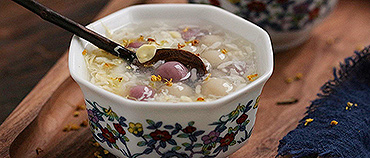
Perhaps not a breakfast food, but certainly worth a sample at some time while taking in the streets and sights of Shanghai, this dish has tiny glutinous rice balls or dumplings boiled in a sweet rice wine recognized as Chinese yeast fermented glutinous rice. Low in alcohol content and sweet tasting, with the additional flavor of goji berries or Osmanthus added, this is a Shanghai street food dish to indulge in.
Make your stay in Shanghai a totally memorable street food experience
Apart from the wonderful culture and history of China, local Shanghai street food makes for a wonderful travel and culinary memories. When in Shanghai, be sure to take in this wonderful city’s street food with your local guide for an experience to truly savor.
Tour China with ChinaTours.com
A ChinaTours.com China tour package is synonymous with authentic travel experiences, taking in the best of China’s culture, history, cuisine and people. Looking for a real experience of China but don’t know how to create the perfect tour itinerary? Our dedicated team of travel consultants who know China tours will take care of every detail. Traveling to 20 unique China destinations, including Shanghai, we’ll make sure you create beautiful travel memories when you tour with us. Have a look at our Beijing tours, Chengdu Panda Tours, Taiwan tours or Hong Kong tour packages, you won’t be disappointed!
Who doesn’t love snacks? Every country has their own takes and variations, and China is no exception! Some Beijing Streets, in particular, are known the world over for their incredible street vendors and snack streets. If you join one of our Beijing Tours we will take you to the Top 10 Best Beijing Streets for Snacks.
As a metropolis, Beijing tantalizes hundreds of thousands of visitors from around the world year after year. To serve this tremendous flow of people, because eating still a very important part of any vacation, restaurants and snack stores are playing an ever-increasing role in Beijing.
Beijing is an incredibly large area to traverse, but here are 10 Beijing Streets to nibble away on.
Top 10 Beijing snack streets
#1 Qianmen Street
Chinese Name: 前门小吃街 Location: Qianmen Street, Dongcheng District, Beijing
With a long history and many time-honored restaurants, this street doesn’t quite bustle with people like the other snack streets on this list. Qianmen Street is a way to gain a taste of upper-class Beijing. When you find yourself surrounded by fantastic buildings in the traditional Chinese design, be sure to try these delicacies:
Old Beijing Hotpot
Beijing Duck
Siu Mai
Wonton and Syrup of Plum
You will see enough delicious food and awe-inspiring architecture here to fill any Instagram in style.
#2 Wangfujing snack street
Chinese Name: 王府井小吃街 Location: Wangfujing Snack Street, Dongcheng District, Beijing
Usually, ‘Wangfujing’ only reminds people of shopping. However, due to the popularity of the famous shopping street, and a testament to Chinese ingenuity, the now booming snack street was established, taking position number two on our list.
Different from Qianmen Street, these vendors set up small snack stores and stalls filling the Wangfujing Snack Street. The benefit of its proximity to the shopping hub is that all the food sold there is able to be eaten on-the-go. which is convenient for everyone.
We recommend the following:
Baodu (Fried beef tripe)
Strong-smelling preserved bean curd
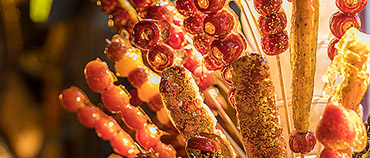
Bingtanghulu
Grilled Mutton
Fried Scorpion, or one of its relatives.
#3 Guijie snack street
Chinese Name: 簋街 Location: Inside Dongzhimen, Dongcheng District, Beijing
Praised as the first popular snack street in Beijing, Guijie earns its place at Number 3 on our list as one of the only streets where all the stores are open 24/7. It stretches about 1.5 kilometers and is also called the Ghost Street, for the street is extremely busy at night with an old saying that ghosts would enter the city in the night to have their dinner. Want to dine like a local? Try one of these specialties:
Hot and Spicy Crayfish
Sautéed Bullfrog in Chili Sauce
Beijing Hotpot
Wheat cake boiled in meat broth
Lamb Spine Hot Pot.
We loved these, but with almost every snack imaginable able to found here, you are really spoiled for choice!
#4 Niujie Muslim snack street
Chinese Name: 牛街 Location: Niujie, Xicheng District, Beijing
The area is most famous for the Niujie Mosque, which is the largest and oldest mosque in the city, Niujie quite literally translates to Ox Street in Chinese. It hosts a large variety of ethnicities in this downtown Beijing street, the Hui people making up the majority, it is said that this cultural cooking pot has roughly 23 distinct ethnic groups living there. Both traditional Beijing snacks and Muslim delicacies are served here, giving all visitors an exotic experience, with our favorites being:
Seasoned millet mush (Miancha),
Douzhir
Jellied bean curd
Fried sugar cake
Lǘdagunr
Yam and date rolls
#5 Fucheng Road
Chinese Name: 阜成路 Location: Fucheng Road, Haidian District, Beijing
At number 5 on our list, located near a booming business district, customers frequenting the restaurants on Fucheng Street are generally business people. Which explains why the majority of restaurants here are known for providing premium and luxurious morsels. Many Chinese regional cuisines from Hangzhou, Huaiyang, and Sichuan can be found here.
The seafood sensations offered by Cantonese restaurants is also praised as being some of the best in Beijing. Be sure to sample everything!
#6 Ping’an Street
Chinese Name: 平安大街 Location: Ping’an Street, Shunyi District, Beijing
Ping’an Street, also called Ping’an Avenue, is a snack street actually made famous for its ancient buildings and surprisingly not its amazing restaurants. Stretching for approximately 7 kilometers, the street houses a number of structures and buildings constructed in the Qing dynasty; among which several of them housed members of royal families. Don’t let that deter you from a good meal though, the snacks available here are unbelievable with the likes of Baodu, Douzhir, and Zhajiangmian.
#7 Suzhou Street
Chinese Name: 苏州街 Location: Suzhou Street, Haidian District, Beijing
Lucky Number 7, Suzhou Street is near the famous hi-tech center of Beijing, Zhongguancun. With restaurants originally serving to provide take-away options for the technicians that lived there. Dishes served in several restaurants were highly praised by their patrons, and rumors quickly spread across the city about the delicious food near Zhongguancun. This attracted more restaurants to buy there, which laid the foundations of the popularity of the renowned street that Suzhou Street is best known for today. Keep an eye out for Cantonese and Hunan cuisine, as well as the seafood.
#8 Fangzhuang
Chinese Name: 方庄 Location: Fangzhuang Area, Fengtai District, Beijing
Fangzhuang is the new kid on the block of best Beijing Streets for dining and snacks. Compared with the other snack streets on this list, this Beijing street’s most advantageous selling point is the restaurants here serve dishes from all across the world.
We definitely recommend sampling the: hand-pulled noodle soup, Peking Duck, Grilled Fish, dumplings, Siu Mai, and the hot pot.
If Ping’an or Niujie Street are identified as ethnic or local cuisine, then Fangzhuang defiantly could be described as an international smorgasbord.
#9 Xiaoyun Road
Chinese Name: 霄云路 Location: Xiaoyun Road, Chaoyang District, Beijing
Xiaoyun road is an oasis, surrounded by skyscrapers as well as highrise villas giving the area a strong sense of being one part removed from the bustle that is Beijing. An assortment of restaurants populate the roadside, serving delightful foreign dishes, such as spicy and unforgettable Thai foods, and simple French cuisine. Xiaoyun also offers patrons unique and exciting African temptations.
#10 Huguosi Hutong snack street
Chinese Name: 护国寺小吃街 Location: Huguosi Street, Xinjiekou, Xicheng District, Beijing
Taking the last spot on our list is Huguosi Hutong snack street, where local Beijing residents visit the time-honored Beijing food snack stores. The alluring smell of traditional cuisine in the air can be intoxicating, with authentic Beijing dishes being served.
Put these traditional snacks on the menu for your stroll down Huguosi Hutong Snack Street:
Fermented bean drink
Glutinous rice rolls with sweet bean flour
Yellow split peas cake
Wontons
Donkey Burger (a kind of sesame seed cake)
Come on an adventure with ChinaTours.com
When you tour Beijing with ChinaTours.com your professional China tour guide will use their expertise to help you to locate the best Beijing Streets for restaurant and snacks. With over a decade of experience in first-class China tour packages, we invite you to join us on tour so you can experience the REAL China.
Are you a culture aficionado who wants an authentic experience when you travel? The team at ChinaTours.com is too. With over 10 years of experience, designing China tours is in our DNA. As a family-owned business, we’re committed to opening up a whole new world of China to Western travelers. We focus on giving our guests a genuine experience of the history, culture, and cuisine of Beijing and other areas of China in ways that build bridges and forge understanding between people. Ready for a China tour made of beautiful travel memories? Talk to ChinaTours.com – the friendliest China tour company.
Are you searching “China itinerary 2 weeks” because you’re looking to book your next travel adventure?
If that’s the case then chances are, you’ll want some good old-fashioned guidance on what to see and do, and importantly, how to see and do it.
In a country that is literally a trove of culture, history, and an incredible 56 UNESCO World Heritage sites, it’s a feat just choosing where and when, but take heart; we’re here for you. This blog, written especially for the avid travel researcher (yes, you who searched China itinerary 2 weeks, we see you!), will answer just about every question you’ve thought of, and then some, so let’s dive right in.
Do I need a Chinese visa and how do I get it?
Getting clear on your Chinese visa requirements is a very good place to start your adventure because let’s face it, visas are one of those tedious administrative hurdles that are part of international travel, and they are best dealt with right up front.
If you are planning a two week holiday in China, there is good news. China has made it easy for international travelers from many destinations. In July 2024 it was announced that from December 1 2023 to December 31 2025, China has implemented a unilateral visa-free policy for ordinary passport holders from 15 countries: Germany, France, Italy, the Netherlands, Spain, Malaysia, Switzerland, Ireland, Hungary, Austria, Belgium, Luxembourg, New Zealand, Australia, and Poland. Citizens from these countries are eligible for a visa-free entry if they come to China for business, tourism, visiting relatives and friends and transit for no more than 15 days. How good is that? It’s perfect for the adventurer wanting a two week holiday in China. You can read more about transit visas and how they work here.
If your plans include a multi-city tour around the country or even a short tour to several destinations, you won’t need a China tourist visa, and it’s wise to get help to ensure your application right the first time around, however, if you do need a visa for whatever reason (for example, you’re not from one of the 15 countries listed above), then engaging assistance from a knowledgeable travel consultant can help, saving you time as you navigate the ins and outs of the application process. Even choosing the correct visa can be a challenge, simply because there are so many, so we strongly advise doing your research.
This is why getting help is a good idea. You definitely don’t want to be left dazed and confused at your local China embassy or China Visa Application Service Centre when you realize you haven’t quite ticked all the necessary boxes. As you’d expect, getting the details right is essential, so enlist the help of someone who knows.
Our tip? Contact your local embassy for information.
Now of course this is going to depend on where you’re traveling from, however, you might be very surprised to learn that it’s possible to make your way by land and sea.
It’s no secret that major airports in China are serious travel hubs, not just for domestic travelers, but for international visitors too, including those just in transit. Let’s just say that when it comes to traveling to China there are options – and lots of them.
As you’d expect, jumping on a direct flight to Beijing, Shanghai, and Guangzhou from most countries is straightforward. There are even direct flights to other cities like Xi’an, Chengdu, and Kunming from the US, Europe, and Australia. This means you won’t be left languishing, waiting on that one weekly flight to start your two-week China holiday.
You’ve probably heard about China’s expanding rail network that is connecting all corners of the country. Not only is this a fabulous way to get around while you’re in China, it also makes it easy to connect up with rail networks beyond the border.
Fancy something a little exotic? Who doesn’t when they’re visiting somewhere new? Travelers from Europe can reach China by taking the Trans-Siberian train from Moscow. Likened to a steel ribbon across Russia, who wouldn’t want to start their China holiday soaking up a little luxury.
Proving train travel is definitely not a thing of the past, the Pan-Asia Railway Network, linking China (Kunming) to Laos (Vientiane), is anticipated to be operational by the end of 2021. Travelers can also travel by train between Beijing and Hanoi; a fantastic route that showcases the very best of expanse that separates these two countries. Plans are already afoot to join China and Bangkok, Thailand in the near future, so if train travel is your thing, there’s no shortage of options.
As for travel between cities, well, the sky’s the limit. There are over 50 flights daily between Beijing and Xi’an, more than a hundred between Beijing and Shanghai, and 40 between Shanghai and Xi’an. Keep in mind, however, that China’s airports are busy, making travel by train an appealing option. Travel times are not hugely different, you have the chance to see more of the country, and it is very affordable.
There are plenty of options for moving within and around a city too. Public transport by bus, train, and metro are immensely popular, and you can always hail a taxi. But our pick is traveling in a private vehicle with a driver who knows how to navigate the craziness that is the roads of China’s big cities, ensuring you arrive at your destination and make it back to your hotel safely.
This question is a bit like asking how long is a piece of string? Truthfully, you can visit China at any time of year and find the kind of weather you love, depending on your preference.
Geographically a northern hemisphere country, you’ll find autumn/winter months from September to February and spring/summer from March to August. It can get bitterly cold – think snow and ice castles like the kind Harbin is famous for – and tropically hot, as it does in Hong Kong and Macau. You will even find places where it’s hot and cold in one day, like the desert region in which Turpan is located.
It’s fair to say that the most popular tourist cities can be visited at any time of year, but it’s highly recommended you avoid traveling during important holidays such as Chinese New Year and the China National Holiday, both of which bring the country to a standstill as locals return home to spend precious time with family.
If food is your ‘thing’, expect to be dazzled and delighted by the incredible array of dishes that are representative of every palate and minority people in the country.
A food tour of China will expand your mind and blow away your taste buds. Every region has its specialties, and every city has its famous snack streets. Expect flavorsome, spiced delicacies for sale alongside the unique and unsavory.
While on tour, be sure to make a meal of every meal, starting with breakfast. Whether you’re a traditionalist at heart, or you prefer to go a little avant-garde while on the road, China can cater to your every dining need. There is huge diversity from back lane food carts to Michelin fine dining. Really, the choice is yours.
Keep in mind too that different cities feature different foods. Order the very best Peking Duck you can find in Beijing, a roujiamo (or two) in Xi’an, and mapo tofu in Chengdu.
Now while we’re the first to say ‘no shopping tours’, it doesn’t mean we don’t love to gather up a collectible or two during our travels. In this department, China has much to offer, so if it’s beautiful, one-of-a-kind, a memory-evoking treasure you want, then we have secrets only insiders can share.
Yes, there are high profile and sky-high shopping malls that modern China is famous for; cathedrals to consumerism and every imaginable electronic, souvenir, and item of clothing. Amidst the glamor and glitz, however, you will find artisans aplenty too. Remaining true to the unique arts that have endured for millennia – calligraphy, silk weaving, porcelain, tea, jade, pearls; the list goes on – these fine arts still capture the hearts of those who hunger for something just a little special. If that’s you, expect to be fully laden on your return home.
For the complete lowdown on shopping, dive into the blogs below.
Hotels in China are a wonder. For a start, can you imagine that back in 1980 there were just 203 hotels designated for international travelers? Today it is a completely different story because accommodation has come a long way since the very rudimentary offerings that were available a little over forty years ago. Today there are a whopping 350,000 different accommodation options for those traveling from around the world, including 20,000 four and five-star hotels.
In terms of service, expect a standard that complements the accommodation. International and domestic brand five-star hotels equate to five-star service where nothing is too much trouble. At the other end of the spectrum in hostels and homestays, you can rely on a relaxed and down-to-earth vibe that provides an insight into life for locals; an experience that is often missed in the larger corporate alternatives. Keep in mind the price of inner-city hotels is a reflection of the location and the ease with which many of the city’s highlights and attractions can be reached. While it may not seem to be a significant detail, the location of your hotel can make a real difference to your overall travel experience. Our guides’ number one tip is to choose the best hotel that fits with your travel budget and make sure it’s located close to a subway line.
Now we know China is a vast country, but what if your passion for travel means you want to use the opportunity by exploring the region beyond its borders? Well, there’s good news. China shares its border with 14 countries: Mongolia to the north; Russia and North Korea in the northeast; Vietnam, Laos, Myanmar, India, Bhutan, and Nepal to the south; Afghanistan, Pakistan, Kyrgyzstan, and Tajikistan to the west. Maritime borders are also shared with Brunei, Indonesia, Japan, South Korea, Malaysia, and the Philippines. Its location at the center of so many countries makes it an excellent launch pad to just about anywhere in the region. Travel by plane or train for the greatest comfort and speed and to make the most of your vacation. For example, flights or train travel to countries in Indochina can be taken from Kunming. If sitting on top of the world is your thing, jump in a car or board a plane bound for Lhasa or Kathmandu. Or if you’re after something a little more exotic, book a ticket on the Trans-Siberian, allowing you to travel from Beijing to Mongolia or even Moscow. There is virtually no limit on destinations, making your greatest challenge what to choose for your China itinerary.
Solo v. group travel: Which should you choose?
For some travelers, this is an easy question to answer based on well-established views and previous experience. It’s good to remember, however, that China is a country unlike any other, which is why you may want to consider your options, particularly on your first visit. A group tour is great if you’re limited on time and want to ensure you cover the absolute ‘must-see’ essentials. If you have a little more time on your hands and enjoy wandering off the beaten path – and your health and age permit – there is certainly plenty to keep you interested if you’re traveling solo. Backpackers can enjoy low-cost transport by train and the opportunity to mix it with locals, while those more interested in comfort will appreciate the flexibility, structure, and day-to-day care provided by a guide on a private tour.
Okay, so we’ve covered a lot of information here, but what if that doesn’t answer the big question, What’s the most popular China itinerary? The magic number here is Two weeks! In this next section of the blog, we cover the all-important details about what to see, what to do and eat, and where to do it, city by city, based on our most popular 14 day best of China adventure
Forbidden City, Great Wall, Temple of Heaven, Summer Palace, Tiananmen Square, Hutongs
Food
Peking duck and any famous Beijing foods found on local snack streets
If you love a little culture
Lama Temple (Yonghe Temple), Confucius Temple and Imperial College Museum, National Museum of China, Beijing Capital Museum, Beijing Zoo, 798 Art Zone, Songzhuang Art Colony, and Peking Opera Museum
Experiences
● Live like a local: Visit local parks and join the morning Tai Chi class, take the bus or metro, or visit the local markets. ● Ride a rickshaw through the hutongs or take a Great Wall hiking or camping tour ● Try a class: Indulge your senses at a Chinese cooking class, learn to make clay figurines, try your hand at calligraphy, kite-making, or a Peking Opera mask.
By night
● Enjoy a drink: Visit the bars in Sanlitun or Shichahai ● Enjoy a concert or show: Choose from Peking Opera, acrobatics, kung fu, and Beijing folk art performances. ● Take a night tour: See the city’s landmarks in a whole different light
Shopping
● Bargain hunt: Search for a travel memento or kitschy tourist trinket by visiting one of Beijing’s many markets. Try the Hongqiao Pearl Market or the Panjiayuan Antique Market, shopping centers in Wangfujing, Xidan, and the Qianmen shopping precincts.
Terracotta Army, Xi’an City Wall, Great Mosque, Muslim Quarter, Shaanxi History Museum, Big Wild Goose Pagoda
Food
Savor one of Xi’an’s famous roujiamo (Xi’an burger) and other famous street food found in iconic destinations like Muslim Street
If you love a little culture
Bell and Drum Tower, Small Wild Goose Pagoda, Xi’an Museum, Stone Steles Museum, Mount Hua, Famen Temple, Han Yang Ling
Experiences
● Enjoy a show: Xi’an is famous for its selection of entertaining shows. Among our recommendations are The Tang Dynasty Music and Dance Show or Song of Everlasting Sorrow). ● Food tour or cooking class: If food is your ‘thing’, team up with a local guide who shares your passion by taking a local specialty food tour. And if you like to cook, then take a class and learn to make biang biang noodles, dumplings, or other dishes unique to this fabulous city. ● Craft a soldier: Make the master craftsmen who assembled the thousands of terracotta soldiers that are part of the Terracotta Army. A perfect activity for families and those who like to get amongst it. ● Appreciate local art: Join a local artisan and learn the ancient craft of paper cutting, Chinese calligraphy, or shadow puppetry.
By night
● Sights at night: Want to double your sightseeing time? Visit some of Xi’an’s highlights at night. Be sure to include the Bell Tower and Drum Tower, City Wall, North Square of the Big Wild Goose Pagoda, and the Datang Everbright City on your list. ● Market visit: Xi’an’s markets go well into the evening. Visit the Dongxin Street Night Market or the famous Muslim Quarter. ● Dine out: Xi’an’s bar and dining precincts are great destinations for food and entertainment, including live music. Stop by the South City Gate and spend time with the locals.
Reed Flute Cave, Li River, Yangshuo West Street, Longji Rice Terraces in Longsheng
Food
Make a beeline for Guilin’s rice noodles, Yangshuo Beer Fish, or sticky bamboo rice in Longsheng. Guilin also has its own selection of local food and snacks, so try these as you wander its old-style, relaxed streets.
If you love a little culture
Wander the area surrounding the impressive Elephant Trunk Hill and spend time learning about China’s historical contributions to science and innovation in Seven Star Park. In Yangshuo, take a drive through the idyllic countryside and see why the city’s backdrop is so famous when you look upon Xianggong Mountain and the expansive Yulong River.
Experiences
● Enjoy nature: Absorb the beauty of the local countryside with a bike ride through charming villages or a leisurely bamboo raft ride down the Yulong River. ● Cook like a local: Join a cooking class that combines sightseeing, local ingredients, and the savoring of regional specialties.
By night
● Night markets: Experience the liveliness of night markets in Xicheng Street, Zhengyang Street, or Yangshuo West Street. ● Night show: Enjoy the famous show, Impression Liu Sanjie in Yangshuo, a performance involving local farmers that are staged on the water and showcase traditional local music, stories, and costumes.
Fengdu Ghost City or Shibaozhai, Three Gorges (Qutang Gorge, Wu Gorge, Xiling Gorge), Shennong Stream or Shennv Stream, Three Gorges Dam.
Food
Enjoy the food onboard the cruise, with menus including both western and Chinese cuisine at breakfast, lunch, and dinner.
If you love a little culture
Depending on the cruise selected, you can also visit White Emperor City, Baiheliang Underwater Museum, and the 816 Underground Project.
Experiences
● Onboard activities: Relaxing in river cruising style by taking advantage of the Chinese culture lectures, morning Tai Chi lessons, or specialty cooking classes. The cruises also make stops for the open-air Three Kingdom show and Three Gorges Project Ship lift.
Shanghai Museum, The Bund, Nanjing Road, Yuyuan Garden, Chenghuangmiao Bazaars, Shikumen Museum, New Spot, Former French Concession.
Food
While visiting the Pearl of the Orient, indulge in xiaolongbao (steamed bun) and other famous local snacks.
If you love a little culture
Shanghai has much to offer, so make a list. Be sure to include Jade Buddha Temple, the Shanghai Science and Technology Museum, Shanghai History Museum, Shanghai Urban Planning Museum, Shanghai Disneyland, Zhujiajiao Water Town, Shanghai World Financial Center, and the Oriental Pearl TV Tower.
Experiences
● Shanghai-style: Sit back and listen to a performance by The Old Jazz Band at the Peace Hotel ● Dress in style: Channel your inner 1920’s Shanghai diva with a tailor-made Chinese Qipao or cheongsam ● Get married: Well, maybe you won’t, but a visit to the People’s Park marriage market puts a whole different spin on partner selection. Observe the way parents and grandparents ‘market’ their unmarried adult children to the best available option. ● Family-friendly: Shanghai caters to all ages, with families a special focus. Visit Shanghai Disneyland (fancy a night at the Toy Story hotel?); Shanghai Zoo (see cute pandas); Shanghai’s Wild Insect Kingdom; Shanghai Ocean Aquarium; the Bund Sightseeing Tunnel; and Shanghai Natural History Museum. ● Fulfill your need for speed: Climb aboard the Shanghai Maglev, China’s fastest commercial electric train or shift down a gear or two with a bike ride that traverses both old and new Shanghai.
By night
● Join the fun: Relish the spectacle of the famous Shanghai Acrobatic Show, a Huangpu River night cruise providing views of the Bund, bars, and restaurants at Tianzifang or New Spot.
Shopping
Tea, pearl, silk, porcelain, and various kinds of hand-crafted items could very easily top your Shanghai shopping list. Apart from shopping centers housing international luxury brands, there are markets for fabric, antiques, glasses, and homewares that are worth visiting; not to mention countless boutiques with one-off mementos.
Whether you’re a savvy traveler or a first time visitor to China looking for the best two week itinerary, doing your research is the best way to make the most of your vacation in this amazing country. Be sure to get the information you need on travel costs, including hotels, tours, food, and experiences from people who truly care about your holiday. Talk to the ChinaTours.com team. We’re travelers too, and we’re committed to helping you create beautiful travel memories that endure long after you’ve arrived home. We welcome online enquiries via direct contact, with responses delivered within 24 hours.
Among the hundreds of traditional dishes, are some that you simply have to try if you’re venturing to China. A traditional Chinese hotpot is one such dish.
What is Haidilao hotpot?
Now there are hotpots – and there are Haidilao hotpots. For those just cutting their Chinese cuisine teeth, hotpot dining involves cooking raw meats, fish, tofu, vegetables, and noodles in broth or oil, which is placed at the centre of the table.
There are different soup bases: tomato, mushroom, clear oil spicy, chicken, and pickled Chinese cabbage, as well as various dishes and noodles that are cooked in the broth. Feeling hungry? Well, you get more than a meal at Haidilao.
Find the best customer service at Haidilao hotpot
Considered by locals to the best hotpot restaurant, Haidilao is not only favoured for its wonderful food. It’s also appreciated for its outstanding customer service. At a time when genuine service is a rarity anywhere in the world, Haidilao surprises and delights even those who are hard to please.
Don’t believe us? Here are just a few examples of the way Haidilao impresses its guests.
Arrive early and waiting for your table? No problem. You’ll enjoy a free manicure or some time in one of the relaxing massage chairs found in the foyer to the restaurant.
Cold outside? In winter, expect to be greeted with wipes to clear you classes of the fog.
Want to avert a smartphone disaster? That’s easy. Every customer receives a zip lock bag for safe keeping of mobile phones.
It might sound over the top, but it seems like people can’t say enough good things about Haidilao.
Is it unforgettable? Well, yes, we think so. Do they provide unique and memorable customer experiences? A hundred percent.
But there’s even more to make Haidilao a place to visit.
New Beijing Haidilao restaurant is out of this world
Apart from the delicious food, a visit to Haidilao is a must if you’re a western traveler on tour in China. And although there are Haidilao restaurants all over China, if your China tour stops in Beijing , make a point of visiting their newest outlet there, located at B1-04, building E, Zhongjun World City, No. 8-9, Jinhui Road, Chaoyang District, Beijing.
Known as a dining amusement park, this restaurant took three years to build from planning to completion and required an investment of more than 14 million US dollars.
Here’s what you’ll find there.
Haidilao’s first smart restaurant
Haidilao is definitely at the forefront of technology, making their Beijing flagship store it’s first smart restaurant. Think Jetson-style technology in a dining environment.
The Beijing restaurant has integrated an intelligent kitchen based on AI, as well as intelligent serving that helps improve food safety standards. It seems Haidilao has thought of everything because there is even ‘intelligent customization’ allowing customers to create an exclusive hotpot broth. The power to personalize is in the hands of customers who can download the Haidilao app and create an exclusive broth file for themselves and share it with family and friends.
A visit to Haidilao is more than a meal; it’s a chance to unleash your creativity.
A waiting room with a difference
While reservations for this innovative new restaurant can be made online or by telephone, there may still be a slight wait on arrival. But don’t be concerned. The standard manicure and massage have been upgraded to a super-sized screen on which an interactive game can be played. Simply enter the game by scanning the code with their Haidilao app.
Accommodating 80 people at once, the giant screen makes waiting for your dinner a truly memorable experience, especially when you’re served pre-meal snacks.
Dining that’s a total immersion experience
The experience only intensifies when you enter the restaurant. Haidilao has gone all out to create a 360 audio visual hotpot immersion experience. Six different visual themes are projected onto the walls of the restaurant. At any time you’ll be treated to rich imagery that will surely surprise and delight. Starry sky, peach garden wonderland, and snowy mountain are just a sample of what’s in store.
The future of table service
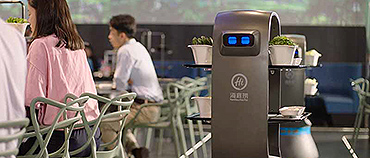
A standout feature of the Beijing Haidilao smart restaurant are the robots that deliver meals. The future of table service really is here.
Taking just three minutes from the time an order is placed on an iPad to the moment dishes arrive at the table, the intelligent service certainly is speedy.
It’s all part of the smart restaurant model where every ingredient has its own unique RFID code, which is equivalent to ‘ID card’. When guests order through the intelligent ordering system, the robot matches the dishes. Its flexible robot arm can touch the top shelf which is more than two meters high. Prepared dishes are transported to the delivery robot or ‘waiter’ standing by in the restaurant.
After collecting the meal, the robot will automatically take meals to the right table. Once this job is done, it returns to wait for it’s next task.
After the meal, or when dishes have piled up, guests can call the waiter to collect them. The robot will automatically move to the table and help staff to remove the empty dishes. When the empty disks are returned to the kitchen, it will automatically report: “Empty dishes have arrived, please take them away as soon as possible.”
Dining here isn’t all robots though. At the end of the meal, enjoy the experience of watching a noodle master performing amazing traditional noodle making techniques. It seems robots can’t handle noodles yet!
Intelligent kitchen that has no need for master chefs
Another feature of this smart restaurant is the ‘intelligent kitchen’.
All dishes are prepared in the automatically temperature controlled and super clean food warehouse environment.
Food is directly delivered to the store through specially designed logistics before entering the automatic vegetable machine. There is also a large monitoring screen in the kitchen, which is used to observe the machine’s operations. On the screen outside the pantry, the remaining dishes are monitored in real time,allowing for accurate control of food shelf life. Expired products are discarded automatically. In addition, the kitchen is also equipped with intelligent equipment, such as an automatic dishwasher and meat cutter.
What people say about Haidilao hotpot
Here are just a few comments from people who’ve loved their Haidilao experience.
When it comes to Haidilao and its customers, it seems like there are no limits to the lengths their team will go to create a comfortable, enjoyable experience.
Their premium service concept has been enhanced with advanced technologies that make a meal at Haidilao more than a dining experience.
Looking for more AI experiences in Beijing? Why not visit HEMA Fresh, the new wave in supermarkets located just ten minutes from Haidilao.
Although ChinaTours.com does not have any affiliation with Haidilao Hotpot, we share their commitment to providing exceptional customer experiences. On all our China tours, we provide our customers with the flexibility to choose their meals for lunch and dinner. This means you have the opportunity explore the fabulous dining options, which are available in every region in the country. Haidilao Hotpot is just one example, but there are many others and we’d love to share them with you. When you travel with us, part of the experience is about ensuring you achieve what you set out to do on your travel adventure – and we’re here to help make that happen. Curious and like to know more about creating beautiful travel food memories? Enquire via our contact form and we’ll respond within 24 hours.
Shanghai cuisine, also referred to as Benbang cuisine, balances color, aroma and taste.
While appearances may not always be appealing to a Western palate (check out Hairy Crab below) – in general, Shanghai dishes feature a comparatively sweet and light-salt flavor. By contrast to the heavy and spicy flavor prevailing in China’s north, Shanghai cuisine offers a different culinary experience. Benbang cuisine is known for its thick red oil sauce and its method of braising or stewing in soy sauce and use of sugar.
A contrast to typical Shanghai street food, traditional Shanghai cuisine is somewhat different and readily available in local restaurants. ChinaTours.com is a reputable provider of China tours, and in writing this article our local tour guides have assisted by handpicking a few famous favorites, including some must-try Shanghai cuisine dishes for those visiting this fascinating city.
Traditional Shanghai Cuisine
Shanghai Old Restaurant / 上海老饭店
Find it: 242 Fuyou Rd Founded in 1875, Shanghai Old Restaurant is the origin of Shanghai’s Benbang cuisine and has a history of nearly 150 years, providing featured dishes such as Braised Jumbo Sea Cucumber with Shrimp Roe; Chicken, Mushroom and Ham Threads in Consomme; and Fried Shrimps.
Fu 1088 / 福1088
Find it: 375 Zhengning Rd Located at an old foreign-style house built around the period between the 1920s or 1930s, Fu 1088 features dishes from Shanghai’s traditional wealthy and influential families. Menu highlights include Stewed Pork with Brown Sauce, Braised Noodles with Yellow Croaker and Shrimp with Mustard and Sesame.
Wang Bao He Restaurant / 王宝和
Find it: 603 Fuzhou Rd Originally built in 1744, Wang Bao He Restaurant specializes in cooking river crabs, showcasing featured dishes such as Stewed Crab Meats with Tender Tofu, Crab Meat and Prawn Rolls, and Shrimp and Crab Cooked with Green Pepper. If you’re a seafood lover, you are guaranteed to love this form of Shanghai cuisine.
Yong Foo Elite / 雍福会 Michelin two stars
Find it: 200 Yongfu Rd Built at the beginning of last century, the garden villa of Yong Foo Elite earns every point of its two Michelin stars. Covering an expansive area of three mus (a traditional Chinese measure of land) on which the former site for British Consulate in Shanghai was located, Yong Foo Elite features dishes such as Stewed Crab Meats with Fins, Wine Preserved Crab and Prawns in Chili Sauce. Come ready to be impressed and enjoy the top-rated Shanghai cuisine at Yong Foo Elite.
Jardin De Jade / 苏浙汇
Find it: 388 Zhaojiabang Rd Built in 1999, Jardin De Jade brings together the dishes and flavors of Suzhou, Zhejiang and Huaiyang – all cities located within proximity of Shanghai – enhancing them to innovate traditional Shanghai cuisine. Feature dishes at Jardin De Jade include Braised Meatballs in Brown Sauce, Benbang Smoked Fish, and Steamed Reeves Shad. Ask your local guide for details on how to book a night out at this special restaurant.
Lubolang Restaurant (绿波廊)
Find it: 115 Yuyang Rd Built during the reign of Emperor Jiajing in the Ming Dynasty, Lubolang Restaurant is a century-aged restaurant which boasts not only typical Benbang cuisines but also unique and exquisite pastries. With classical pastries available, including Flaky Pastry with Shredded Meat, Mushroom and Winter Bamboo Shoots, Osmanthus Jelly, and Pan-fried Turnip Cake, make sure you arrive ready to feast.
Looking for traditional Shanghai cuisine dishes to try?
Sample these local specialty dishes when you’re visiting Shanghai, the Pearl of the Orient
Steamed Hairy Crab (蒸毛蟹Zheng Mao Xie)
I know. It sounds more like an animated character than seasonally popular Shanghai street food dish, but Hairy Crab is virtually revered among locals who recommend steaming with ginger and serving with a dipping sauce of rice vinegar, ginger and sugar.
Can’t face the prospect of pulling apart the crab? For local Shanghai residents, it’s all part of the ritual. Ask your local guide to share their insider secrets to the best Hairy Crab street stall. They’ll take you there – and we know you’ll be happy you did.
Braised Pork Intestines with Alfalfa (草头圈子 Cao Tou Quan Zi)
For the more adventurous Shanghai visitors, a foray into the unknown sampling braised pork intestines with alfalfa could make for the ultimate food travel memory. When you’re asked Did you try any usual Shanghai food? You can give a resounding Yes! as your answer. While it may not sound appetizing, braised pork intestines with alfalfa is old Shanghai cuisine. Ask your local guide to include it on your culinary tour.
Sauteed Shelled Shrimps (炒虾仁)
For seafood lovers, sauteed shelled shrimps – or you bao xia – are a Shanghai favorite. Sauteed in oil, and flavored with ginger, chicken broth, Shaoxing wine, sugar, black vinegar, and sesame oil, this dish is unique to this region. Keen to eat like the Shanghainese? Check in with your local guide while on tour or layover for the best culinary adventure advice.
Indian Kalimeris Herb mixed with Smoked Bean Curd (马兰头拌香干)
The Shanghainese love their vegetables, so trying Indian Kalimeris Herb mixed with Smoked Bean Curd (Ma Lan Tou) is a must. Others you may want to sample include Shepherd’s Purse, Chinese Little Greens, and Shanghai rape, a type of cruciferous green vegetable.
Make your visit to Shanghai a totally memorable food experience
Apart from the wonderful culture and history of China, local traditional cuisine adds to every travel and culinary experience, whether it’s a short layover or a longer China tour. If you want to experience Shanghai’s local cuisines come with us (ChinaTours.com) on a Shanghai tour and your local bilingual guide will ensure you enjoy the different flavors which will captivate and delight you.
Are you a culture aficionado who wants an authentic experience when you travel? The team at ChinaTours.com is too. Designing small group, private and custom China tours is in our DNA. As a family owned business, we’re committed to opening up a whole new world of China to Western travelers. We focus on giving our guests a genuine experience of the history, culture, and cuisine in ways that build bridges and forge understanding between people. Ready for a China tour made of beautiful travel memories? Have a look at our carefully designed China Tour Packages, including some of our Best China tours such as Beijing tours, Chengdu tours and Yangtze River Cruises and so many more…. Also, talk to ChinaTours.com – the friendliest China tour company. Enquire now.
Best hot springs in Xi’an? Looking for a Xi’an tour that encompasses the Xi’an hot springs?
Maybe you’ve booked a small group Xi’an tour, or your planning to travel solo to Xi’an. Whatever the case, mixing things up to make beautiful memories is what travel’s all about, right?
So most people wouldn’t put the best hot springs and Xi’an in the same sentence. That’s because whenever we think of Xi’an, there’s usually one thing that comes to mind. The Terracotta Army.
Awe-inspiring by any measure, it’s understandable we tick that bucket list item on our tour itinerary.
Hot springs near Xi’an
But what if you’ve time on your side – maybe a free afternoon or evening in your schedule on tour in Xi’an? Wouldn’t it be great to know there are options available, other than shopping and more sightseeing?
Well, the good news is, there are other options.
The Chinese draw on a long, rich history of therapies that contribute to long life and good health. While many of these have been adopted by westerners keen to absorb some Eastern wisdom, certain treatments aren’t practical to move beyond the Chinese border. And Xi’an hot springs are one of them.
But that needed stop you enjoying the benefits while you’re on tour in Xi’an. Few people know the very first hot spring in China was found in Shaanxi province where Xi’an is located. In fact, the province’s history was influenced heavily by the hot springs in the area.
Emperors and their royal courtesans knew they were on a good thing. Over dynasties and centuries, they built resorts and summer houses, taking advantage of the health-giving and restorative nature of these pristine destinations.
Want to soak up life like an emperor and restore aching muscles from walking travel miles?
Let’s take you on a trip through the best Xi’an hot springs so you can.
#1 Huaqing Hot Spring
Huaqing Hot Spring in Xi’an sits at number one on the list of the best Xi’an hot springs.
Over 6,000 years old, the Huaqing Hot Spring remains not only one of the most famous hot springs in China, it is also one of the oldest. Approximately 30 kilometers east of Xi’an City, the former royal spring has become a scenic area for tourists, with a resort now well established and providing every visitor with the pure delight only Chinese emperors and courtesans could enjoy in the past.
Noted for the quality of spring water available, experts believe the water from Huaqing Hot Spring will do more than simply provide relaxation; it will restore your sense of wellbeing too.
Sounds like a natural remedy from heaven.
In Chinese: 华清池温泉 Find Huaqing Hot Spring: 38 Huaqing Road, Lintong District (30 kilometers east of Xi’an City), Xi’an.
#2 Mianxian Hot Spring
Nestled in Southern Shaanxi, about three kilometers away from Mianxian, we have number two on our list of the best Xi’an hot springs.
The Mianxian Hot Spring has an average temperature of 58.2℃ and a daily flow rate of about 5,000 tons of water. This vital spring has been used in therapy since ancient times and has been commissioned as a resort after WWII. Want healing and health? Make time to visit one or more Xi’an hot springs on your China tour.
Chinese Name: 勉县温泉 Find it: At the foot of Ma’anshan Mountain, Hanzhong City, Shannan
#3 Lantian Tangyu Hot Spring
With an enviable outlook, the iconic Lantian Tangyu Hot Springs shares another distinguished title, that of top 8 best views in Lantian.
Situated about 20 kilometers from Lantian county and 40 kilometers away from downtown Xi’an, the Lantian Tangyu Hot Spring draws both locals and tourists for healing, relaxation, and restoration.
The Chinese love a good saying and it’s fitting there’s one for Tangyu: ‘the water in Tangyu is much more precious than gold’.
As one of the best of Xi’an hot springs, Lantian Tangyu Hot Spring is so popular that even since its beginning at the time of the Tang Dynasty, people far and wide have traveled to gather here, just to take a dip!
When you visit, you’ll understand why.
In Chinese: 蓝田汤浴温泉 Find it: 20 kilometers away from Lantian County, Shaanxi
#4 Meixian Tangyu Hot Spring
China’s emperors had a deep affinity with Meixian Tangyu Hot Spring, so much so, that Emperor Wen of the Sui Dynasty built a summer residence here and named it the ‘Phoenix Spring Palace’.
Until the start of the Tang Dynasty, Meixian Tangyu Hot Spring was still used as a royal getaway destination during the summer.
Located about 10 kilometers from Xi’an where it’s nestled alongside the gate of Taibaishan National Forest Park, the Meixian Tangyu Hot Spring is also referred to Taibaishan Tangyu Hot Spring by outsiders.
Open from afternoons through to late evening, it’s the perfect way to round out a busy day on tour in Xi’an.
In Chinese: 眉县汤浴温泉 Find it: Tai’an Road, Tangyu County, Taibaishan National Forest Park
#5 Virgie Spring
Number five on our list of the best Xi’an hot springs – and the only hot spring not dignified by royalty – the Virgie Spring in Qia County of the Shaanxi province is a minerally rich spring and has unbelievable scenic surroundings.
Virgie Spring is named after a unique tradition in Qia County. It is said in ancient times, young women on the eve of their weddings would bathe themselves in the spring to embrace their impending maturity, believing this prepared their bodies for the gift of children.
Virgie Spring actually consists of a group of smaller springs forming a beautiful butterfly pattern – perhaps a nod to the mystical and magical so characteristic of Chinese mythology.
One of the perfect Xi’an hot springs to relax and enjoy.
In Chinese: 处女泉 Find it: Qiachuan, Heyang, Weinan City, Shaanxi
Ready to take the plunge on a China tour with stops in Xi’an and visit the best hot springs including the famous Huaqing Hot Spring? Book online now or connect with one of our China tour specialists.
Come and experience China with ChinaTours.com
ChinaTours.com provide the best China tours, as our tour groups are kept small so you experience the best of China whether it is one day or a tour of several days. We offer tours throughout China including tour packages in and around Xi’an, Beijing, Tibet and even Hong Kong.
A small group, private or custom tour is the ideal way to experience China when you travel with ChinaTours.com, the friendliest China tour company. Arranging specialized inbound China tours for over ten years, we understand the importance of providing comfort, safety, and a real experience of China. We can arrange private tours for one in twenty unique China destinations, or a custom tour to best suit you. We’d love to hear from you if you would like to know more.
A little bit like buying a fancy bottle of wine, knowing how to choose Chinese tea like a local can be, well, a little confusing.
In fact, because the art and science of tea has a modern history, as well as an ancient one. More recent influences on the maintaining the quality of tea emerged in China from the 1950s to the 1980s. During this time, the production of tea came under a system called the ‘commodity allocation plan’, which developed a standard based on eight elements for assessing tea quality. In true Chinese style, this assessment was multi-faceted, taking into consideration the ‘inner’ quality of tea and ‘outer’ quality of tea in equal measure.
The inner quality of tea refers to the aroma, taste, color and selection of tea leaves. Of these criteria, aroma and taste are most important. In terms of the outer shape of tea that influences tea quality, connoisseurs look for the shape and color of leaves, as well as the uniformity of shape, and how clean the leaves are. Although all elements are important, the shape of tea leaves takes priority.
With color, clarity, and aroma among the many factors to consider, it’s any wonder that western travelers on a China tour feel the overwhelm of indecision and confusion when pressed to choose a Chinese tea on their own.
The truth is, learning how to choose a Chinese tea involves more than a dose of good luck. There is an art and science to planting, growing and producing tea, so if it’s a genuine quality product you’re after while on tour, then take notes!
We’ve covered it all in this and other blogs in our article series on Chinese tea.
When it comes to tea, 8 is a lucky number
We’re the first to admit that 8 is an auspicious number in all things Chinese, that’s why it’s no surprise there are exactly eight things to look for if you want to choose Chinese tea like a local.
Ready? Here goes.
1. Look for a consistent shape
A consistent shape in dried tea leaves is just one of the eight elements considered important when assessing tea quality. Tiao Suo (条索) specifies the shape of dried tea leaves. For example, with panning green tea we look for long strips; for gunpowder (pearl) tea we look for the roundness of the ‘pearl’; with Longjing tea the defining characteristic in terms of shape is how flat the leaf is; while black tea is valued for the way it is crushed. When it comes to shape, there are different Tiao Suo which point to the quality of a tea. When considering tea shaped as a long strip, look for whether the leaves are tight, straight, strong, and heavy. For round tea, the tightness of the small round pearl, along with how solid and evenly distributed the weight in the pearl. For flat tea, smooth and even is the core factor.
2. Choose a quality color
Not surprisingly, the best Chinese tea must have visual appeal too. When looking at tea for its color, be sure to check for an even spread and gloss across the tea leaf.
3. Whole shredding? We’ve got you covered
Another term not immediately associated with tea, but is in fact, integral to how to choose Chinese tea like a local: whole shredding. It’s a term that can be a little confusing because whole shredding actually means the tea leaves must maintain their natural shape, even when dried.
4. Tea clarity
While clarity is a wine term referring to a wine’s reflective quality, that is, whether it is brilliant, dull, clear, or hazy, clarity in tea refers to the number of impurities. It goes without saying that the finest quality teas are free from contamination. This no doubt explains the reason some of the most expensive Chinese tea is produced in pristine regions like the mountains of Fujian and the Li Shan (Pear Mountain) tea district of Taiwan where the chance of contamination is greatly reduced.
5. Hmm…tea. How does it smell?
We all understand the term aroma, but when it comes to tea, what does it mean? Aroma in Chinese tea refers to the scent that arises from the steam after the tea is brewed. The various types of tea carry their own fragrance, for example, black tea is typically sweet, while a fruity or floral aroma is usually associated with Oolong tea.
6. It’s all in the taste
As you step out and try different teas, you’ll start to become familiar with the distinctive tastes that are associated with each. Naturally, a quality tea is strong and fresh; and not at all bitter or unpleasant to smell.
7. Soup color? Aren’t we talking about tea?
Well, yes we are, but soup color is the term used to describe the color of water after the tea leaves are immersed in boiling water. Soup color mainly depends on chroma (the saturation of color), brightness and turbidity. Want to add some green tea to your repertoire? Look for tea that is yellow-green and bright. On the other hand, black tea should be red and bright, while Oolong tea, a bright orange-yellow hue.
8. Leaf bottom
Who knew that the art and science of tea could be so complex? Leaf bottom or Ye Di (叶底), refers to the tea after it has been infused (and with most Chinese teas, this occurs several times). The literal translation of Ye Di is ‘finished tea leaves’, but the Chinese are a poetic bunch and instead use the term ‘leaf bottom’. Tea connoisseurs say that the leaf bottom is a good indicator both of tea quality – and the tea-making skills of the tea drinker.
The tea bottom is evaluated on the ratio of buds to young leaves, and the tenderness of the leaves, which should be uniform in shape and size, soft in texture, brightly colored.
Looking for the finest tea in China?
We can help with that kind of adventure – and just about any other kind of China tour, regardless of your interest. Whether it’s culture, history, food, crafts, or Chinese tea, our dedicated team of travel consultants can help custom design a China tour that inspires beautiful travel memories.
ChinaTours.com is dedicated to helping western travelers from the United States, United Kingdom, Australia, Canada, and elsewhere enjoy an authentic experience of China, including adventurers on the hunt for the very best Chinese tea. We are passionate Chinese tea drinkers too. In fact, we source the tea we drink from all corners of China – and would love to take you there. If you’d like to learn how to choose Chinese tea like a local, or even take a totally food-focused tour of China, just let us know. We’re here to share your passion. Enquire via our contact form and we’ll respond within 24 hour.
For the very best in China tours
Filter our search options to find the best suited tour